Saturday, April 30, 2016

David Talbot ("Electric Universe") on Coast To Coast AM Sunday evening/May 1

Disinformation like the new "flat earth movement" is intended to obscure and conflate with the likely truth of the "Electric Universe" (as opposed to the mainstream "gravity universe"). We've covered this info before. This 2-hour segment will start about midnight pst; 3:00 AM est. You can find it later on a YouTube channel called "Conflict Returns." They keep deleting his account because of the copyright, but he continues to come back under "conflict... something." I prefer to listen to a good program live; often out on our deck here... out along the hillside if weather permits. This is a fascinating and important program.


Positive Thinking/ Electric Universe

Date: Sunday - May 1, 2016
Host: George Noory
Guests: David Essel, David Talbot, Wallace Thornhill  

 First half: With 30 years of work in the field of personal growth, David Essel is the author of 9 books on self-realization. He will reveal why the real ‘’secret to success’’ requires much more than positive thinking, affirmations or vision boards, and that no one ever changed their lives through positive thinking alone. Second half: David Talbot is a comparative mythologist who has devoted 35 years to examining the origins of ancient beliefs and symbolic traditions. Wallace Thornhill is an Australian physicist. His lifelong investigation of "The Electric Universe" offers a revolutionary view of the cosmos. They will discuss the latest developments in their electric universe and plasma cosmology theories and how educators are not keeping up with all the changes happening in the scientific community.


**************************************************

5-3-16 UPDATE

Here is the whole program from another of "Conflict's" channels. The Electric Universe segment starts at about an hour and fifteen minutes. In case I lose this embedding, the direct link is.....

https://www.youtube.com/watch?v=aGjBQB151WQ 


Coast To Coast AM - May 1, 2016 Myth of Positive Thinking & Electric Universe
 

Conflict May

.

Sunday, April 24, 2016

Ghost programs and the metaphysical issue: Part 17

The evening of the week which I call "Ghost night" is now Saturday on the Travel Channel network (277 on DirecTV), with new episodes of the popular programs 'The Dead Files' along with the other mainstay 'Ghost Adventures' now airing. Now added to that lineup is a new program 'Deadly Possessions' with Zak Bagans, which is a lot like 'Haunted Collector'. This program has an interesting format, and interesting topics, based on actual haunted items. He's apparently building a "haunted item collection." Apparently they usually purchase or take items off of the owners hands which have caused them much grief. Lifetime Move Network's "ghost night" was switched from Saturday to Thursday I believe, but it's off season for it currently. That's the lineup with 'The Haunting of' with Kim Russo, "Ghost in My Child', and 'My Haunted House'.

This subject matter in popular culture, which started in earnest in 2005, is moving along as strong as ever. What people can't seem to grasp is that we don't "become ghosts" after death. A "ghost" is a soul which is compelled to remain behind because of some unresolved issue. A suicide will always result in this; that seems to be a definite rule, however it's not a permanent state. A soul is intended to go into the afterlife, at which time it then becomes a free spirit. Apparently free to travel both worlds at will until it decides to go back to have another experience. It's more complex than that, but that's the gist of it. I call this the "Soul Matrix."


About ten years ago, my father passed away from lung cancer. About a week ago I was visiting my mother, and in the early evening we lit a candle and turned off all the lights. We spoke about him for awhile, and then were silent for a bit with the effect of light and shadow from the flickering candle apparent on the ceiling. After about twenty minutes, the lamp just came on all by itself. It didn't "click" on, but just "came on." I can't prove that it was him, although I know it was. It was either him energetically affecting the electrical charge, or I caused it through psychokinesis, or it occurred through some type of universal synchronicity triggered by the power of ritual/suggestion, or it was just a coincidence. After about ten more minutes, the light turned off on its own. Later I turned it "on" via the switch, and "off" as normal.

I had another strange experience recently, although this was more in the coincidence realm I think. A synchronicity relevant only to the person experiencing it. I live on a slope of a mountain, where the streets were carved out. With houses on only one side and separated from one another, the original topography of the hills are easy to make out. I was driving in a location which was on another part of the slopes of the mountain. I parked to finish my drink. The roads there were similar to those in the neighborhood, except that there were no houses; only a few scattered businesses. I noticed the particular view that I had from where I was parked appeared to be an exact match for one street in the neighborhood... right down to some trees, bushes, and natural formations. It was eery. With so many similarities, I soon began to look for "dissimilarities." I couldn't really find any. It was as though this street was a dead ringer for the other street, minus the houses.

Below, an episode of Fade To Black with Jimmy Church; also an occasional guest host on Coast To Coast AM. A frequent guest is author Tracy Twyman, a deep researcher on occult history, secret societies, and metaphysical subjects, and a good name to google or YouTube if interested in this subjects. He's interviewed her on Coast as well.


Ep.150 FADE to BLACK Jimmy Church w/ Fr. Jack Ashcraft, Tracy Twyman, Exorcism Ouija LIVE on air 

FADE TO BLACK

Day three of Halloween Week on FADE to BLACK and tonight we have up first Fr. Jack Ashcraft and we discuss how he determines if someone is in need of his services and what steps are taken after...next we have Tracy Twyman, author of many books and her current offering is Clock Shavings...which is a non-fiction account of her communication with Cain and Baphomet for the last 13 years through her Ouija board.

************

http://quintessentialpublications.com/twyman
 

http://tracytwyman.com
 

JimmyChurchRadio.com
 

Fade To Black (YouTube)

.

Tuesday, April 19, 2016

Reflections upon the Full Pink Moon

Live "Pink Moon Show" at The Old Farmer's Almanac online

Live stream from Thursday evening from 5:00 to 5:45 PM pst

April Full Moon Names

April’s Full Moon, the Full Pink Moon, heralds the appearance of the moss pink, or wild ground phlox—one of the first spring flowers. It is also known as the Sprouting Grass Moon, the Egg Moon, and the Fish Moon.


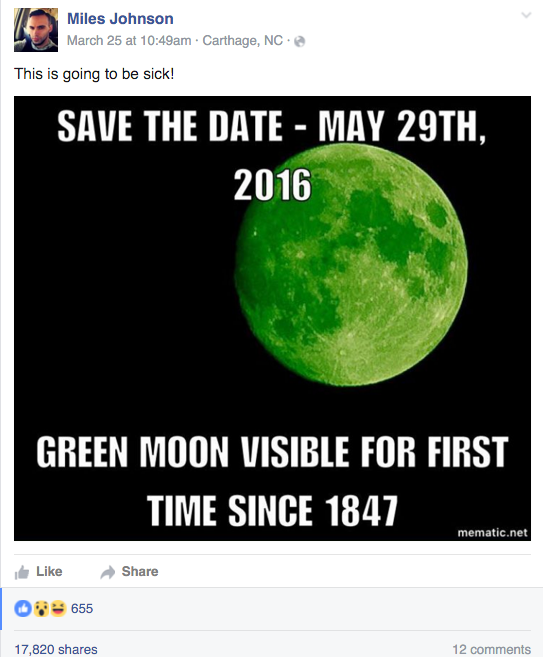
'Green moon on April 20, 2016? Not true'

No, there won’t be a green moon on April 20, 2016 … or on May 29. Some possible origins of this latest urban legend.

There are several versions this (completely untrue) story, and we’ve gotten many questions about it from within our community, from people wanting to know if it’s true. Here’s the main version: the moon will appear green for the first time in 420 years on April 20, 2016.

con'd


"Torvi" - hazel eyes, Viking face..


'Notorious Lola Montez kept the men in S.F. panting'

Lola Montez already had a racy global reputation when she landed in S.F.

Gary Kamiya - San Francisco Chronicle - June 1, 2014
  
On May 21, 1853, the most notorious woman in the world arrived in San Francisco by paddle-wheel steamer from Panama. Her name was Lola Montez.

She had come unannounced, so no one was there when she stepped off the ship at Long Wharf and made her way into the city. But her erotic exploits, political intrigues, violent temper and extraordinary beauty had made headlines throughout the world.

con'd


31 gets a release date and new distributor

Rob Zombie’s much anticipated release ‘31‘ has now got a release date. Stick September 16 in your diaries folks.

After a small issue with previous distributors Alchemy, the film has also secured Saban Films to help distribute the movie for it’s theatrical release.

“After meeting with Saban, it was obvious that this was the perfect home for ’31,’” said Rob Zombie. “They have a true understanding of the genre and how to handle it. I am very excited to work with them.”


The Bastard Fairies-We're All Going To Hell (Official Video)

The Bastard Fairies

THE NEW WEBSITE IS LIVE www.bastardfairies.com


Some Atheist podcasts use this catchy song from a few years back.


God's Angry Man - Werner Herzog [1/6]
 

Nick Paulsen
 

God's Angry Man - Werner Herzog's documentary on Dr. Gene Scott. Part 1/6.


Those outside of California may not remember the very zealous Glendale-based Dr. Gene Scott. He occupied one of the old UHF channels just prior to the great increase of cable networks. He would rant and rave to the point where you might end up just watching him to see what was up. He had a true cult following I think. The rest of it is on YouTube.


Myths: Lilith 

Thomas LeRoy


The Sect of the Horned God presents a video series of great myths. (If you are looking for porn, this is not your video.)


Music: Strange Ways -- Silent Partner (Youtube Audio Library)


Cat stands up to aggressive Boxer dog 


Сat fight with dog/Very brave cat 2013-09

Cats VS Dogs


'View From Space Hints at a New Viking Site in North America'

Ralph Blumenthal - New York Times - March 31, 2016


A thousand years after the Vikings braved the icy seas from Greenland to the New World in search of timber and plunder, satellite technology has found intriguing evidence of a long-elusive prize in archaeology — a second Norse settlement in North America, further south than ever known.


con'd


Lighthouse of Alexandria - The ancient Egyptians had massive unknown energy/light source


The Lighthouse of Alexandria and the Ancient Port of Alexandria

Ancientvine


Alexandria, Egypt was founded by Alexander the Great in April 331 BC ,and became the capital of the Graeco-Egyptian world. The second largest city in Egypt, Alexandria also was called "The Pearl of the Mediterranean". The ancient port city was home for one of the Seven Wonders of the Ancient World - The Pharos of Alexandria (The Lighthouse of Alexandria). 


Scarborough Fair - Nox Arcana

Nox Arcana


"Scarborough Fair" by Nox Arcana from the album Winter's Majesty. Original lyrics and musical arrangements by Joseph Vargo. Vocals performed by Jeff Endemann.


Interesting cover of 'Scarborogh Fair' by gothic band Nox Arcana.

.

Saturday, April 16, 2016

'Dracula Untold' (2014) - movie review; and the Romanians who saved Europe

'Dracula Untold'

Dracula Untold is a 2014 American dark fantasy action horror film directed by Gary Shore in his feature film debut and written by Matt Sazama and Burk Sharpless.[4] Rather than focus on Irish novelist Bram Stoker's 1897 novel Dracula, the film creates an origin story for its title character, Count Dracula, by re-imagining the story of Vlad the Impaler. Luke Evans portrays the title character, and Sarah Gadon, Dominic Cooper, Art Parkinson, and Charles Dance appear in supporting roles.

Principal photography began on August 5, 2013, in Northern Ireland. Universal Pictures released the film on October 10, 2014, in cinemas and IMAX. The film is the first installment of the rebooted Universal Monsters Cinematic Universe,[5] followed by The Mummy in 2017.

Despite mixed critical reviews, with praise towards Luke Evans's performance and the story, and criticism directed at the characterization, Dracula Untold was a box office success grossing $217 million worldwide.

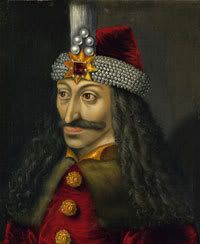
A few days ago I rewatched 'Dracula Untold', this time with the idea of examining the local Romanian legend and folklore... or even the European legend and folklore aspect of it. This can at times conflate with old pagan mythology. The overall Dracula legend is a fantasy based on combining the real historical character of "Vlad the Impaler" with old vampire folklore. I thought it was an interesting dark twist for a fantasy tale. My earlier pondering of some older native pagan tradition somehow rising to stop the Ottoman Muslim expansion had no basis in the movie or in actual history. However, it seems odd to me that Vlad Dracul was a member of an apparently Christian and "monarchical chivalric order for selected nobility" called the Order of the Dragon.


Serpentine symbolism is very seldom a part of Christianity. Serpent, dragon, or snake symbolism represents "knowledge," and is often conflated with the snake in the Garden of Eden. As to whether or not this order was a Freemasonic or Alchemical secret society, it seems possible. The Order of the Dragon used both Christian and serpentine symbolism. The society was present in Europe, especially Germany and Italy. One curious symbol is the red amulet worn by Vlad Dracul. Once I saw a plastic red Dracula amulet necklace on sale for Halloween. Illustrations of the real Vlad Dracul show him either wearing this red amulet as a necklace or as part of his royal headdress. Adding to the legend is that his name "Dracul" (House of Draculesti) sounds a little like "Draco".. such as a dragon; although I'll take that as mere coincidence.

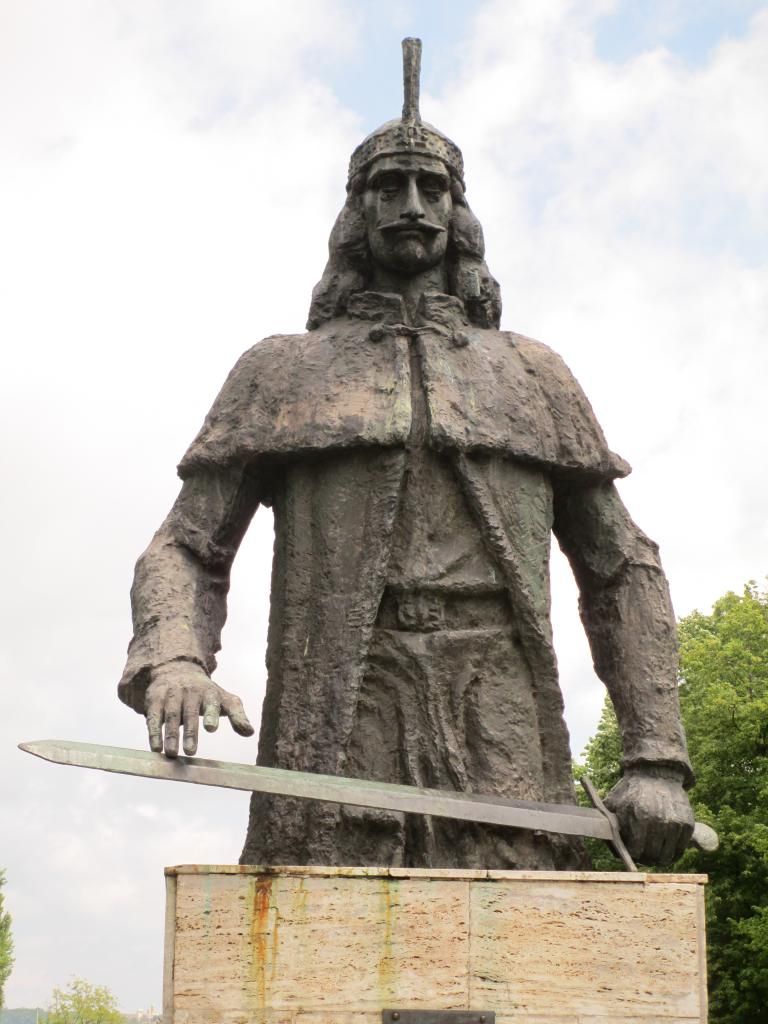
Although extremely brutal, in many ways we must view him as a hero. He literally stopped the Ottoman Empire by becoming even more brutal than they were. The Dracula legend of popular culture, as well as his own extreme actions, have probably prevented him from attaining the status of a true hero... such as a William Wallace. He is a folk hero today in both Romania and Bulgaria. As the old saying goes "he did what had to be done." The Romanians saved Europe. Vlad Dracul was a Charles Martel on perhaps an even grander scale. The Romanians were facing a much larger and more dangerous enemy in the Ottomans. The Battle of Calugareni took place well over a century later.

Battle of Calugareni

The Battle of Calugareni was one of the most important battles in the history of early modern Romania. It took place on 23 August (13 August on old style calendar) 1595 between the Wallachian army led by Michael the Brave and the Ottoman army led by Sinan Pasha. It was part of the Long War, fought between Christian and Ottoman forces at the end of the 16th - beginning of the 17th centuries.

The whole Ottoman forces were estimated at about 100,000 men, but not all of their troops were on the battlefield at Calugareni. It seems that about 30,000-40,000 Ottoman soldiers were involved in the battle.

Michael the Brave had in total about 16,000 men and 12 large field cannon, with Transylvanian (Székely) detachments.[5] Being heavily outnumbered, Michael the Brave strategically positioned his forces near a swampy field (near Neajlov River) that would negate the Ottoman's military superiority. South of the village of Călugăreni, where the Câlniştea river flows into Neajlov river, the terrain is a muddy marsh, surrounded by forests. A narrow bridge over the Neajlov river was a mandatory pass point. The battle had three different phases.


Islam vs Christianity - 23 August 1595 Battle of Calugareni ( Part 1)

IuliCata82Romania

IULIAN ROMANIA ^^^ Battle of Călugăreni was one of the most important battles in the history of early modern Romania. It took place on 23 August 1595 between the Wallachian army led by Michael the Brave and the Ottoman army led by Sinan Pasha.The whole Ottoman force was estimated to have between 70,000 and 100,000 troops.Michael the Brave had in total about 16,000 men and 12 large field cannons.Mihai continued his attacks deep within the Ottoman Empire, taking the forts of Nicopolis, Ribnic, and Chilia and even reaching as far as Adrianople. At one point his forces were only 24 kilometers from Constantinople. The Order of Michael the Brave, Romania's highest military decoration, was named after Michael !!!


Islam vs Christianity - 23 August 1595 Battle of Calugareni ( Part 2)


Vlad Dracul

'Dracula Untold' (2014) - movie review

The movie begins in Transylvania in 1442. The landscape was shown as dark, foreboding, and beautiful. Romania is indeed beautiful, as like an Oregon within Europe. Vlad Dracul was portrayed as the benevolent Prince of Wallachia, a forerunner of modern Romania. By his side, his wife Mirena; a strong noble character who finally dies in the soon-to-be struggle. He was entitled "Son of the Dragon," although I don't know if that is what Dracul really means; and as the "Prince of Transylvania." He grew up under Ottoman oppression, and had served as a forced conscription for the Ottomans; who had a practice of forcing regional rulers to give them young boys to train and use as cannon fodder for their own wars of expansion. I don't know how historically accurate this movie is, but I'll just go with it. He was something of a legendary warrior in his own service as a boy/young man, and had a long relationship with the Ottoman representatives who would soon invade his countryside again, particularly Sultan Mehmed whom he fought with as a conscription. They all grew up together in a sense, and now they were men.

The theme of the movie can be reflected by an interesting quote from Vlad Dracul in the movie: "Sometimes the world no longer needs a hero. Sometimes what it needs is a monster." It shows his transformation from a benevolent prince, to "Vlad the Impaler." The concept that an enemy can be so vicious that you must become like them in order to survive and defeat them. I think that's probably true. After the Ottomans returned, they demanded in no uncertain terms that the Prince hand over to them one thousand boys--including his own son--for military service to the Sultan.

Spoiler alert beyond this point!


.

.


While at first the Prince reluctantly went along with the Sultans demands, he changed his mind just as he was handing his son over to a small group of Ottomans whom he slayed all by himself. The war was on. This was similar to the dramatic scene in 'Braveheart' when the Scots finally let loose on an oppressive English Lord and a small group of his armed guard. The image of a boy finally standing up the class bully; a concept as old as mankind. I suppose you could say that any "bully" would be best served if they merely struck "fear" upon their victim, but not to the point of "desperation."

The Prince then enters a cave in the mountains where a cursed undead man, a vampire, dwells. This vampire cannot leave the cave until he can turn another man into a vampire. I don't recall all of the terms of this curse, but that's the basic gist of it. Vlad agrees to allow this vampire to kill him. He goes through a period where he is dead in the cave, then rises from the dead and leaves the cave... a clear allegorical "Jesus." However, you could also say that he allegorically "struck a deal with the Devil" as well. There is also a strong allegorical concept, shown in many movies, of an oppressed people "rising from under the ground" to face their enemy.

The deal was that he would remain "undead" with all of these dark powers for a period of three days, just as Jesus died for three days before coming back to life, and if he could avoid drinking human blood then he would return to being a moral again. If not, then he would remain undead, and the vampire from the cave would have to remain condemned to the cave. With these new powers, he could now turn into a pack of bats and fly and attack as a pack. He became almost indestructible, but could only go out when the sun went down. I took this all as to mean that the Wallachians, represented by the prince, regaining their ancient courage. This would actually be the reverse of the Christian concepts of "loving your enemies" or "turning the other cheek." There's also something of an Alchemical tie-in to all of this... "the dark arts" which were not necessarily evil, but can be used for good or evil. The symbolism of "bats" I took to mean as the resistors becoming "creatures of the night"... of which bats well represent.


There was a reference, I think perhaps by the Sultan, of "100,000" Turks will march on Europe"... apparently in reference to an unfolding plan. After the Sultan sees a large number of Ottoman troops impaled on poles, one of the wounded soldiers presented him with a message from the Prince: "Vlad Dracul hopes that you enjoy the view." There's nothing quite like some malevolent person or force getting a real taste of their own medicine. When the full Ottoman army finally does march upon Romania, the Sultan has them wear blindfolds so they cannot see all the impaled Turks on sticks. Apparently this sight really did instill fear upon the Ottomans at that time, but I'm not sure if they actually wore blindfolds.

After creating some new vampires from people who were dying anyway, the Prince and the Walllachians went on to defeat the Ottoman army. This allegory of "vampires" I think represented, as like with the "werefolf" legend, people who transform themselves in spirit into wild animals... often in order to face an enemy. The Vlad Dracul of the movie, as well as the other vampires, finally allows himself to die in the sunlight... becoming a martyr. It sort've reminds me of the old saying "it's not always the popular guy who gets the job done."

.

Friday, April 8, 2016

The Arctic Home in the Vedas: Part 21 - The migration of ancient Mediterraneans, Teutons... and Atlanteans?


Manly P. Hall - Serpents and Druids (Eire, Arya, Iran)

Culain ruled by Venus

A compilation I made of clips, chiefly following the ancient Irish/Aryan/Iranian trails, from Hall's "The Atlantean Hypothesis" lecture series.

************

Manly P. Hall discusses a possible Atlantean origin for the Druids coming from the west, as well as the ancient Mediterranean and Teutonic migrations from the east. He also makes distinctions between them and the proto-Europeans (ex. Basques).. In terms of ancient knowledge and occultism, nobody in modern history was as learned as Hall.


Saturn, the Druids, the Phoenecians, and the Wicker Man

Tim Hayes

Follow this weird, Saturnian line of descent from the ancient Phoenecians and the Celtic druids (who both practiced the sacrificial rites of Moloch/Saturn/EL) down to some of its modern incarnations in the Cremation of Care Ceremony and the Burning Man Festival.

************

The second video, from the Saturnian-themed Tim Hayes YouTube channel, follows a different hypothesis of a Phoenician origin of the Druids. The ancient Phoenicians were on the same cultural level as the Egyptians, Greeks, and Romans; but have been relegated to an occultic role by the powers that be. Could this possible connection explain the reason that Phoenician and Druidic are seemingly combined as one by the Bohemian Club? We know that they traveled far and wide, including the British Isles.

.

Thursday, April 7, 2016

"Ancient Aliens" in Val Camonica?


10,000 BC Old Alien Painting Discoverd In a Cave in Val Camonica, Italy 17. Dec 2011

Hibernate2012

Down below is cave painting is c.10,000 BC and is from Val Camonica, Italy.It appears to depict two beings in protective suits holding strange implements
Source: http://www.ufo-blogger.com/2011/12/alien-italy-cave-painting-10000-year.html

This is a part text from this page: http://www.nephilimskulls.com/Articles.asp?ID=151


This cave painting is c.10,000 BC and is from Val Camonica, Italy. It appears to depict two beings in protective suits holding strange implements. Notice the halo looking objects over their heads, which is identical to the ones in the photos above from Toro Muerto, Peru.


************


The second image has long been a part of the "Ancient Alien" hypothesis.

.

Wednesday, April 6, 2016

Polytheistic Religions in Pre-Roman Italy: Part III

South of Umbrians and Picenes, the Sabines, speaking Oscan and culturally close to Samnites, settled on Central Apennines. They were one of the most ancient populations in Italy and soon merged with Romans, to whom they handed down the pride they had in common with Samnites and the adherence to frugal customs and rural values we can find in archaic Roman writers, like Catone, who reports the presupposition that the Sabines’ name came from Sabo, son of Sancus, their main god, phonetic variant of Umbrian Saku, but this presupposition has no serious bases. Apart from Sancus-Saku, Umbrian religion and Sabine had much more in common: Sabines also worshipped the male parallel of Roman goddess Pomona, calling him Poimuni. Their goddesses Ardoina and Curi were identified respectively with Diana and Juno.

Vestini were very similar to Sabines. They settled in the Aterno valley and on Adriatic coast of current Abruzzo. They are known for the statue of the so-called Capestrano warrior; their name may come from the goddess Vesta, who became goddess of fireplace, home and preservation of life. Along the same river the Marrucini settled; they were an Osco-Umbrian population, too, and they might have been a branch of Marsi which moved north; both names may come from god Mars’.

We know very little about other Osco-Umbrian groups’ religion such as Aequi’s or Hernici’s, apart from what we can deduce from their belonging to this branch of Italic populations. We can deduce from Marsi’s name that they could practise a strong cult to the god Mars or that they might be born from a ver sacrum ceremony, as ancient sources say. Marsi settled at first in Sabine region, then moved to the region called Marsica from their name, under Umbrian pressure. Romans told that Marsi were snake-charmers or immune to their bite, so the snake should have had an important religious or totemic role among them, a role we can imagine linked to healing if we observe a christian rite which takes place in the same region nowadays, consisting in covering saint Dominic’s statue with snakes that are to be touched and taken by believers who want to heal or to preserve health. Marsi’s goddess Angizia held knowledge of medicinal herbs, of which they were experienced, and was a snake-charmer too.

The Paelignans settled in Samnio region, on Abruzzo’s Apennines, and made the Marsic league with Marsi, Marrucini, and Vestini; once they were believed to be of Illyric origins, but their language is Oscan. We don’t know much about their culture, because they romanized very quickly after the defeat they suffered during social war. The same happened with Frentani, inhabitants of basins of Fortore, Tiferno and Sangro rivers, on Adriatic coast of current Abruzzo and Molise. Their name may come from the word meaning “deer”, the sacred animal who led them during the ver sacrum from which they took origin.

The Volscians founded some cities which survived during Roman period: Antium, with a patron goddess who was interpreted as Fortune but had a larger “sphere of competence”: she was a goddess linked to fertility, birth, healing especially of reproductive organs, but also to navigation and agriculture; Anxur, where there were a temple dedicated to Iuppiter anxurus or Jupiter as a child, built in IV century a.e.v., over which Sulla made another temple to be built. Cassino is a Volscian city too, and there are traces of a cult to a deity of waters, later identified with Apollo.

Certainly Samnites are the most known among Osco-Umbrians, because of their pride and opposition to Roman conquest: these qualities are disclosed in books, where the role they had in Roman culture’s development is often forgotten. In facts, Atellans, farces of scurrilous humor, have a Samnite origin and were taken by Roman first attempt of literary production. For long Samnites were believed not to be a urban population: actually, while Samnites living on the mountains stayed reserved and conservative, those living in plains opened to influences coming from other populations, Grecians included, and rebuilt some cities: Pompeii, Etruscan city, was rebuilt by Samnites as the temple consecrated to fertility goddess of sulphurous waters, Mefitis, worshiped especially by Samnites, demonstrates; near the city of Capena, in southern Latium, there was a sacred area called in Latin lucus Feroniae, the wood sacred to the goddess Feronia, linked to springs and woods, whose cult was spread all over Central Italy: under Roman rule, this sacred area was widened.

As we have information about Umbrian religion from Gubbio’s tables, so we have information about Samnite religion from Agnone’s tables, regulating the practice of cult inside the sacred enclosure of Agnone, consecrated mainly to Ceres (Kerres, in their language) and subordinately to sixteen deities listed in these tables, often called “Kerriiais”, meaning “Cereal” and thereby “who makes grow”, referring to their function of inducing growth and coming from the name of the goddess Ceres, goddess of vegetation and harvest.

These deities are: Vezkei, in Latin Veiovis; Evklui Paterei, Father Euclo, called Hades or Hermes by Grecians, so he may have been a psychopomp god; Futrei Kerriai, Ceres’ daughter; Anter Statai, or Stata Mater for Latins; Ammai Kerriiai, Maia, Italic goddess of Spring, later identified with her Greek namesake, Hermes’ mother; Diumpais Kerriiais, Nymphs of springs; Liganakdikei Entrai, deity of vegetation and fruits; Anafriss Kerriiuis, Nymphs of rain; Maatuis Kerriiuis, dew’s goddess; Diuvei Verehasiui, or in Latin Jupiter Virgator, whipper, maybe someway bound to Lupercalia rites, during which some priests hit with leather straps the hands of women stretching out them to ensure fertility; Diuvei Regaturei, Jupiter Pluvius, who makes it raining; Hereklui Kerriiui, Hercules; Patanai Piistiai, goddess of wine making; Deivai Genetai, in Latin Mana Geneta; Pernai Kerriiai, Latins’ Pales, goddess of sheep farming; Fluusai, Flora, goddess of earth and patron of sprouds.

Samnites living near Agnone paid a tax for sacred enclosure’s maintenance and tables says that the enclosure belongs to those who paid this decima and have the right to attend it. There were fifteen altars inside this sacred garden; rites honoring Flora were performed outside it. Agnone’s sacred garden is an example of what Samnites’ first worshiping places looked like: they were open spaces, woods and valleys; only later Samnites began building sanctuaries, the most known of which is the sanctuary near Pietrabbondante, federal sanctuary of Samnite League. It had a big temple with three cellae and three altars dedicated to three deities, one of which was the goddess Victory, and a theatre. The architecture of this sanctuary shows consequences of the influence exerted by Grecians since VI century a.e.v. Mamerte, parallel to Latins’ Mars, was a very important god; his comrade-in-arms was the god Heres; like Sabines, Samnites worshipped Famel, goddess of earth. Lucina, goddess of birth, was a so important goddess that first Romans adopted her as an independent goddess and later her name became one of Juno’s appellations. Samnites had a sacred animal, like other Osco-Umbrian populations; theirs was the bull, while the cock was Samnite league’s sign.

Hirpini had the wolf as sacred animal and their name comes from the Samnite word for wolf, hirpus. They were an Oscan-speaking population, settled in southern Sannio, where Romans founded the colony of Beneventum. They, or their priests, were also called Hirpi Sorani (wolves of mount Soratte, from the place where this cult was celebrated); the historiographer Servius said that Hirpini practised the cult to Dis Pater, a Latin deity of underworld, with whom the original deity must have been identified, so some scholars believe that the adjective “Sorani” may come from Suri, an Etruscan underworld god. Hirpini also practised fire-walking, walking on coals with bare feet.

Lucanians’ sacred animal was the wolf, too, if we consider their name as given to them by Grecians, coming from the word meaning wolf, lukos; according to some philologists, their name is rather derived from the Latin word for “sacred wood”, lucus.

To their south, the Bruttii settled in current Calabria; ancient historiographers said they were shepherds or servants to Lucanians, but soon rebelled against them. They were a rough and nomadic population who conquered many cities of Magna Graecia before being defeated by Romans during the Punic Wars, when they were Hannibal’s allies. Archaeological findings demonstrate that they never founded real cities and their settlements consisted in an oppidum (fortification) and its connected villae. We don’t have traces of their culture.

The third Indo-European wave came from Illyria, preceding those of Grecians, Celts and Germans: various populations crossed the Adriatic and settled in current Apulia, between Abruzzo and Marches where overlapped to Osco-Umbrians population (Picenes) or in current Veneto. In Apulia, Illyrians were Daunii, Peucetii and Messapians; Liburni  settled in Picene region: we don’t know much about their religion because they merged with local Osco-Umbrians so that some historians believe Illyrian influences to be the result of relations at a distance and that Liburni never really settled in Italy; so Veneti were Illyrians too, and archaeologists prefer calling them Palaeoveneti, to avoid confusion with other populations reported under the same name, for example a Celtic group settled in Brittany, skillful navigators defeated by Cesar.
This confusion derives from uncertain origins of the name Veneti: it may come from the root ven- meaning “loved, friend”, and thereby Veneti means “members of groups united by blood ties”, or may come from a similar root meaning “to win” and so Veneti means “winners”; so Veneti is a generic name. The Veneti we are talking about may be, according to some sources, the Enetoi (Greek word for “praiseworthy”) mentioned in Iliad as a population coming from Paflagonia and by Herodotus as an Adriatic population, known to Grecians and then to Romans as skilful horse breeder. The so ancient use of this name doesn’t implies the existence of an original group later divided. The Palaeoveneti came from Illyria in XIII century a.e.v.; their language, attested by inscriptions, is an Indo-European language with similarities with Italic, Greek and Germanic branch, while their alphabet derives from the Etruscan alphabet of the city of Chiusi by adding the Greek letter O (in facts, this sound doesn’t exist in Etruscan language) and they have a syllabic script.


The Palaeovenetic culture is also called “atestina”, meaning “of the city of Este”, being this city their principal centre, near which there were four temples. The main one was dedicated to the goddess Reitia, connected to healing, as the ex-votos found around it show, but also to writing, as many alphabetic tablets and styli for writing have been found near the temple. Maybe the sanctuary contained also schools. The other temples were dedicated to the Dioscuri (Greek interpretatio of twin deities, common feature among Indo-European religions), to a warlike goddess whose name is not known, and the fourth may have been an auguraculum (a place where divination was practised). Most of Venetic temples are near waters; in Cadore region (Alps of current region Veneto) there was a temple consecrated to a triform goddess or to the god Trumusiate; near Abano’s thermal spring the cult of Hercules was practiced and there was a temple to the god Apono.

Iapyges was the collective noun for all the Illyrian population settled in current Apulia, who were believed to come from Crete according to some ancient sources: Sallentini, Calabrians, Messapians, Peucetii, Daunii. We don’t know much about Sallentini, Calabrians and Peucetii; we know something more about Daunii and Messapians.

Daunii settled in northern Apulia; they didn’t pass down much of their religion, but there remains some anthropomorphous stelae, bearing arms and hands drawn on them. Male stelae have an armor drawn on them, female ones a dress; some have a pin at the top, on which a head should be put. The of the entity drawn on the stele, which may be related to commemoration of dead people, was shown by other drawings: jewels, weapons, spheroid graphemes, colored scenes with people and animals. Scenes are different according to the stele’s sex: male stelae have fighting and hunting scenes, while female ones have a great variety of themes. On the latter representations of opium poppies were notices, so it is thought the Daunii used this flower not only for healing, but also for ecstatic and religious purposes.

Messapians settled in southern Apulia; they went to Italy during the Iron Age and stayed in touch with other Illyrian populations, both with those on the opposite coast of Adriatic and with those who came to Italy too, especially with Veneti. Some ancient historiographer, for example Herodotus, said Messapians were descendant of Cretans, who merged with local population. Messapian language is attested by many public, funerary, votive and numismatic inscriptions in Greek alphabet from Taranto and it is an Illyrian language. Their religion went under Grecians’ influence so that some Messapian deities have names which are very similar to those of Greek deities. In Torre dell’Orso’s and Roca’s inscriptions there are some names of typically Messapian deities: Tator or Taotor, one of the most important gods, or Batio, who was worshipped in brambles (and so his name, from the Messapian word for bramble) and represented sometimes as a god and sometimes as a goddess breast-feeding her child. Later, Batio was identified with Jupiter and worshiped as Jupiter Batio, but the cult of the goddess of growth survived in post-messapian period. Ana was another goddess, later identified with Aphrodite, as in a dedication on a capital to Aphrodite Ana.

 This is the general picture of Italian situation. Of course, it’s only an overview, just to give an idea of complexity and tissue of populations in the territory of what we call Italy nowadays. Even though I introduced them as distinct populations, actually they overlapped everywhere until they definitively merged under Roman rule.

The Federazione Pagana doesn’t have a predominant ethnic-religious orientation (except in “numeric” sense of word, I mean for what concerns the majority of members) and so its purpose is to support development of paganism in Italy and thereby of these paganisms and others and to let every single person search for his/her historic and emotional roots.

Manuela Simeoni


[2] It’s what happens with those who start studying “stregheria”, but they believe they can’t practice it or they won’t find a master because they don’t have Italian ancestors.

[3] Ante Era Vulgare: before current era, it means b.c.

[4] From now on, I will use mainly Latin names of population where I couldn’t find the English word for them. Latin names are in italic.

.