Wednesday, August 4, 2010

Iron Mountain and the Settlement of the U.P. - Part 3


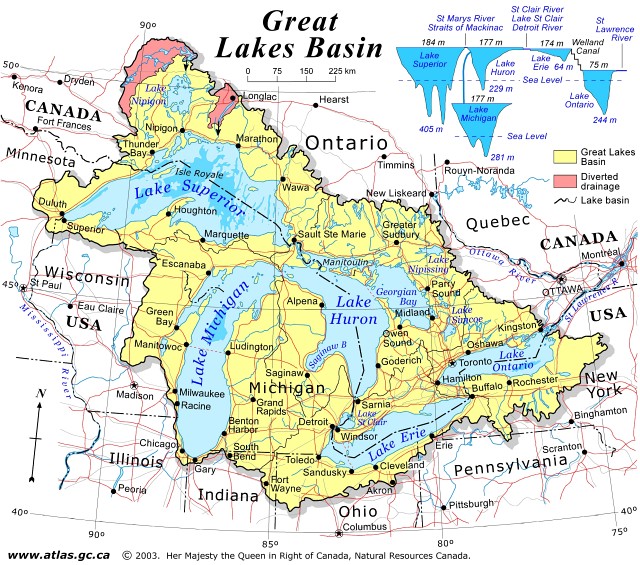
The following text is from a historical study by Northern Michigan University entitled Recorded in Stone: Voices on the Marquette Iron Range. It's from the webpage called Italians in Marquette County. This county is located in the northern U.P. It can be said that the vast majority of these "Italians" have been Piedmontese, Lombardian, or Tuscan in origin; despite the fact that they are presented in some ways as standard East Coast Italian-Americans. Still, it captures some essense of the soul of our people, who were true pioneers of the region. On the link, there are some good photographs, but I don't want to add them here, as I'm trying to get away from the habit of using other sites bandwidth, although occasionally it's necessary. There is some audio from interviews of very old-time residents of the county as well, which comes on automatically after you click on the following link.


Italians in Marquette County

By: Russell M. Magnaghi


Background

Italy was a geographic description and not a unified nation until the 1870s. With the fall of the Roman Empire, Italy deteriorated into small kingdoms and city states which were dominated by France, Spain, and Austria, not to mention the Normans and Arabs. The central part of the peninsula had come under the control of the papacy and was known as the Papal States ruled by the pope. The unification of Italy began in 1861 and was finally completed in 1870. Conditions in Italy were poor for the average peasant and many sought a new life in the Americas. It was natural that with the opening of the copper and iron mines of the Upper Peninsula, Italian immigrations would be attracted to the area.


English Era

The first known Italian to visit Marquette County was Count Paolo Andreani who visited the Lake Superior country in the summer of 1791 before the region had been given to the United States by the British. Andreani was leading a scien­tific expedition to study the shape of the earth. He took measurements at various locations enroute and is considered the first known Euro­pean to circumnavigate Lake Superior at one time. Naturally he camped at least one night at Little Presque Isle which was the principal camping site for travelers along the south shore of Lake Superior. From there they would traverse across Marquette Bay and land at Shot Point or vice versa.


The Iron Era

The Marquette Iron Range was the first of the iron ranges to be discovered by William Burt on September 19, 1844 in Negaunee. Lacking a source of laborers, immigrants were encouraged to come to the Range and help extract the iron ore. The first known Italian in Marquette at this time was Eugenio Borgi who was born in Naples in 1836 and in the summer of 1860 was working as a day laborer. Also listed on the Federal census was Mary Black, a 29 year old woman from Piedmont employed as a servant. Unfortunate­ly that is the only time that we hear of these two Italian immigrants.

In the summer of 1863 Philip and Josephine Marchetti arrived at Eagle Mills, east of Negaunee with a group of Irish. These were the pioneer Italians to the iron range Philip was from Corsica, had migrated to the Italian mainland and worked in the marble quarries. Soon after serving in the Italian Legion during the Crimean War he migrated to the United States. By October 1860 the Marchettis were living in western Massachusetts where Philip worked on railroad tunnel construction. Their daughter Mary Ann was born in Pittsfield, Massachusetts in 1860. Although they kept their property at Eagle Mills and used it as a farm, they eventually moved into Negaunee where Philip developed real estate holdings. Due to these early Italian settlers, Negaunee became the focal point on the Marquette Iron Range for the settlement of these early Italians immigrants.

Another early arrival was Batista Barasa, who was born in Quasolo, Italy in 1837. He worked in France and Spain with his brother on railroad tunnel construction before he migrated to Massachusetts and eventually to Negaunee in 1871. His brother Peter (b. 1842) came to the United States in 1877 and three years later was living in Negaunee. By 1873 there were other Italians in Negaunee: John Bastedo, a wagon maker and John Mazara, a laborer at the Jackson Mine. By the late 1870s Dominic Dighera was also a county resident. These and other early Italians were attracted to Marquette County through the efforts of Barasa or what is known as "chain migration:' One immigrant would arrive in a location and then sent letters which brought his friends and relatives. The area was developing and there was ample economic opportunity.

With the development of shaft mining the earlier immigrants – Cornish, Irish, and Germans - were no longer needed on the range and most of them began moving to newly opened mining frontiers either in the Upper Peninsula, Minnesota or in the Far West. Although there were 41 Italians in Negaunee in 1880 it was seven years later that the first large scale migration of Italians began into the County. At first the Italians were from northern Italy: Lombardy, Piedmont, Venice and the Tyrol and they settled in Negaunee. Initial­ly 50 Italians arrived; followed in the spring of 1888 by an additional 100. Although they inherited the jobs at the lowest end of the employ­ment scale as trammers or iron ore shovelers, they wrote back to Italy and encouraged others to join them. The wages and living conditions on the Marquette Iron Range were a great improvement over economic and work conditions in Italy. In the 1890s southern Italians primarily from Calabria but also from Naples and Sicily settled in Ishpeming. They experienced a similar migration process. By 1910 Italians comprised 15% - 16% of the labor force on the Range. There were a great many Italians working as miners and in many of the mines a greater proportion of the Italians were working as laborers and trammers. In 1910, of the 907 Italians with occupations, 741 or 81.6% were miners. There were also 51 Italians (6%) working on the railroad, 24 (2.8%) listed as laborers, and 20 working in the iron furnaces in Mar­quette. Most of the Italian businessmen were located in Negaunee and Gwinn at that time. There were 16 boardinghouse keepers, 11 saloonkeepers, 5 merchants, 5 bakers and 3 shoemakers. This breakdown of occupations was consistent with other Italian com­munities in the Upper Peninsula.

Although Italians were centered in Ishpeming, Negaunee and Gwinn, a small group of them headed by the DePetro family resided in Marquette. The DePetro family came to the Upper Peninsula to work on the railroad in the Sault Ste. Marie area. When they heard that the Cliffs-Dow plant in Marquette needed laborers to work in the charcoal-chemical factory, they moved west. The extended family continues to live in Marquette.


Politics

Although it was usually atypical in other areas of the United States, the Italian immigrants in Marquette County successfully became involved in local politics. Batista Barasa, who became a citizen in 1879, was elected to the Negaunee City Council when the community re­ceived its charter in 1890. Felix Chiabotto, a Negaunee merchant was elected to represent the 2nd Ward in 1897. In Ishpeming, Michael Tassin was a policeman and well-known for his efforts to get his fellow Italians to become citizens and then to vote on Election Day. These activities of the immigrants were unique considering that elsewhere in Michigan, Italian-Americans did not become involved in politics until the 1920s. In the late 1980s this interest in politics continued. Frank Valenti who was born in Italy served on the county commission. Representative Dominic Jacobetti who was born in Marquette County was serving in the Michigan House of Representatives. He had served since 1954 and held the record for the longest serving legislator serving the state in public office.


Entertainment and Recreation

The Italian love for music is well known. As early as 1884 the Marquette Mining Journal noted that an Italian band provided excellent dance music in Marquette County but nothing more was heard of this group. A number of Italian music teachers appeared in the various communities such as Nettie R. Calamata who in 1906 was offering mandolin, guitar, and banjo lessons.

The Italian Band of Negaunee was organized by January 9, 1907 when it provided music for Mike Marrietti's saloon called Hogan's Place. In the summer it provided music for picnic dances. In July 1910 it was formally organized and continued to entertain the public. In 1916 the Negaunee Star Band was led by Peter Zabotti and played social dances. In July 'Professor Joseph Bangiovanni's String Orchestra was presenting "jitney dances" in Negaunee's Cleveland Park. Nine years later Joseph Violetta was the leader of the Negaunee City Band.

The most famous band in Ishpeming's history was Vampa's Band. Professor Vampa arrived in the community in 1915 and began organiz­ing the new band. He was able to get even the most musically illiterate to read music and by January 1916 his band with thirty-four members played for the first time and was an immediate success. Vampa's Band played at the Marquette County Fair, Memorial Day and Columbus Day celebrations and at other dances and festivals given by local clubs and lodges.

Then at the peak of the band's rise to success Vampa left town for Flint and eventually Italy. In March 1919 the band was reorganized with Felix Catania of Chicago as the new director. However due to a contractual dispute Catania left Ishpeming by July. In August 1920 Vamp returned from Italy and in August 1921 a new band made its first appearance at the annual St. Rocco-St. Anthony Day festa. The band also played in local theaters, at dances and one year at the L'Anse firemen's tournament. A little later Vamp joined forces with Frank Trombley to create a short-lived symphonic orchestra with between 65 and 75 members.

The local Italians directed their entertainment and recreation toward their families. Home parties were popular with an accordion and violin or guitar providing the music on a Saturday night. During the warm summer months families organized picnics while the Italian lodges also held annual picnics. The men played bocce in backyards or saloon-side courts and got into the Italian card game of morra especially for drinks in saloons. Some of the Italians fished and hunted both as recreation and also as a means of augmenting their families' food supply.


Home Life

The first Italians who arrived on the Marquette Range were usually single men who once they got settled sent for their wives or got married. Many lived in company housing, at first, but tended to purchase their own homes when this was possible. Families took in boarders from the same village or those who were family members as a means of providing housing and also adding to the family income.

Each family maintained a garden which provided the household with much of the vegetables that the household needed during the year. Besides what was planted the women and children gathered fruits and berries and made jams and preserves from them.

If possible families kept a pig and cow. In November the pig was usually butchered, prime pieces preserved in crock jar covered with liquefied lard and the small pieces were processed into sausage. Blood sausage was also made at this time. It was sometimes said that every part of the pig was used except the squeal. The cow pro­vided milk, butter and cheese for the family and if there was a surplus it was sold to customers in the vicinity. The Italian family became self-sufficient so that they usually only had to purchase items such as coffee, sugar, or olive oil. Pasta and Italian bread could be made at home but it was usually purchased.

In the late summer orders were taken for grapes and beginning in September train loads of grapes arrived at railroad sidings in Negaunee and Ishpeming. Most families made as many as 150-200 gallons of wine which would last them through the year. Some people would take the remaining grape skins and distill them into a potent alcoholic drink called grappa. Today a number of people make sausage from family recipes but the wine making tradition has declined because of the cost incurred making your own wine.


Cultural Activities

Most of the Italian immigrants who settled on the Marquette Range were literate. As a result many of them kept in touch with the news through Italian-language newspapers. Some subscribed to papers published in New York City like the ever-popular Il Progresso while others read the long-lived Il Minatore Italiano (The Italian Miner) which was published in Laurium between 1896 and the 1930s or the transient papers such as La Democrazione Italiana of Hancock (1917) or La Sentinella (The Sentinel) published in Calumet around 1906.

In Negaunee a group of Italians organized a dramatic group. During the 1920s and 1930s the group entertained the Italian colony with popular plays produced in the Negaunee High School auditorium.

Columbus Day (October 12) was a day on which the Italians affirmed their ties with their adopted nation. From the early part of the 20th century the day has been celebrated in a variety of ways. In the early days there were elaborate parades, dinners, dances and political speeches. Since Columbus Day came close to Election Day, politicians saw it as a good time to campaign and thus attended the festivities. The last major dinners were sponsored by the Lòggia della Neve, Order of the Sons of Italy in the 1980s. Today these elaborate celebrations have dramatically declined. Only the Paisano Club of Marquette County holds a dinner for its members. Usually a talk is given promoting Italian heritage.

The Italian communities on the Marquette Iron Range never had their own Catholic Church. They made up a significant portion of the congregations of St. Anthony's Church in Gwinn, St. Paul's in Negaunee, and St. John's in Ishpeming. The most prominent Italian-American Catholic clergyman and community was the late Monsignor Louis Cappo (d. 2007) who was pastor of St. Peter Cathedral parish in Marquette. A few Italians joined some of the local Protestant churches and some of their off-spring have become clergyman.


Lodges and Clubs

The mutual beneficial societies were a characteristic feature of all Italian communities wherever immigrants settled. At a time when there were no Social Security benefits nor unemployment or disability insurance or death benefits, the Italians along with other immigrants established these societies. They traditionally paid an initiation fee and then 50 cents per month. If they were sick or injured they received $1.00 per day, their families received a benefit at death and the membership attended the funeral under pain of a severe fine.

The oldest of the Italian fraternal organization in Marquette Coun­ty was Società Fratellanza e Mútuo Soccórso/Fraternal and Mutual Aid Society which was established in Negaunee in 1890 and incor­porated on February 6, 1892. Within a few years it boasted over 500 members who paid $1.00 per month for illness and accident benefits and an additional $2.00 for death benefit which was collected when needed.

The biggest activity for the lodge was the annual picnic held in July or August. In early July 1910 their annual picnic was held in Cleveland Park where there was boating, swimming and athletic events, eating contests and the card game, morra. A seven piece band was included in the 1915 pic­nic which became a common feature. During the Italo-Turkish War in 1911-1912 the lodge sent $25 to the Italian Red Cross for the widows and children of Italian soldiers killed in the fighting. Over the years the organization was active but as the immigrants died out there was no longer any interest in such an organization. On October 15, 1962 the lodge was closed and the remaining members were paid with the assets.

Over the years a number of fraternal organizations were formed in Negaunee. Società Italiana di Mútuo Soccórso Giuseppe Maz­zini/Italian Mutual Aid Society, Giuseppe Mazzini was founded on June 24, 1908 with over 130 charter members. North Italians from Lombardy and Venice on September 10, 1911 established the Società Italiana di Mútuo Soccórso Lombarda-Veneta di Negaunee/Italian Mutual Aid Society, Lombardy-Venetia of Negaunee. They were in­corporated on March 15, 1912. They first met in Scandinavian Hall where they wrote their constitution. They held their annual picnic in Cleveland Park and participated in both July 4th and Columbus Day parades and celebrations. In 1912 the Società Unità Diposero was established and on September 28, 1913 Grove No. 3 of the United Order of the Druids was formed and in 1925 a women's branch was created. Both organizations were still active in Negaunee in the 1980s. A little known organization: Alpine Italian Club flourished around 1915. There is little information concerning this lodge except that is existed and was incorporated in Marquette County.

Four of the lodges: Mazzini, Diposero, Fratellanza, and Lombardi joined in securing plots in the Negaunee cemetery. These plots were for single members without families in the community. A large monument which is still standing was surrounded by the graves of members. When these plots were no longer in demand they were sold to private individuals.

Léga Cittadina Italiana di Mútuo Soccórso/Italian Citizen League of Mutual Aid was formed in May 1918 with 50 members and incorporated on February 23, 1919. Its goal was "of having every adult Italian parentage in Marquette County duly qualified as a citizen of the United States as well as member of the League." The lodge pro­moted attendance at citizenship classes held in the high school by the Negaunee Board of Education and there were sick and death benefits. In 1920 two-thirds of its members were from Negaunee while the rest were from Ishpeming and North Lake and there was hope of establishing a branch in Princeton.

On September 23, 1907 the Italian colony in Princeton formed the Società Guglielmo Marconi di Mútuo Soccórso. They constructed their own hall where they held their meetings, dinners, and dances. The structure stood until the early 1980s although the society had been disbanded earlier.

The Italian community is Ishpeming established a number of lodges whose histories have been intertwined over the years. On August 6, 1899 Società di Beneficènza Italiana was established, followed on February 23, 1902 by Società Operàia di Mútuo Soccórso, Umberto I. The Società di Mútuo Soccórso, San Rocco was created on September 17, 1922 by uniting the Confraternity of San Rocco formed in 1918 and the Società di Beneficènza Italiana, due to the fact that the members belonged to both lodges. The name of the Società Operàia di Mútuo Soccórso was changed to Società Operàia di Mútuo Soccórso, San Antonio di Padova on April 26, 1936. The last amalgamation of these societies took place on September 20, 1942 when the two remaining were united and renamed: Società Americana ­Italiana di Mútuo Soccórso, San Rocco e San Antonio di Padova. Into the 21st century the San Rocco Society as it is popularly known continues to celebrate the feast day of St. Rocco in mid-August.
In the past the celebration was elaborate as witnessed in August 1943 when Frank Vallela was the chairman:

*9:30 a.m. music

*10:00 a.m. parade through Ishpeming to St. John's Church 11:15 a.m. High Mass, St. John's

*12:30 p.m. parade through Ishpeming

*2:00 p.m. public picnic with band music and events: women's nail driving contest, "coins in the pan," and the greased pole contest in which the lucky individual who reached the top won $5.00 which was placed there

*7:00 p.m. Negaunee City Band

*8:00 p.m. Negaunee Turners, an aerobatic and musical set 9:45 p.m. Negaunee Turners

In the late 1980s and the 1990s the St. Rocco festival was re-emerging and held a small celebration in the St. John church yard. However by the early 21st century a rather elaborate celebration had developed and attracts both Italian-Americans and the general public as a major event in Marquette County. Hundred usually attend the celebration attracted by the food, music and dance.

Italians from the Neapolitan community of Montefalcone in Beneven­to in Ishpeming formed a society of their own on June 5, 1910 which was appropriately named: Società Napoletana di Mútuo Soccórso ...Composto di Falconese. The first president was Leonardo Avella. The organization continued in existence until the early 1970s when it too was disbanded.

The Italian-American Federation of the Upper Peninsula was organ­ized in October 1909 in Calumet. Its purpose was to unite the numerous Italian societies throughout the region and over the years a number of Marquette County societies were members. Over the years a number of its conventions were held in Negaunee and Ishpeming where there were parades and grand celebrations. However over the years interest in the organization declined and in September 1982 it was formally disbanded in Iron Mountain.

With the decline and termination of most of the old lodges a new idea was brought forth by Monsignor David Spelgatti of Ishpeming. A new organization should be organized to help preserve the Italian ethnici­ty which still existed in the county. In 1964 the Paisano Club of Up­per Michigan was formed with the goals of commemorating, preser­ving and highlighting the traditions of the Italian immigrants and their American-born children. Since that time the club has flourished with branches forming in Dickinson and Gogebic Counties. In 1982 Presi­dent Leonard Altobello and Msgr. Spelgatti were successful in their efforts to secure Professor Russell M. Magnaghi of Northern Michigan University to carry out the necessary research to preserve the history of the immigrant experience in Upper Michigan. As a result of this encouragement and generous financial assistance, artifacts, photographs, published and unpublished material along with 150+ oral interviews on tape have been preserved. To date the Paisano Club is the only organization in the state of Michigan to conduct such an ex­tensive research project on immigrant history.

The last of the ethnic organizations to be formed in the county was the Lòggia della Neve/Lodge of the Snow of the Order of the Sons of Italy. It was established in May 1981 and continued into the late 1980s. It provided money for charitable organizations, scholarships and had an annual recognition dinner held in October to also commemorate Columbus Day. Thus we see that the Italian heritage in Marquette Coun­ty continues to be maintained. However the future of these ethnic organizations is precarious due to the many interests facing young people many of whom come from mixed ethnic backgrounds and do not which to call their focused nationality.


Bibliography

Anonymous. “The Italian Immigrant.” Harlow’s Wooden Man 10:2 (Spring 1974): 3 and 9.

Magnaghi, Russell M. Miners, Merchants and Midwives, Italians in Michigan’s Upper Peninsula. Marquette, Mich.: Belle Fontaine Press, 1987.

---. Italians in Michigan. East Lansing: Michigan State University Press, 2001.

Developed for the NMU Archives on-line project. Completed 07/08/2008)

**************************************************

One interesting excerpt to consider was the following: "North Italians from Lombardy and Venice on September 10, 1911 established the Società Italiana di Mútuo Soccórso Lombarda-Veneta di Negaunee/Italian Mutual Aid Society, Lombardy-Venetia of Negaunee. They were in­corporated on March 15, 1912. They first met in Scandinavian Hall where they wrote their constitution. They held their annual picnic in Cleveland Park and participated in both July 4th and Columbus Day parades and celebrations. In 1912 the Società Unità Diposero was established and on September 28, 1913 Grove No. 3 of the United Order of the Druids was formed and in 1925 a women's branch was created. Both organizations were still active in Negaunee in the 1980s. A little known organization: Alpine Italian Club flourished around 1915. There is little information concerning this lodge except that is existed and was incorporated in Marquette County."

It's actually very rare to hear about any association, past or present, in relation with Lombardian heritage in the United States, so that makes this somewhat remarkable. Also, that wasn't necessarily that long ago in a historical American sense. Only about 97 years or so. Also curious was the Druidic order. That could possibly, although unlikely, be a connection to the Gaulish Druidic history. Also, names like Del Club Alpino or Alpine Italian Club seem to tie into our heritage as well.

The article also confirms that it was in 1909 that the Italian American Federation of the Upper Peninsula was formed, as an umbrella group, and disbanded in 1982. However the Paisano Club, formed in 1964, has taken up the task of recording this part of the history of the region.

One subject that we will cover soon is the resurgence of "Swiss Clubs" in California. They are mostly Ticinese of Lombardian ancestry, and wouldn't it be great to see these expressions of Lombardian ancestry in California and the Great Lakes region get together someday.

.

Tuesday, August 3, 2010

Iron Mountain and the Settlement of the U.P. - Part 2


[This remarkable Catholic church was built by Iron Mountain's Italian community in 1902. Although it looks almost contemporary, the design is based on Renaissance parish churches in Italy.]


Italian North Side - Iron Mountain

(from Hunts' Guide to Michigan's Upper Peninsula)


It's not like it used to be in this tidy, tight-knit neighborhood that grew up just after the turn of the century north of the Chapin Mine and downtown. Today descendants of Italian miners have lost their language and intermarried. There are lots of non-Italian names among the parishioners of Immaculate Conception Church, built by Italian immigrant volunteers in 1902.

[The wine press on the roof is the symbol Bimbo Constantini gave his neighborhood gathering place. The outline of the pig on the front is a clue to the porketta sandwiches made here.]

But this trim working-class neighborhood has the feel of a cherished way of life where camaraderie and shared meals still mean a lot. New aluminum siding on these modest, well-kept homes is a point of neighborhood pride. There are still a few inspiringly serious vegetable gardens maintained by the older generation, with plum tomatoes staked and cut back for maximum growth in the precious summer warmth. Some small grocery stores remain, underscoring Iron Mountain's reputation for its ethnic food.

In March of 2000 the North Side of Iron Mountain basked in the national spotlight as its own Tom Izzo coached the Spartans of Michigan State to the national collegiate basketball championship. Izzo's Awnings and Izzo's Shoe Hospital, owned by relatives, appeared in Detroit papers. Newspaper stories professed amazement at how well the little guy from the U.P. meshed with the big black players from Flint.

The press, in its common way of not looking beyond the superficial stereotype, failed to see the similarities. Like Izzo, the "Flintstones" came from strong families with working-class backgrounds that emphasized team playing. True, the U.P. is entirely white except for Native Americans and a few college students and Asian and African-American professors and other professionals. But middle-aged people who grew up in the U.P. learned to deal with schoolmates from widely varying backgrounds. Maybe that has something to do with the coincidence that Detroit Lions coach Steve Mariucci was a high school, and Northern Michigan University classmate of his friend Tom Izzo. A number of restaurants have little shrines to these famous native sons. A more lasting legacy is the state-of-the-art Izzo-Mariucci Fitness Center and meeting space on Carpenter and West, near Iron Mountain High School, built with money the coaches raised.

To explore the Italian North Side, drive along Vulcan, the north side's main street. It parallels U.S. 2. Get there by turning east onto Third at Hardee's, or onto Margaret across from the A&W.


Highlights of the neighborhood include:

• BIMBO'S WINE PRESS (L'Torchio di Vino), once a typical corner bar, became a center of local Italian-American culture and sports when the late Bimbo Constantini, a neighbor and retired teacher, purchased it. (See Restaurants.)

• CRISPIGNA'S ITALIAN MARKET is a small grocery/liquor store that uses old family recipes to make its own ravioli (sold frozen), Italian sausage, and red sauce. It carries imported Italian food, candy, and wines. It's also a Western Union office and Greyhound depot. After the Crispignas' daughter lived in Italy, she came back deciding to join the family business and help remodel it with a stylish continental rusticity. On Margaret at U.S. 2, kitty-korner from the A&W. 774-0266. Open 10-5:30 Central Time. Handicap accessible.

• The IMMACULATE CONCEPTION CHURCH is not to be missed on any north side tour. It's an authentic bit of vernacular Italian architecture, complete with big scrolled volutes on the front façade and an attached campanile (bell tower). The stuccoed interior is peaceful and rather spare, not the heavily ornamented neo-Baroque style often seen in Catholic churches of that era.

This homemade elegance is the result of the church's unusual history. Father Giovanni Sinopoli, part of a Catholic order founded to minister to Italian immigrants, came to Iron Mountain from Italy in April, 1902. Immediately he set about organizing volunteers to construct a new church. Sandstone was quarried on nearby Millie Hill, just east of the Chapin Pit. A mere nine months later the church was dedicated.

The parochial school next door, now used mainly for parish religious classes, is where Tom Izzo and Steve Mariucchi were first-graders together. 500 Blaine at Vulcan. (906) 774-0511. Front and side entrances both open 8 a.m.-4 p.m. or so, Central Time. Parking in rear off Stanton. Mass at 5:15 Tues, 12:10 Wed, 8 a.m. Thurs & Fri, 4 p.m. Sat, and 9 and 11 a.m. Sun, all Central Time. Wheelchair access: front and side entrances.

**************************************************

Also from the Hunts' Guide to Michigan's Upper Peninsula is a good page on Iron Mountain. What comes into focus is that the Lombardian/Piedmontese settlement seems to have been on the western portion of the U.P., both on the north and south sides.

On page 351 of the book 'The American Immigration Collection' (Foerster; 1969), we get some insight on the heritage of Calumet (in the north U.P.) ninety years ago: "In the metalliferous mines, the work of the Italians has been of almost equal consequence. In the early days of Calumet exploitation, half a century ago, some Piedmontese and Tuscan miners were employed; a recent estimate, which I take to be somewhat exaggerated, places at 8000 the number of Italians in the copper region of northern Michigan. Miners of copper and silver are, or have been, numerous in the Cobalt district of Colorado, and in several counties of California. In all these regions, their numbers have fluctuated much, a curcumstance not unfavorable in an industry whose workplaces are isolated and for whose product the demand varies broadly. In partial explanation of the decline of Italian miners in the Calumet district in the years before the war, it has been suggested that they have been unwilling to work amid the perils of the ever deepening mines. Iron miners have long been established on the peninsula of Upper Michigan, in Marquette, Dickenson, and Gogebic counties. The Iron Mountain colony follows after Calumet in age and importance."

**************************************************

On pages 214 to 216 of the book 'Michigan Genealogy: Sources & Resources' (McGinnis; 2005), we get further insight on the heritage of the western U.P. eighty to one hundred twenty years ago: "Italians: When the French first explored Michigan, Italy did not exist as a nation. Italians who wanted to come to the New World often traveled to France first and came under the French flag. "A number of Italians in Michigan's colonial past came as administrators, chroniclers, explorers, fur traders, and soldiers." Many of these Italians' names became "frenchified," and it is often difficult to determine their Italian origin. The first, and perhaps best known, Italian in Michigan was Alfonso Tonti, officiallly known as Alphonse de Tonty. Tonty was Cadillac's send-in-command when Detroit was established in 1701. He served as governor or commandant at Detroit from 1704 to 1706 and again from 1717 to 1728. His daughter, Therese, was the first European child born in Michigan.

It wasn't until the mid-19th century that Italian immigrants began arriving in noticeable numbers in Michigan. Many came to work in the iron and copper mines in Gogebic, Houghton, Marquette,and Menominee counties in the Upper Peninsula. "In 1860 the earliest Italians--Joseph and Vitale Coppo, Joseph Gatan, Bart Quello--were mining in the Hancock area." They had come to the Upper Peninsula from the Canavese area of Piedmont by way of Canada. Soon chain migration brought thousands of other Italians, many of them single men without their families, to the Upper Peninsula. In 1890, about 3,000 Italians lived in Michigan, but 2,386 of those lived in the Upper Peninsula. (Another 340 worked in Detroit, with the rest living in Flint, Grand Rapids, Saginaw, Macomb County, and Oakland County.) "[By] 1910 there were some 10,000 Italians living in the Copper County alone." Calumet and Iron Mountain had the two largest Italian communities. Between 1890 and 1930, many Italians in the Upper Peninsula moved to Detroit due to labor unrest in the mining industries and increased opportunities in Detroit's auto industry.

Many of the Italians in the Upper Peninsula came from northern Italy. In Houghton County, for example, they came from Piedmont, especially from Canavese north of Turin; Lombardy; and Luca in Tuscany. In Gogebic County, they came from Piedmont, Tyrol, Abruzzi, and Sicily, while those in Menominee County came primarily from the province of Venice. Other northern Italian provinces represented in the Upper Peninsula included Abbruzze, Calabria, and Umbria. However, the Italians in Ishpeming in Marquette County tended to come from southern Italy.

Michigan cities in the Lower Peninsula with early Italian communities included Flint, Pontiac, Lansing, Muskegon, Saginaw, and Grand Rapids, where many Italians migrated from the coal-mining region of Pennsylvania to work in the Grand Rapids area plaster quarries.

Italians in Detroit: In 1855, there were about a dozen Italians in Detroit, most from northern Italy. More immigrated from Genoa and Lombardy, and in 1883, several Sicilians came to Detroit from Cleveland. They had worked as fruit merchants and quickly opened similar businesses in Detroit. By 1897, there were 207 Italian families--1,103 adults and 630 children--in Detroit,most of these Lombards and Sicilians. By 1910 there were about 8,000 Italians in Detroit and 16,000 in 1920. "In 1930, out of 43,087 Italians in the state, 73 percent resided in Wayne County and only 11 percent in the mining counties." Detroit's "Little Italy" was located along Gratiot Avenue, and another Italian community was near Gratiot and Harper.

Sources: Several resources are available to assist Michigan researchers with Italian roots:

* Magnaghi's 'Italians in Michigan' (2001) gives an overview of Italian settlement throughout the state, and Magnaghi's 'Miners, Merchants, and Midwives: Michigan's Upper Peninsula Italians (1987) focuses on the Upper Peninsula

* Vismara's article, "Coming of the Italians to Detroit," published in the January 1918 issue of 'Michigan History' magazine, has much information about Detroit's early settlers

* Italians of the Upper Peninsula of Michigan has census records and other information

.

Saturday, July 31, 2010

Iron Mountain and the Settlement of the U.P. - Part 1

Although we have covered the Lombardian heritage of the Ironwood area, actually the larger population and percentage of specifically Lombardian settlement was in Iron Mountain over on the eastern Upper Peninsula (U.P.) of Michigan. Iron Mountain, like Ironwood, is close to the northern border with Wisconsin, and it also has a long history of mining.

Today, with a population of 8,000+, Iron Mountain is about 20% "Italian," and apparently that is largely Lombardian in origin. The welcome sign upon entering Iron Mountain states "Welcome to Iron Mountain - Proud Hometown of Tom Izzo & Steve Mariucci."

Tom Izzo is the head mens basketball coach of the Michigan State Spartans, one of the most successfull teams under his reign, including a national championship in 1999-2000; while Steve Mariucci is a former 2-time NFL head coach with the San Francisco 49ers and Detroit Lions, and former head coach of the University of California Golden Bears. He is best known for developing a young Brett Favre while a quarterback coach with the Green Bay Packers, and also for coaching the 49ers to the second biggest playoff comeback victory in NFL history in 2001 (his 49er record was 60-43 overall).

I have no way to determine if Izzo or Mariucci, both "Italian-Americans," are of Lombardian descent or not. I would think they would be, but perhaps not. There were also many Piedmontese who had settled in the U.P. In any case, both are actually from Iron Mountain.

Iron Mountain is located in Dickenson County, which apparently has the same heritage. With a population of 27,000+, and about 17% "Italian," there are likely some several thousand people of Lombardian descent in the county.

From Wikipedia's Iron Mountain webpage: "Iron Mountain hosts a few points of interests such as the Millie Hill bat cave, The Cornish Pump, and is located adjacent to Pine Mountain ski jump/ski resort, one of the largest artificial ski jumps in the world. It shares Woodward Avenue with the neighboring town, Kingsford. In addition, Iron Mountain is known for its pasties, Bocce Ball Tournaments, World Cup Ski Jumps, and Italian cuisine. Iron Mountain was also named a "Michigan Main Street" community by Michigan Governor Jennifer Granholm in 2006. It is one of only thirteen such communities in the State of Michigan in 2008. It is also the hometown of Michigan State University men's basketball coach Tom Izzo."

Iron Mountain is also the birthplace and hometown of Gene Ronzani, the former head coach of the Green Bay Packers from 1950 to 1953. A former college football standout at Marquette University (on the northern coast of the U.P. along Lake Superior) as a halfback and quarterback, he had spent many years as a player for the Chicago Bears (1933 to 1938 & 1944 to 1945). He was also a college standout in basketball and track.

It would be a pretty good guess that Ronzani was of Lombardian descent, but we're sometimes left to speculate about certain things. We're not likely to receive any research grant to study such things anytime soon, as actually some other heritage groups do get. It's still fun to piece together, in this case, the history of Iron Mountain and the U.P.

There does seem to be a "Lombardian connecton" in and around the Great Lakes region, especially in the western portion. We know there were a sizable number of Lombardian immigrants in Duluth, for example, a port city along eastern Lake Superior. This is a subject that we've barely grazed the surface of. Finding information about some of these subjects, particularly about immigration from Lombardy, is like pulling teeth! I actually had found the reference to immigrants from Lombardy in Duluth in a very old newspaper article from the early part of the 20th century.


It should be mentioned that Lombardi nel Mondo has done some good research on the subject of Lombardian heritage in the United States, but they seem to only be interested in enriching this history to their own Lombardia-based organization, and have shown little interest in communication with any of us. Hopefully this policy will change. In the meantime, we will just continue to keep trying to piece together this heritage the best we can.

From the website called the Michigan Family History Network, here is a page entitled "Upper Peninsula Italians." It goes on to state that these individuals were mostly from Houghton County, in the northern U.P., which is actually another old area of settlement of immigrants mostly from Piemonte going back to even the late 19th century. Just quickly, we should be grateful to Wikipedia for being such an organizing element for laymen researchers. Especially the quick geographical searches of counties and towns. Google has started to make available old news articles from even obscure newspapers, so that's another source to keep in mind. I mean, that could have great potential for key word searches.

In the above link, we see the name Count Paolo Andreani, who was a Lombardian explorer of the Great Lakes, and who visited the U.P. in 1791. Ironically, the U.P. was very desolate then, but starting a century later, became a place of settlement for Lombardian immigrants. Andreani was the first known European to circumnavigate Lake Superior. Now between him and Beltrami, we have two key explorers of this general region, both of Lombardian descent. There is a lot more to say about Count Andreani, so we'll save that for another entry.

Another organization which had done some local research in the U.P. is the Italian American Federation of the Upper Peninsula, which was an umbrella organization of mutual benefit societies in the U.P. going back to at least 1922. I don't even know if the organization is still in existence. The following is a webpage from the Northern Michigan University research archives, and makes reference to a lot of old sources regarding "Italians" in the U.P. It's interesting that it makes mention of an association called Del Club Alpino, which was located in Calumet (in the northern U.P.). We should keep in mind that the Finnish, German, Lombardian, Polish, etc., immigrants in the U.P., starting in the late 19th century, were really more pioneers. Settling a rough terrain without any help. I mean actually building the cities, roads, farms, etc., from scratch. The link goes on to state regarding Del Club Alpino: "Membership roll and dues book for the club in Calumet. Many members were original or early settlers in the Copper Country, most of whom were from the Piedmontese villages (north of Turin) or Pont and Locana Canavese in Northern Italy."

What is apparent, even in merely scanning that last link, is that there are endless trails to follow. All we can do now is touch upon some of these subjects and try to draw some kind of picture, both locally and in terms of the bigger picture. If you happen to have any insight into any area of interest regarding this subject, feel free to contact us at camun@live.com. Perhaps it would be easier to go ahead and put the information in text form and we can enter it here.

.

Friday, June 11, 2010

Economic crisis and fools gold: Interview with historian Giorgio Cheda

Economic crisis and fools gold: Interview with historian Giorgio Cheda

"We shall not stay long"

Dale Bechtel - SwissInfo.ch - December 1, 2009


Migrations interview: Part one


Historian Giorgio Cheda, the pre-eminent expert on Ticino emigration, provides answers in this five-part interview to many questions about the mass movements abroad.

Cheda, whose own father lived in the United States for a few years, is the author of comprehensive volumes on the migrations to California and the Australian state of Victoria.

In the books, the stories of the 19th and early 20th century "emigranti" come alive through the countless letters they wrote to the loved ones they left behind.

Cheda also based much of his work on research he conducted in archives in the two countries during visits in the 1970s.

swissinfo: What were the economic conditions like in 19th century Ticino, which led to the first wave of migrations overseas?

Giorgio Cheda: There was a period of economic crisis in the mid-19th century, also in Ticino. In particular, there was the potato blight. There was a drop in production from the alpine pastures because there was a very serious disease that decimated the livestock. And, above all, there was an economic embargo.

Since Liberals in Ticino were helping the men of the Italian "Risorgimento" to achieve Italian unity, the Austrian authorities decreed an economic embargo between Ticino and Italy. This led to the immediate return of some 5,000 workers who were employed in Lombardy. It also meant it was impossible to buy grain (because Ticino depended on Lombardy for its bread), and it was impossible to sell timber, cheese, livestock and so on to Lombardy.

So it was a very hard time.

swissinfo: So where did these first "Ticinesi" migrants go, and what influenced their decision to go there?

Giorgio Cheda: The first place to have a real impact was Australia. Why? Because the emigration agencies insisted especially on recruiting immigrants for Australia. The reasons are complex, but I can sum it up as follows: the Hamburg ship owners had invested a lot of money in order to carry emigrants to the goldfields. But the German authorities realised that this form of emigration was also a matter of speculation, and that the clauses in the contracts were not being respected. Since the agencies could no longer recruit further emigrants in Germany, they looked for new sources and so came to Switzerland.

However, strict laws were in force in the cantons regulating the activities of the emigration agencies. Ticino was the only one that had not passed a law of this kind. So for 18 months or a couple of years, the agencies had a free hand.

Through newspaper adverts, personal contacts and other means, they were able to recruit roughly 2,000 Ticinesi, especially from the valleys above Locarno. Almost half of these 2,000 came from the Valle Maggia, and many others from the Val Verzasca. And with these groups of emigrants they stipulated very tough contracts: the voyage was expensive, so almost all of these emigrants had to borrow money, take out a mortgage loan, to be able to buy their tickets for Australia.

Meanwhile, in those years only a few hundred went to California. So there was a difference from the very beginning: speculation on the part of the agencies, which deprived Ticino not only of 2,000 emigrants but also of some SFr2 million to pay for the voyage, while on the other hand those who went to California found fertile ground. Not only were they able to work in the goldfields and save a few dollars; they were also able to invest their savings straight away in land. Unlike in Australia, where land ownership was still the privilege of the British, in America land was available for anybody who wanted to cultivate it.

So these peasant farmers from the valleys of Ticino found fertile ground in California and were able to develop their working skills, like raising livestock, and making good quality butter and cheese, and selling it in centres such as San Francisco, and later Salinas and many other places - Sacramento, Los Angeles and so on.

They were able to perform very productive activities which enabled some of them to progress in time from being ranchers to being traders, or send their children to university and get involved in new professions which, here in Ticino would have been unthinkable for mere peasants. And so they were able to make their fortunes.


Migrations interview: Part two

In this section, historian Giorgio Cheda describes why, in general, the migrations to Australia were a failure and those to California a success.

swissinfo: Can you explain in more detail how and where they got their money from to travel abroad and start new lives, since they were very poor?

Giorgio Cheda: Yes, this is a very significant issue. And it explains the difference between emigration to Australia, which occurred over a period of only two years, and emigration to California, which involved many more people but was spread over a century.

In the case of Australia, as I said before, the issue is very complex because, since the vast majority of these emigrants did not have the money to pay their fares, they had to contract debts. This meant that, in a village, when ten, 15 or 20 young people decided to go to Australia, they would form a partnership and go to a notary. The notary would make them sign a personal contract, but with joint and collective liability. This meant that if, for example, someone died on board ship or during the early days in Australia, without having earned anything, the partners who had signed the contract were obliged to repay the debt of their late companion, as well as their own.

This meant that a great deal of the property of the families in these villages, where 100 or a 150 young people (and not so young people) were going to Australia, became burdened with debt – their houses, cowsheds, and their land. In many cases, I have discovered that part of these debts were repaid, ten or 15 or 20 years later, but with the savings accumulated by their relatives who had emigrated to California.

Therefore in general, albeit with some exceptions for which we have documentation, emigration to Australia was a failure from a financial point of view and also on the human level. Because, of the 2,000 who emigrated to Australia, only ten or so were women. This meant that in Australia they were not able to rebuild their families, as happened in California, where, because emigration was spread over so many years, it could be self-financing. Apart from the first emigrants, who had to contract a debt, those of the second, third and fourth waves were generally funded by their relatives already working in California. So it was self-financing.

Then, many of those who emigrated to California were able to rebuild the kind of family life they had known in Ticino, on the ranches of the Salinas Valley, in Sonoma county, West Marin and so on, where full-scale "colonies" were formed by groups of Ticinesi. The women were Ticinesi. The young men were Ticinesi, and if a young man could not return to Ticino to find a wife, he would write a letter inviting his mother or father to find him a promising young woman, then he would send her the money to join him in California and get married. As a result, many weddings were celebrated in San Francisco, or in Salinas or elsewhere, but still within the village community. So nuclei of Ticinesi peasants were reconstituted, but operating on a different geographical and economic basis from that of the Val Verzasca or the Valle Maggia, because obviously the conditions in California were very different from those of their native valleys.


Migrations interview: Part three

The voyage overseas could only begin once families had given their consent to the emigranti and the necessary funds had been scraped together. In this section, Cheda describes the journey.

swissinfo: Let's take a step back and talk about how they actually travelled abroad. Did the first emigranti in the 1850s begin their journey on foot, or did they take diligences (stagecoaches) to the ports?

Giorgio Cheda: They travelled partly on foot, partly by diligence and partly by train. There were already sections of railway - because in the 1850s they were beginning to build railways very quickly - in both France and Germany. So it was possible to get to the ports of embarkation using fairly good means of transport.

Some parts of the journey did have to be covered on foot, for example the St. Gotthard. They could go as far as Airolo with the diligence, but then they had to cross the pass on foot.

I'm thinking of a letter from someone writing from Hamburg to say they had had to leave one of their companions in a hospital somewhere because, climbing hurriedly over the Gotthard pass in cold weather and snow, he had caught pneumonia.

So this chap had to be taken to hospital, stay there until he was better, then join the following convoy so he could reach Hamburg and take the next ship, which was leaving the following month, and so arrive in Melbourne later than the group with which he had begun the journey. But generally the journey to the port of embarkation was fairly easy, because it could be done by public transport.

swissinfo: Was Hamburg the only port they embarked from?

Giorgio Cheda: Almost all of the 2,000 emigrating to Australia took the ship from Hamburg, for the reason I explained before: the Hamburg recruitment agencies exerted pressure so they could fill their ships with passengers for Australia. Some went to London, some to Dieppe or other northern European ports but almost all left from Hamburg.

But for California the assembly point was Le Havre. In 1850, 1880, 1890, almost all emigrants bound for California embarked at Le Havre for New York.

For Australia, the voyage was by sailing ship. Of course, sailing ships were dependent on the winds and might take up to six months, as I have been able to discover by comparing the dates of embarkation in Hamburg, where I have been to research the ships' passenger lists, with the disembarkation lists in Melbourne.

Meanwhile, the journey to California was fairly long until 1869, because they had to go round South America, round Cape Horn, then sail up the Pacific coast. After 1869, when the construction of the first transcontinental railroad was completed, the train journey from New York to San Francisco took no more than ten days, maybe only a week. So getting to California in 1870 or 1880 was relatively easy. It took about a month: three weeks to cross the Atlantic and then, from New York to San Francisco, a further week by train – and there you were.

This explains why return journeys to California in the late 19th/early 20th century were, I would say, fairly common, especially for those families who, having a ranch in California but still having relatives and friends in the villages here, wanted to return fairly often to visit their places of origin. So many very positive contacts were maintained between the valleys of Ticino and the "colonies" the Ticinesi had founded in California.


Migrations interview: Part four

There were two sides to the migration coin with both winners and losers.

But as Giorgio Cheda argues in this part of the interview, the mass movements abroad, especially those to California, must be seen as benefiting both the emigranti and those who remained in Ticino.

swissinfo: So over many decades, people continued to migrate to California – but not only to California, to Argentina as well between 1880 and 1914 and to London. What impact did the loss of all of these people have on Ticino and the people left behind?

Giorgio Cheda: As always, there were both positive and negative aspects. In my opinion the net result was positive. I know that not everyone agrees with my view, but let me explain. There were negative aspects, of course, which were borne mainly by the women, because emigration created an imbalance of the sexes. It was mainly men who left, especially in the case of Australia and the first waves of people going to California, and the women were left behind. So these women could not get married and it fell to them to perform all sorts of heavy tasks, which also affected them physically.

I've seen some doctors' reports in which they say that women had difficulty in giving birth because they were obliged from childhood to carry heavy burdens up and down the mountainsides carrying, for example, cheese, ricotta and butter from the alpine pastures at 2,000 metres above sea level to the market in Locarno. All this work fell on the women's shoulders. Or think how they had to make hay in the woods to be able to feed a cow or two during the long winters. This was very hard work for a woman, and very dangerous.

These hardships have been illustrated very well by the painter Vanoni, who has left a whole series of ex voto images in our churches graphically portraying the sufferings of the women who were forced to perform these tasks.

So, on the one hand, there was this imbalance of the sexes, which weighed most heavily on the women. But, on the other hand, you have to remember that the departure of many people, mainly to California, also meant fewer mouths to feed with the limited supplies of food that could be produced in our mountains, because the arable land there could produce only a limited amount.

Then senseless deforestation caused partly by politicians out to make a quick profit led to the loss of quite a few hectares of arable land. Then there was the damage caused by the flood of 1868, the year in which emigration from Ticino peaked. The people were demoralised. They no longer saw how they could survive in a valley as poor as the Val Verzasca or the Valle Maggia, so they preferred to go to California. Therefore there is also this very positive aspect: emigration as a safety valve, an outlet for a population that was increasing in numbers and could not make a decent living from its native soil.

swissinfo: Were there other positive aspects?

Giorgio Cheda: A good proportion of those who emigrated to California may have lived a hard life as cowhands, ranching, working all hours of the day, but they were also able to acquire land at an affordable price, especially between 1860 and 1910 –something that would have been unthinkable here in Ticino.

So clearly this explains how a thousand or so of these 27,000 Ticinesi who went to California were able to purchase, in total, an area almost as large as the Sopraceneri (upper part of Ticino): 1,800 square kilometres of land. This is putting together all the small, medium and large-size ranches that the Ticinesi purchased between the border of Oregon, up in Humboldt County, and San Diego and the Mexican frontier, and especially of course in certain counties such as Marin, Sonoma, Napa, the Salinas Valley, San Luis Obispo, the Santa Maria Valley, or on the Sierra, in Plumas County and so on, where the largest and most important "colonies" of Ticinesi became established.

Not forgetting San Francisco, where already in the 19th century - before the San Francisco earthquake - there were more than 500 Ticinesi living. Obviously they were not working on ranches but in the various trades and professions, because the children of the first ranchers had been able to attend college or university, and so they had settled in the major cities – cultural capitals, we might say – of the American West.

We could put it another way: if today we visit the Ticino valleys of Sopraceneri, we find many fine houses built between 1880 and 1910-15, which were paid for with the dollars earned in California. The finest houses in the Valle Maggia and the Val Verzasca, and indeed in other areas such as the Leventina or the Riviera, were built during that period thanks to the savings made by the ranchers in California, or rather by the emigrants, since not all of them were ranchers, of course.

They managed to save a certain amount of money, returned to Ticino and built their houses. Unfortunately, there is a negative side to this, which is often passed over: the failure of the banks. Let us not forget that in 1914 practically all the banks in Ticino collapsed. This represented a loss of a cool SFr40 million, as valued at that time. And almost all of these 40 million, in my humble opinion, were savings remitted by emigrants, largely saved in California - also in Argentina and other places, but most of it had been saved in California.

Years ago, I tried to research this matter in greater depth, but unfortunately I had to give up because all the documentation regarding the 1914 bankruptcies had been destroyed.

But I hold this view because I have read many of the emigrants' letters and have some knowledge of what happened in those years. In particular, we must consider the importance of the Banca Svizzera-Americana, established by the Ticinesi in San Francisco with branches in other towns in California and a centre in Locarno. From Locarno, the Banca Svizzera-Americana reached out into the valleys of Ticino, and played an important role in handling the savings that were regularly remitted from California.

So when the banks crashed, many families lost enormous sums of money, and this must be counted as one of the negative aspects of the (emigration) phenomenon.


Migrations interview: Part five

In the final chapter of the swissinfo interview with Giorgio Cheda, the historian talks about the longing of all migrants – at one time or another – to return to their homeland.

swissinfo: Your own father migrated to California. But he came back...

Giorgio Cheda: My father worked for nine years in California but he returned, as did many, many others. As I told you, 27,000 people emigrated to California but, of these 27,000, only 1,000 established ranches. We need to double that figure, because there were the wives of these ranchers, though not all of them were Ticinesi. And some became involved in other business activities and spent the rest of their lives in California. But others returned, after five, ten, 15, 20 years or more. This is normal because, where emigration is concerned, there is always a longing to return home.

Many emigrants want to come home, sooner or later, and spend the rest of their lives in their native village. This, too, is interesting and positive, especially in my own case (and in the case of many others) because it meant I had a different relationship with California. In other words, for me California was not just any old place. Not only was it a place to which 27,000 Ticinesi had gone, but also close relations, members of my own family. And so I was interested to know what kind of life, what kind of society this relative had experienced when working for a number of years in California. It was the trigger, if you like, that initiated my research into these letters and motivated me to reconstruct this important episode in the history of Ticino.

swissinfo: How strong are the ties today between the descendants of the emigranti and their relatives in Ticino?

Giorgio Cheda: Relations with Ticino emigrants have become reduced to the purely private level today, largely because there is no longer the financial dimension I referred to earlier. Today, there are certainly many families which still have ties with relatives in California. But these are becoming less and less important year on year, because the old people are dying off and the young people are not interested in forming new relationships.

In some cases, there are fairly intense relationships between family members who still have common interests, because there are still some families living in Ticino which have property in California, or economic interests in California, but obviously these are private matters.

I think there must be money coming into Ticino because there are still families which receive income from property acquired by their relatives in California. But they have little impact on modern-day Ticino.

swissinfo: Are people in Ticino today aware of the importance of the overseas migrations of the past?

Giorgio Cheda: Yes, there are quite a few Ticinesi who are aware of their importance, but this is more a matter of nostalgia for the older generation. I would say that the younger generation is not at all interested in this subject. They are much more affected by the phenomenon of immigration.

You only need to consider the success of certain far-right parties, certain xenophobic parties, which make it their business to point the finger at immigrants and blame the most recently arrived for all our social problems and so on. Immigration is viewed negatively, partly because it is exploited by political movements of the right, which would have us curl up hedgehog-like, creating a very closed, limited society such as ours, rather than thinking of the importance of being open, both economically and culturally, which could be a positive benefit of immigration.

.

Thursday, May 27, 2010

Absolute distain is aimed at a tiny assembly of peaceful Odinists in a Southern California public park


Odinist Group Files Lawsuit Against NOR Parks Department

Group Claims They Were Discriminated

BAKERSFIELD, Calif. -- The Odinist group has now formally filed a complaint with the North of the River Parks and Recreation Department and also began the process to file a lawsuit with the ACLU.

Two weeks ago, ABC23 reported on the story of a group of pagans practicing a harvest ritual at Standard Park, and the confrontation that occurred as a result.

ABC23’s Elaina Rusk sat down with both sides to find out what will happen next.

The night of Aug. 12, a group of Odinists gathered at Standard Park for a harvest ritual and were thought to be white supremacists by park-goers and neighbors, two of whom called 911.

[One of two 911 calls which led up to this incident]

Deputies responded after each complaint, but the Sheriff's Department couldn't comment on the situation because no report was filed, which means the deputies did not find any criminal activities taking place.

Don Parkins, an Odinist, said, “We're not breaking the law, because if we were, we'd be in jail." The Odinists' complaint is with the NOR Parks and Recreation Department. They say the ranger who responded to the second call told them they weren't allowed to practice their rituals in any NOR park.

After ABC23's first story aired, NOR officials told the station that they received that complaint, and conducted an internal investigation.

Roger Perez, NOR public relations director, said, “I believe there was a claim that the religion was being disrespected, and we take those types of claims seriously. But in our internal investigation, that wasn’t believed to have been said, was not said, by our deputy. And unfortunately, I think it just got blown out of proportion."

But the Odinists were not satisfied. They began the process to file a civil lawsuit with the ACLU which is considering whether to take the case.

But the Odinists said NOR could have easily resolved the issue.

Collin Bentley, an Odinist, told ABC23, “All it would have required for them is to simply acknowledge that their ranger was in the wrong, and for a formal reprimand."

"Again, we've done our investigation,” Perez told ABC23. “And as far as we're concerned, it’s an issue in the past, and we will definitely keep it in mind for the future, and make sure that there isn't even a question of this type of thing in the future."

Rusk received viewer phone calls and e-mails after the first story aired, claiming that no matter what happened in the park that night, the Odinist religion -- and this group -- is racist.

Other people told Rusk that the group should be allowed their freedom of speech.

The Odinists confirmed theirs is a Viking religion that only allows people of Germanic descent into their brotherhood, but they deny they are racist.

***************************************************************************

This incident actually occurred in August of 2009. What is possibly the most remarkable part of this unfortunate story, is just how distanced certain European-Americans are from their roots; occasionally bordering on a strange type of self-hatred. All one has to do is read some of the comments at the bottom of the above article link for proof of that. Roots that go back about forty thousand years. For example, the raven flag couldn’t be more foreign to them. What a shame it is upon this land that these people couldn’t at least be given the benefit of the doubt. It should be noted that this type of behavior is very unusual for park rangers as a general rule, especially the “MY park” part.

What if some of our brothers and sisters from Comunità Odinista were treated this way? What if people adhering to our own ancestral faith of Cernism were disrespected in this manner? The ancient flag of Langbard, when it is flown with pride, could be called “Nazi” by some of these paranoid people. One can only take so many steps back against the edge of the cliff. It should be also noted that there are many types of European-related heritage festivals, attended by many thousands of people, where there is not this problem.

The above link to one of the actual 911 calls, in which a person actually is heard giving a false report, which is illegal. In fact, the caller even asked for an officer by name, which seems to suggest that she was a frequent caller. Even beyond the American Constitution, these men were denied their basic rights and freedoms as human beings! As far as this group only allowing those of “Germanic descent” into their society. Well, of course! That is their “folk family.” Is that any different than an Irish club or Greek Orthodox Church? Those institutions are not public.

It appears that there is a perception that, because they are of Germanic descent, they should have fewer rights than others. At least that is the subconscious perception that exists now with most people. From personal experience, I know that there are some members of Odinist groups who are not specifically of northwest European descent. The main point being that the construct is based on this ancient Germanic paganism, originally from northern Europe; however, those ancient tribes migrated to many different places all over Europe.

All to often, people’s minds are wired to react by what their perception of something is, especially if it’s different to them, and dismiss any evidence to the contrary. The CCNA condemns the totally unacceptable treatment dished out to the three Odinists in that Bakersfield public park on August 12, 2009. They were not even seeking any attention, and yet were bullied by a number of citizens and park rangers. Even worse than the bullying, was the cultural humiliation. At a minimum, a letter of apology by the NOR Park officials would seem to be acceptable.

Friday, May 14, 2010

Cernunnos: The Astronomical Connection

Sometimes, if you poke around, evidence can be hidden in plain sight. An article which we republished a couple of years back, entitled 'Strange Occultic Tradition Excavated in Valle Camonica' (Silvano Danesi; 1999; silvanodanesi.org), is a good case in point.

Before we go on, we would like to point out that the development of an honorable, historically accurate, and folkish "Cernic Rite" is now a part of the mission of the Camonica Club.

When reading Silvano Danesi's article about the excavation near Cevo, Brescia (Val Camonica), it's very clear that this occultic traditon was deep in astronomy. Early man, for so many thousands of years, looked to the stars for answers to many of the same questions that we ask today. Questions regarding god, the meaning of life, the spirit world, man's place in the universe, the cycle of life, as a compass, the cycles and patterns of the stars in relation to the earths seasons, and even astronomical patterns which repeat at longer patterns than just once a year (ex. "every twenty years").

It should be pointed out that "occultic" simply means hidden, therefore is neither good nor bad in of itself. As has been acknowledged more and more in recent times, most people have separated themselves from the natural world. Nothing reflects this more than the fact that many, or most, people don't even really see the stars in the sky due to the lights emitting from the urban sprawl. When viewing the night sky in a basically rural area, we can see the type of sky that the ancient Camunians saw. 'Our Haunted Planet' (1971), by the late John Keel, gave a deep look into the ancient past; as well as providing possible explanations for the direction of early man.

The Cevo site links the ancient past with the Middle Ages, spanning thousands of years. The megalithic circles connect complex ancient astronomy to the origin of Cernic tradition. One of these altars is in the form of a serpent's head, and is clearly tied to the Ofiuco constellaton, which was percieved by it's shape and symbolized by a man holding a snake. This early serpent cult represented the beginnings of what was to become Cernism. As the article stated: "local legends and feasts of the pagan hinterlands have survived and give the idea of an ancient cult linked with the serpent."

It should be noted that many stone formations were once foundations for structures. In the article, it's also interesting to note that these mostly circular standing stone altars are simply referred to as "churches." As stated in the article, the "Androla Chapel" has probably the best view of the sky in the Camunian Valley. The evolution of this faith over the centuries can be pieced together, and would include influence from the ancient Camunni, the early "serpent people," the Celts, and later Cernic witches who apparently also made use of the deep dark nearby tunnels leftover from ancient copper mines.

The legend states that the witches guarded the serpent of the golden ring in the Androla caves and the serpent is an element of great importance for the study of local traditions and in identifying possible ancient cults. In Andrista, for example, the tradition of the Basilisc is still observed. It's interesting to note how "the serpent" and "the golden ring" sound a lot like the snake and the torc of the depictions of Cernunnos (see image above).

From the article: "In January, according to traditions, the Brescian valleys and countryside, especially in Val Saviore and in Franciacorta, see the arrival of the Basilisc, a serpent that the legend says is stumpy with cows horns on its goatskin head." It continues: "The Cernunno is associated with many animals, but particularly with the bull and the stag and is similar to the mythical serpent with a ram's head (goat – ram). Usually the Cernunno is represented with stag's horns, accompanied by a serpent with a ram's head."

Many aspects of the ancient life in the valley, and the surrounding regions as well, were named after the Basilisco (from basilìskos, little king – the king of serpents). Everything from festivals of the seasonal equinox, to place names, to various local dishes, etc. They would seem to be connected in some way to the harvests and harvest festivals.


The "cult of the serpent" seems to have been mainly associated with the Celts, which would seem to mean that it was from a period after the ancient Camunni, which would be about 500 BC. This cult was also present in other parts of the nearby northeast Italian peninsula and southern ancient Germany. The basic gist of all of this is that the god Cernunnos was most often represented as a man holding onto a serpent and a torc in each hand. All of this originates with the Ofiuco constellation, and ultimately goes deep into pragmatic astronomy as it relates to our planet. It appears that the deeper that one wants to go, the deeper that it will take you as far as the meaning of all of this.

The article goes on to state: "The reference to the serpent, however, could infer stars of particular interest when aligning the megalithic circles. The symbols of the Zodiac, correctly interpreted, should be based on 13 and not 12 signs. In fact, the ecliptic, in fact, after Libra enters Scorpio which occupies only a few degrees (241-248) and then in Ofiuco, which occupies from 248 to 266 degrees. Sagittarius arrives after Ofiuco. The Ofiuco constellation, associated with that of the Serpent, is represented by a human figure holding a serpent in his hands and sometimes entwined with it. The name derives from the Greek ofiòkos, or 'he who holds the serpent.' In the period between November and January, Ofiuco is particularly evident in the sky to the East, before sunrise. Therefore it is not improbable that 'he who holds the serpent' or Cernunno, was identified with Ofiuco.

"If we observe the sky of 1998, we see that the sun rises (at 7.40) for the first time in Ofiuco, abandoning Scorpio, on December 1st and rises for the last time in Ofiuco (at 7.55) on 18 December. The day after, 19 December, the sun rises in Sagittarius. In 1998, therefore, the period influenced by the presence of Ofiuco as a reference for sunrise goes from 1 to 18 December. If we now leap back to 500 B.C., in this period the Celts at Cevo could observe the sky through their megalithic finders. The sun rose at 6.50 in Ofiuco on 1 November leaving Scorpio where it had remained until 31 October. The sun remained in Ofiuco until 18 November (when it rose at 7.15), then to pass, on 19 November, into the sign of Sagittarius. The period influenced by the presence of Ofiuco in 500 B.C. was therefore that between the 1st and the 18th of November.

"Festivities linked to the serpent, therefore, will all probability can be collocated in the period between November 1 and 18 (now December 1 and December 18). A period in which there was the Celtic New Year which began at Samain (the solar rising of Antares with the Moon in a particular position) granting the possibility of contact between the human world and the divinities. The period was dedicated to Lug in his acceptance of Cernunno and the goddess Morrigan."

The article then goes on to many other facinating traditions and connections, many that directly tie in Cisalpine Gaul to Gaul itself. It also seems to prove that their were indeed Druidic traditions in Cisalpine Gaul, but the jury is still out on that as it's generally believed that their were no Druids there. There have been more than one study on this which say yes however.

It concludes: "Visits and the first surveys can reasonably lead us to affirm that the localities Androla and Molinello (we could add Dòs Merlin at Saviore) were places dedicated to the cult and observation of the sky. It is equally reasonable to think that the megalithic circles, dolmen and stone constructions are to be associated with the traditions relative to the 'serpent', or “divin biscio” (divine snake), which represent the survival of ancient cults concerning Cernunno (the Celtic god Lug), associated with the Ofiuco constellation. The number of places visited allows us to say that Cevo, with suitable studies and appropriate surveys, should be an area of considerable archaeological and anthropological interest."

.

Thursday, April 29, 2010

Luigi Bezzera: Milanese Inventor of the Espresso Machine

History of the Espresso Machine (aabreecoffee.com)

Espresso as a beverage and understood term dates back to 1901 when Luigi Bezzera patented the world's first "espresso" machine, a giant steam driven thing with two groupheads called the Tipo Gigante. Luigi's machine had been developed to help reduce the time his employees took for a coffee break. The owner of a manufacturing company, Bezzera needed to increase the production of his employees, so a faster "coffee maker" was the key, he thought. His invention yielded a coffee maker that used a combination of water and steam, forced under high pressure through coffee grounds, to rapidly brew the coffee. It was dubbed the "espresso machine."

However, there was a downside to Luigi's machine. Brewing with a combination of steam and hot water under pressure did produce a cup of coffee faster than other brewers of the time, but the resulting brew was bitter. Desiderio Pavoni, who purchased Bezzera's patent in 1905, was the first person to realize that the bitterness was the result of the steam and the very high temperatures it imposed on the coffee grounds. So, Pavoni began experimenting with various temperatures and pressures, and eventually concluded that brewing at 195 degrees with 8-9 BAR of pressure produced the best results. This is the basis for espresso as we know it today.

The modern day espresso machine dates back to 1947, when Gaggia introduced the Gaggia Crema Caffe machine. This was the first machine capable of consistently introducing pressurized water (8 BAR or higher) into a bed of coffee, and easily and cheaply enough for normal commercial use. Before that, almost every commercial and consumer espresso machine was steam driven and therefore, more akin to the modern day moka brewer.

Here are some other milestones in the history of the espresso machine and the resulting beverage.


Espresso Machine Time Line

1901 - Luigi Bezzera patents his Tipo Gigante, the precursor to what would become espresso machine technology for the next fifty years. Luigi wanted to reduce coffee break times so he made a machine that brewed “coffee” much faster using pressure. Espresso (in a loose translation) means “fast” in Italian.

1905 - Desiderio Pavoni buys Bezzera's patents. La Pavoni was the first manufacturer of espresso machines to be used in coffee bars. Also, Pier Teresio Arduino founds Victoria Arduino, the company that would do more to spread early espresso culture than any other with its advertisements and philosophy behind the drink.

1912 - La Cimbali founded. They are makers of fine high-end home and large capacity espresso machines.

1922 - Universal enters the espresso machine business and soon becomes the leading machine maker with a wide range of products through the 1920s and 1930s and beyond. (They have since disappeared from the market).

1927 - La Marzocco founded. The first espresso machine comes to America as NYC's Regio's Bar installs a La Pavoni two-group machine that is still on display today.

1929 - Rancilio founded by Roberto Rancili.

1932 - La San Marco starts a 10+-year trend towards total Deco design in machines with the introduction of the La San Marco 900. Every company would move to this design style.

1936 - Simonelli founded, who later became makers of medium to heavy-duty espresso machines.

1938 - M. Cremonesi developed a piston pump that forced hot, but not boiling, water through the coffee. The piston pump was quite an improvement as it eliminated the burnt taste of coffee, which occurred in the Pavoni machines.

1946 - Faema founded by Ernesto Valente.

1947 - Gaggia introduces the revolutionary piston lever Crema Caffe machine and modern day espresso in the commercial establishment is born. Many will follow.

1948 - Gaggia introduces the Classica, a 2-group version of the Crema Caffe; La Pavoni, other companies introduce new brewers based loosely on Gaggia's revolutionary system. True espresso, as we know it today, becomes common.

1950 - Elektra experiments with hydraulic pressure machines.

1950 (circa) - Officine Maffioletto makes one of the first machines capable of brewing real pressure espresso, but in the home. It was a piston model with a 1-liter capacity.

1950's - Piston operated machines, both spring action and direct pressure, many direct copies of Gaggia's ground breaking Crema machines, flood the market and make modern day espresso common.

1956 (circa) - Gaggia Gilda machine, not marketed for, but suitable for home use is brought to the market - a dual lever piston single group machine.

1958 - La Marzocco Crema Espress single group lever machine is introduced.

1961 - Faema introduces a very revolutionary machine, the E61 - the first heat exchanger, rotary pump driven espresso machine. Elektra Micro Casa a Leva and La Pavoni Europiccola Lever machine for the home are introduced. Micro Casa had "steam on demand" ability.

1966 - Alfred Peet opens first Peets Coffee in Berkeley, CA later serves as inspiration for the founding of Starbucks by visiting Seattlites.

1971 - Starbucks first opens in Seattle as a roastery.

1974 - La Pavoni Professional Lever machine for the home is introduced. Pavoni introduces "instant steam" and brew machine.

1982 - SCAA founded. Originally called the Specialty Coffee Advisory Board or SCAB; they would soon change their name to something more pleasing to the ear.

1983 - Howard Schultz of Starbucks travels to Italy and becomes immersed in espresso culture.

1985 - Starbucks installs the first espresso machine in their Seattle shop.

1989 - Acorto brings to market the world's first truly complete and marketable commercial super automatic machine, including groundbreaking features such as the self-contained refrigeration system for milk, and different frothing choices on demand.

1990 - Rancilio introduces the Rocky Burr Grinder - a grinder that blurs the line between commercial and home grinding appliances.

1991 (circa) - Saeco brings out the world's first super automatics designed specifically for home and small office use.

1992 - Illy collector cups first introduced, bringing artistry to the cup itself, as well as what's inside the cup.

1994 - Solis brings the SL-90 consumer espresso machine to market, one of the first successful automatic espresso machines for the home.

1997 - Rancilio introduces the Rancilio Silvia, which raises the bar in the home espresso machine market and starts a trend towards better, more professional machines for the consumer. Pasquini markets the Livia 90 (made by Bezzera), one of a new wave of prosumer, heat exchanger-equipped machines for consumers instead of commercial businesses.

1997 - Aabree Coffee Company goes on the web.


Of course, this list is by no means complete. It is presented to give you an idea about several things, including the fact that espresso existed long before the big coffee chains were around. And even though those chains and espresso are somewhat reliant on one another, I'd wager that espresso will far outlast any of the chain coffeehouses you and I know so well. With its unique culture and growing number of devotees who are ultimately dedicated to the betterment of the brew, I'm ready to see what the next hundred years has in store for espresso.

.