

QUOTES
Regarding "the past"
"If a man dwells on the past, then he robs the present. But if a man ignores the past, he may rob the future. The seeds of our destiny are nurtured by the roots of our past." -- Master Po
"The present is rooted in the past. It is through these roots that we draw nourishment and strength." -- Master Po
[Wikiquote - Kung Fu (TV series)]
In its original meaning, kung fu can refer to any discipline or skill achieved through hard work and practice, not necessarily martial arts.
Kung Fu: Master Po on the Importance of the Past
Grasshopper
This clip is taken from the episode called "The Tide" in Season 1. Starring David Carradine as Caine and Keye Luke as Master Po.
*************************
 Video links
Child Abuse and Paedophilia By The Elite
Benghazi Whistleblowers – The story behind the cover-up - CTM #670
Case Study 06: The Disappearance of Samantha Sayers
How I Took The Red Pill And Realized Everything In Our Cult(ure) Is a Lie - Jeff Berwick @ Red Pill
How to deal with gaslighting | Ariel Leve
Inside the Mind of a Thief | Burglar Confessions
*************************

Saga Press is now The Three Little Sisters Publishing
https://www.the3littlesisters.com/
There has been some ongoing confusion here as there was a different "Saga Press." Now hopefully this finally settles the matter. The Three Little Sisters Publishing is an folkish Asatru publishing company, with books for people of all age groups.
*************************

Saint Mary Lake, Glacier National Park, Montana
*************************
Patsy Cline - Too Many Secrets - 1957
kcope001
*************************

'Vikings' - The end of season five
I finally viewed the last two episodes of season five. With season six likely to be the last, somehow I found the season five ending to feeling like an appropriate ending with Bjorn Ironside--clearly the strongest of Ragnar's sons in every way--finally putting the reign of Ivar the Boneless to an end in a quick and decisive come-from-behind victory. With Lagertha and the other leaders crowning him as King, his vision of speaking and listening to advice from Ragnar, the seeming fulfillment of the will of the gods, and the ending words from the disfigured Odinic spiritual guru.... it felt like an ending/beginning.
*************************
 "Imaginative reality" horror
A couple of days ago I viewed the 2018 horror film 'Winchester', which is loosely based on a real story. It's at least about a real place, real people, and real history. Perhaps my favorite "imaginative reality" horror film is 'Shadow of the Vampire' from 2000, which was a fictionalized account of the making of the classic vampire film Nosferatu. Being based on some type of real history and/or event adds a certain eerie quality.
*************************

While on the subject of horror films, several weeks ago I viewed a little-known 1965 horror film entitled 'Devils of Darkness' on either TCM or AMC. Actually I taped it since it followed something else I was taping. There can be some lost B-level horror gems late at night. The film was set in France, and featured British, American, and French actors. Although far from superb, it had that old cinematic B-horror quality, mixed with mystery and a secret cloak-and-dagger society... although it was never fully clear whether or not they were Satanists or vampires.
Devils of Darkness (1965) - B Movie Nation
*************************

An Amur leopard is a sub-species of leopard native to southeastern Russia and northern China. It appears to be identical to the African/Middle Eastern/south Asian leopard. It's not even like a snow leopard; it looks identical to the African leopard. It's a leopard!
So we have this animal which can exist and survive in either the hot steaming tropics, or the freezing snowy north! Cats are so specialized that they can exist practically anywhere where other animals exist. In ancient times, perhaps as recent as 10,000 years ago, lions existed in the far northern regions of Eurasia. African lions can be seen outdoors in zoos, walking around in the snow. They look comfortable with their thick fur. That mane once coated their entire upper bodies when they lived in the north during the last glacial movement. The big cats of the tropics almost look like they are more suited to a colder environment.
I believe that African lions could easily survive in the North American wilderness, just as American mountain lions could easily survive in Africa. Outside of extreme desert or tundra, I believe that all cats could survive anywhere where other types of cats are native to. Tigers are another good example of a big cat that can exist in extreme environments; from the frost of Siberia to the jungles of Asia.
*************************
Huey Lewis and Gwyneth Paltrow 'Cruisin'
gabriel moreno
*************************

"What I know about myself isn't really worth telling.
If you'll only let me tell you what I imagine about myself
you'll think it ever so much more interesting."
-- Lucy Maud Montgomery
*************************

Doha Hanno - Special to CTVNews.ca - March 23, 2019
A spectacular new image of Jupiter’s Great Red Spot and turbulent southern hemisphere has been released by NASA.
NASA’s Juno spacecraft captured the image as it performed its 17th science pass of the gas giant planet.
Juno took three images in total of Jupiter on Feb. 12. The spacecraft was between 26,876 kilometres and 95,434 kilometres above Jupiter’s cloud tops.
Juno is a NASA spacecraft explorer orbiting Jupiter and is currently using scientific tools to study the planet’s atmosphere.
*************************
Indrid Cold: The Woodrow Derenberger Interview (WITH CAPTIONS)
Mothman Historian
The following audio is presented in effort of preserving West Virginia folklore. I've fully transcribed the audio from "The Man Called Cold" Interview and now It is represented in video form with captions.
The Woodrow Derenberger Interview is a 30 minute piece of audio about Indrid Cold aired on Live TV in Parkersburg West Virginia on November 3rd 1966 at about 4 o'clock in the afternoon and recorded on tapes.
************
The "mass experiences" that took place in Point Pleasant in 1966 were one the truly unexplained mysteries of all time. My take on it is that "Motherman," "Indrid Cold," etc. were expressions of the "elementals of nature" interacting with us on a profound level. Once while hiking years ago, in broad daylight, I observed a small pure black humanoid figure crouching under a tree. There was no sign of any light or shadow on it; it was just pure black. I looked directly at it for several seconds and just continued walking. I knew that it was no child wearing a ninja costume. It was most likely some sort've "elemental," and I didn't show any fear or interest. If I had tried to approach it, I probably would have been sorry.
Ukrainian Female Co-Host Caught Blinking Her Reptilian Eyes During Interview
The Hidden Underbelly 2.0
************
Watch: TV Presenter Reveals Reptilian Eyes?
Tim Binnall - CoastToCoastAM.com - December 12, 2018
A bizarre video circulating online seemingly shows a Ukrainian TV presenter briefly revealing that she has reptilian eyes. The odd moment occurred during an online program produced by what might best be described as a New Age movement known as AllatRa. Recorded back in July, the curious incident was first noticed by a Spanish language YouTube channel devoted to the paranormal a few months later and ultimately was picked up by English-speaking sites earlier this month.
In the already-strange program, which runs a jaw-dropping six hours, a man and two women discuss spirituality and, of all things, Atlantis. During the conversation, one of the female co-hosts gazes up at the ceiling and, for a split second, her eyes appear to become reptilian before she blinks and they return to normal. Lest one suspect that this was the work of paranormal pranksters using random foreign footage to fashion some kind of hoax, the puzzling moment can be seen in the original footage produced by the AllatRa group.
As one can imagine, the esoteric nature of the organization as well as the almost-futuristic attire of the presenters has led some viewers to compare the possible reptilian revelation to the infamous TV program V. More skeptical observers, however, have offered two divergent arguments for why the woman is not really a reptilian in disguise. Some have suggested that the eerie scene was added by AllatRa themselves to create a buzz about the group, while others say that the woman's eyes are simply reflecting light. What's your take on the weird clip? Let us know at the Coast to Coast AM Facebook page.
************
With many silly claims of "reptilian eyes," it would be pretty easy to discount this before watching it. I saw this phenomenon once before, and I thought it to be from some film perhaps, and I discounted it. But here, a TV host? There have been other strange videos of various related phenomena, but there's always a "built in excuse" so to speak. However, there's no mistaking this one. It's either real or a display of advanced special effects.
Letters To Cleo - Dangerous Type (no movie clips)
SteveLatham
Letters To Cleo from Boston, Massachusetts covering another band from Boston, Massachusetts. Dangerous Type from the soundtrack of The Craft. This version of the video has no clips from the movie. You get to see more of Letters To Cleo. Dangerous Type was originally recorded by The Cars. Letters To Cleo's version recorded in 1996 features Greg Hawkes of The Cars on keyboards. Letters To Cleo recorded the song in Los Angeles with producer Ralph Sall.
The Revelation ...read in full, read along version.
Tonya Maxwell
The entire book of The Revelation of the Lord Jesus Christ read aloud to listen to or read along with when ever you have the time. Download it or put it on your channel, and select "creative commons" in the advanced settings under licenses to allow others to do the same!
More great books of the Bibe are found at the channel: familybibletime ...
*************************
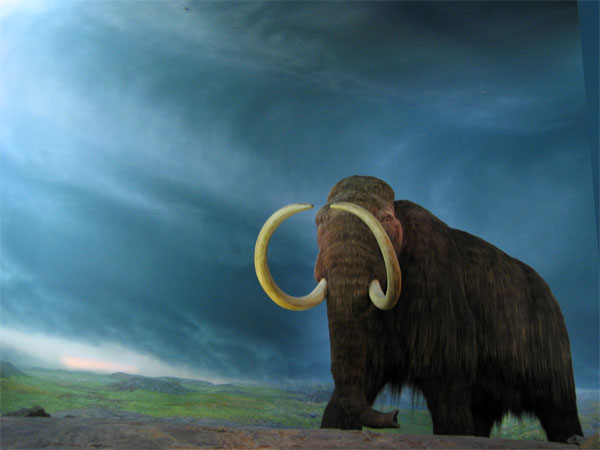 Scientists Revive Woolly Mammoth Cells
By Tim Binnall - CoastToCoastAM.com - March 12, 2019
A team of researchers in Japan have taken a significant step towards possibly bringing the long-extinct woolly mammoth back to life. The breakthrough reportedly came when scientists managed to extract cell nuclei from the frozen remains of one of the famed creatures that had been recovered from the permafrost of Siberia. Incredibly, in what sounds like a scene from a science fiction film, when this 28,000-year-old material was injected into mouse ova, it began to stir.
Specifically, the researchers say that, in 5 out of 43 instances, a "pronucleus-like structure budded" from the cross-millennial concoction containing the ancient mammoth material. Although the biological process stopped short of the next step, which would be cell division, the scientists were hopeful that the activity indicated that the damaged cell nuclei could be naturally repaired. The team now hope to move beyond where their experiment came to an end and cautioned that their results are almost more of a 'proof of concept' at this point.
To that end, before one starts imagining a world in which the iconic creatures once again roam the planet, one of the scientists behind the project flatly stated that "it would be difficult to resurrect a mammoth as things stand." He pointed to the extensive damaged inflicted upon the DNA from this particular specimen due to it being frozen for so long, but posited that "there's a chance, if we can obtain better-preserved nuclei." With that in mind, we'll keep our fingers crossed that someone in Siberia will stumble upon a more pristine mammoth carcass which would allow for the long-dreamed-of scenario of reviving the legendary creature to finally happen.
*************************
 "Cereal"
The word cereal comes from the Roman goddess, Ceres, who is the goddess of agriculture. So if someone said something like "I had cereal on the Wednesday before Easter," you would indirectly be referencing the goddess Ceres, the god Wotan, and the goddess Ostara.
*************************
 4 examples of celebrities who broke "PC law" in an extreme manner and got off scot free
Since John Wayne was attacked by the mainstream media recently for an old magazine interview in which he made numerous antagonistic comments about many groups of people, why not get these comments out and we can have some real sparks? His comments were nothing compared to these. I don't even believe in PC culture, since it's an unpublished, uncodified, and stunningly unevenly-applied set of rules put in place by unnamed sources, so therefore can't be challenged.
Some comments are more like bluster, but for someone to just--point-blank--state that the women of a certain ethnicity are very ugly... wow. Howard Stern can come out and say "I hate the Frennch" (purposely misspelled).. or English.. and nothing will be said; but if he said the same thing about "the Irish"... or Italians, Poles... big problem!
Person: Tony Danza
Target: Ellen DeGeneres/Lesbianism
When: Early 1990's
Where: The Tonight Show
Quote/intent level: "that's really slimy"
Person: Candice Bergen
Target: Italian women
When: 1970's
Where: Interview in Playboy magazine
Quote/intent level: "you will get a fettuccine fork in the back"/general dislike
Person: Paul Rodriguez
Target: Russian women
When: Late 1980's
Where: HBO comedy special
Quote/intent level: A long tirade about how ugly they are
Person: Charlie Sheen
Target: Libyans
When: 2011
Where: Roast of Charlie Sheen on Comedy Central
Quote/intent level: Compared a participant as having a face like that of the target group, and finished with the words "which means that you're *bleeping* disgusting!"
*************************
Jill Tracy
Jill Tracy is a singer, pianist, writer, composer, performance artist and "musical evocateur" based in San Francisco.
Known for her dark, evocative, cinematic style, Jill Tracy states that some of her biggest childhood influences were film score composers such as Bernard Herrmann, and classic suspense tales, including Alfred Hitchcock and Fritz Lang films, Ray Bradbury stories, and Rod Serling's The Twilight Zone.
In an interview, she stated, "I learned from watching 'The Twilight Zone' that often it was what you didn’t see that really put the fear in you... How a story could evoke such emotion and response essentially revealing so little. I abide by that in my approach to music. It’s the breath, the spaces between the notes and the arrangements that make the work come alive. The Soul lives in the silence."
She thinks of her music as a portal, a "way-in" and calls this seductive and magical place she inhabits the "elegant side of the netherworld."
************
Jill Tracy (official site)
Jill Tracy (music site)
Jill Tracy YouTube channel
When initially listening and observing Jill Tracy's work, I believe that it follows more of a Gothic theme than any structured occult tradition. Art with Gothic or dark themes are very appealing within our ancestral memories of the ominous still of the ancient "black of night."
*************************
 3 wildly popular films which are on TV incessantly!....
....and 3 films which were popular and well-received when they came out, but are rarely if ever featured on TV
‘Jaws’ (1975) – Over the years this has been a summer tradition, but now it’s on
at all times of the year!
‘National Lampoon’s Vacation’(1983) - Another summer favorite, which is
also featured at all times of the year.
‘National Lampoon’s Animal House’ (1978) and ‘Meet the Parents’(2000) - Sort’ve
tie between the two. Both are featured often.
‘Blame It On Rio’ (1984) - Although popular at the time, this film is never
on TV. There aren’t many American films set in Brazil, so what’s the holdup
here? Funny film.
Midnight Run (1988) - Very popular film at the time, but rarely on TV.
Actually, one of the cable channels has actually been featuring it lately
though.
Sorcerer (1977) - Although well received and highly rated, this film has
never been on TV for at least several decades. Of course, I don’t really know
that, but it’s at least a forgotten movie.
I don't get the movie channels, so this would have to apply to standard cable channels.
*************************

“Just because you do not take an interest in politics doesn't mean politics
won't take an interest in you.”
-- Pericles, 495-429 BCE.
*************************

Haunting image
The ruins of Pompeii, with a snowy Mt. Vesuvius in the background.
*************************
 Three random beauties from a particular film
Carrie Anne Moss in "The Red Planet' (2000)
Nicole Kidman in 'The Others' (2001)
Cate Blanchett in 'The Aviator' (2004)
I know, I can keep thinking of more, but somehow these three always come to mind.
*************************
Joe Cocker - up where we belong
thyzira
Joe Cocker, Jennifer Warnes
************
An Officer And A Gentleman - Final Scene (song continues in credits)
.


