Thursday, March 28, 2019

Tana's Day 2019


QUOTES

Regarding "the past"

"If a man dwells on the past, then he robs the present. But if a man ignores the past, he may rob the future. The seeds of our destiny are nurtured by the roots of our past." -- Master Po

"The present is rooted in the past. It is through these roots that we draw nourishment and strength." -- Master Po


[Wikiquote - Kung Fu (TV series)]

In its original meaning, kung fu can refer to any discipline or skill achieved through hard work and practice, not necessarily martial arts.


Kung Fu: Master Po on the Importance of the Past

Grasshopper

This clip is taken from the episode called "The Tide" in Season 1. Starring David Carradine as Caine and Keye Luke as Master Po.


*************************


Video links

Child Abuse and Paedophilia By The Elite

Benghazi Whistleblowers – The story behind the cover-up - CTM #670

Case Study 06: The Disappearance of Samantha Sayers

How I Took The Red Pill And Realized Everything In Our Cult(ure) Is a Lie - Jeff Berwick @ Red Pill

How to deal with gaslighting | Ariel Leve

Inside the Mind of a Thief | Burglar Confessions


*************************


Saga Press is now The Three Little Sisters Publishing

https://www.the3littlesisters.com/

There has been some ongoing confusion here as there was a different "Saga Press." Now hopefully this finally settles the matter. The Three Little Sisters Publishing is an folkish Asatru publishing company, with books for people of all age groups.


*************************


Saint Mary Lake, Glacier National Park, Montana


*************************


Patsy Cline - Too Many Secrets - 1957

kcope001


*************************


'Vikings' - The end of season five

I finally viewed the last two episodes of season five. With season six likely to be the last, somehow I found the season five ending to feeling like an appropriate ending with Bjorn Ironside--clearly the strongest of Ragnar's sons in every way--finally putting the reign of Ivar the Boneless to an end in a quick and decisive come-from-behind victory. With Lagertha and the other leaders crowning him as King, his vision of speaking and listening to advice from Ragnar, the seeming fulfillment of the will of the gods, and the ending words from the disfigured Odinic spiritual guru.... it felt like an ending/beginning.


*************************


"Imaginative reality" horror

A couple of days ago I viewed the 2018 horror film 'Winchester', which is loosely based on a real story. It's at least about a real place, real people, and real history. Perhaps my favorite "imaginative reality" horror film is 'Shadow of the Vampire' from 2000, which was a fictionalized account of the making of the classic vampire film Nosferatu. Being based on some type of real history and/or event adds a certain eerie quality.


*************************


60's Gothic Horror

While on the subject of horror films, several weeks ago I viewed a little-known 1965 horror film entitled 'Devils of Darkness' on either TCM or AMC. Actually I taped it since it followed something else I was taping. There can be some lost B-level horror gems late at night. The film was set in France, and featured British, American, and French actors. Although far from superb, it had that old cinematic B-horror quality, mixed with mystery and a secret cloak-and-dagger society... although it was never fully clear whether or not they were Satanists or vampires.

Devils of Darkness (1965) - B Movie Nation


************************* 


My "northern big cat theory"

An Amur leopard is a sub-species of leopard native to southeastern Russia and northern China. It appears to be identical to the African/Middle Eastern/south Asian leopard. It's not even like a snow leopard; it looks identical to the African leopard. It's a leopard!

So we have this animal which can exist and survive in either the hot steaming tropics, or the freezing snowy north! Cats are so specialized that they can exist practically anywhere where other animals exist. In ancient times, perhaps as recent as 10,000 years ago, lions existed in the far northern regions of Eurasia. African lions can be seen outdoors in zoos, walking around in the snow. They look comfortable with their thick fur. That mane once coated their entire upper bodies when they lived in the north during the last glacial movement. The big cats of the tropics almost look like they are more suited to a colder environment.

I believe that African lions could easily survive in the North American wilderness, just as American mountain lions could easily survive in Africa. Outside of extreme desert or tundra, I believe that all cats could survive anywhere where other types of cats are native to. Tigers are another good example of a big cat that can exist in extreme environments; from the frost of Siberia to the jungles of Asia.


*************************


Huey Lewis and Gwyneth Paltrow 'Cruisin'

gabriel moreno


*************************


Quote

"What I know about myself isn't really worth telling.
If you'll only let me tell you what I imagine about myself
you'll think it ever so much more interesting."
-- Lucy Maud Montgomery

  *************************



Juno captures striking view of 'Jupiter Marble'

Doha Hanno - Special to CTVNews.ca - March 23, 2019

A spectacular new image of Jupiter’s Great Red Spot and turbulent southern hemisphere has been released by NASA.

NASA’s Juno spacecraft captured the image as it performed its 17th science pass of the gas giant planet.

Juno took three images in total of Jupiter on Feb. 12. The spacecraft was between 26,876 kilometres and 95,434 kilometres above Jupiter’s cloud tops.

 Juno is a NASA spacecraft explorer orbiting Jupiter and is currently using scientific tools to study the planet’s atmosphere.


*************************


Indrid Cold: The Woodrow Derenberger Interview (WITH CAPTIONS)

Mothman Historian

The following audio is presented in effort of preserving West Virginia folklore. I've fully transcribed the audio from "The Man Called Cold" Interview and now It is represented in video form with captions.

The Woodrow Derenberger Interview is a 30 minute piece of audio about Indrid Cold aired on Live TV in Parkersburg West Virginia on November 3rd 1966 at about 4 o'clock in the afternoon and recorded on tapes.


************


The "mass experiences" that took place in Point Pleasant in 1966 were one the truly unexplained mysteries of all time. My take on it is that "Motherman," "Indrid Cold," etc. were expressions of the "elementals of nature" interacting with us on a profound level. Once while hiking years ago, in broad daylight, I observed a small pure black humanoid figure crouching under a tree. There was no sign of any light or shadow on it; it was just pure black. I looked directly at it for several seconds and just continued walking. I knew that it was no child wearing a ninja costume. It was most likely some sort've "elemental," and I didn't show any fear or interest. If I had tried to approach it, I probably would have been sorry.


Ukrainian Female Co-Host Caught Blinking Her Reptilian Eyes During Interview

The Hidden Underbelly 2.0


************


Watch: TV Presenter Reveals Reptilian Eyes?

Tim Binnall - CoastToCoastAM.com - December 12, 2018

A bizarre video circulating online seemingly shows a Ukrainian TV presenter briefly revealing that she has reptilian eyes. The odd moment occurred during an online program produced by what might best be described as a New Age movement known as AllatRa. Recorded back in July, the curious incident was first noticed by a Spanish language YouTube channel devoted to the paranormal a few months later and ultimately was picked up by English-speaking sites earlier this month.

In the already-strange program, which runs a jaw-dropping six hours, a man and two women discuss spirituality and, of all things, Atlantis. During the conversation, one of the female co-hosts gazes up at the ceiling and, for a split second, her eyes appear to become reptilian before she blinks and they return to normal. Lest one suspect that this was the work of paranormal pranksters using random foreign footage to fashion some kind of hoax, the puzzling moment can be seen in the original footage produced by the AllatRa group.

As one can imagine, the esoteric nature of the organization as well as the almost-futuristic attire of the presenters has led some viewers to compare the possible reptilian revelation to the infamous TV program V. More skeptical observers, however, have offered two divergent arguments for why the woman is not really a reptilian in disguise. Some have suggested that the eerie scene was added by AllatRa themselves to create a buzz about the group, while others say that the woman's eyes are simply reflecting light. What's your take on the weird clip? Let us know at the Coast to Coast AM Facebook page.


************


With many silly claims of "reptilian eyes," it would be pretty easy to discount this before watching it. I saw this phenomenon once before, and I thought it to be from some film perhaps, and I discounted it. But here, a TV host? There have been other strange videos of various related phenomena, but there's always a "built in excuse" so to speak. However, there's no mistaking this one. It's either real or a display of advanced special effects.


Letters To Cleo - Dangerous Type (no movie clips)

SteveLatham

Letters To Cleo from Boston, Massachusetts covering another band from Boston, Massachusetts. Dangerous Type from the soundtrack of The Craft. This version of the video has no clips from the movie. You get to see more of Letters To Cleo. Dangerous Type was originally recorded by The Cars. Letters To Cleo's version recorded in 1996 features Greg Hawkes of The Cars on keyboards. Letters To Cleo recorded the song in Los Angeles with producer Ralph Sall.


The Revelation ...read in full, read along version.

Tonya Maxwell

The entire book of The Revelation of the Lord Jesus Christ read aloud to listen to or read along with when ever you have the time. Download it or put it on your channel, and select "creative commons" in the advanced settings under licenses to allow others to do the same!

More great books of the Bibe are found at the channel: familybibletime ...


*************************
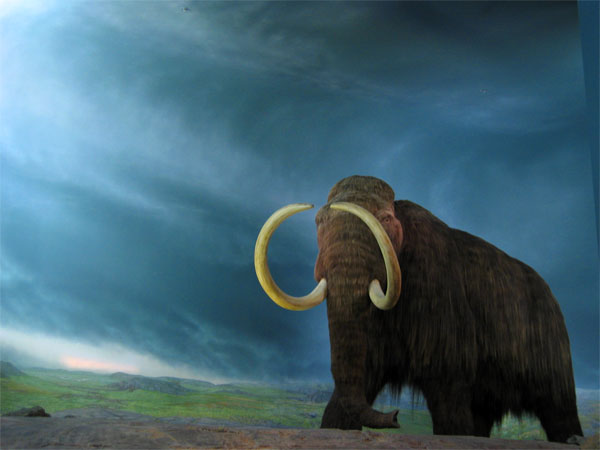

Scientists Revive Woolly Mammoth Cells

By Tim Binnall - CoastToCoastAM.com - March 12, 2019

A team of researchers in Japan have taken a significant step towards possibly bringing the long-extinct woolly mammoth back to life. The breakthrough reportedly came when scientists managed to extract cell nuclei from the frozen remains of one of the famed creatures that had been recovered from the permafrost of Siberia. Incredibly, in what sounds like a scene from a science fiction film, when this 28,000-year-old material was injected into mouse ova, it began to stir.

Specifically, the researchers say that, in 5 out of 43 instances, a "pronucleus-like structure budded" from the cross-millennial concoction containing the ancient mammoth material. Although the biological process stopped short of the next step, which would be cell division, the scientists were hopeful that the activity indicated that the damaged cell nuclei could be naturally repaired. The team now hope to move beyond where their experiment came to an end and cautioned that their results are almost more of a 'proof of concept' at this point.

To that end, before one starts imagining a world in which the iconic creatures once again roam the planet, one of the scientists behind the project flatly stated that "it would be difficult to resurrect a mammoth as things stand." He pointed to the extensive damaged inflicted upon the DNA from this particular specimen due to it being frozen for so long, but posited that "there's a chance, if we can obtain better-preserved nuclei." With that in mind, we'll keep our fingers crossed that someone in Siberia will stumble upon a more pristine mammoth carcass which would allow for the long-dreamed-of scenario of reviving the legendary creature to finally happen.


*************************


"Cereal"

The word cereal comes from the Roman goddess, Ceres, who is the goddess of agriculture. So if someone said something like "I had cereal on the Wednesday before Easter," you would indirectly be referencing the goddess Ceres, the god Wotan, and the goddess Ostara.


*************************


4 examples of celebrities who broke "PC law" in an extreme manner and got off scot free

Since John Wayne was attacked by the mainstream media recently for an old magazine interview in which he made numerous antagonistic comments about many groups of people, why not get these comments out and we can have some real sparks? His comments were nothing compared to these. I don't even believe in PC culture, since it's an unpublished, uncodified, and stunningly unevenly-applied set of rules put in place by unnamed sources, so therefore can't be challenged.

Some comments are more like bluster, but for someone to just--point-blank--state that the women of a certain ethnicity are very ugly... wow. Howard Stern can come out and say "I hate the Frennch" (purposely misspelled).. or English.. and nothing will be said; but if he said the same thing about "the Irish"... or Italians, Poles... big problem!

Person: Tony Danza
Target: Ellen DeGeneres/Lesbianism
When: Early 1990's
Where: The Tonight Show
Quote/intent level: "that's really slimy"

Person: Candice Bergen
Target: Italian women
When: 1970's
Where: Interview in Playboy magazine
Quote/intent level: "you will get a fettuccine fork in the back"/general dislike

Person: Paul Rodriguez
Target: Russian women
When: Late 1980's
Where: HBO comedy special
Quote/intent level: A long tirade about how ugly they are

Person: Charlie Sheen
Target: Libyans
When: 2011
Where: Roast of Charlie Sheen on Comedy Central
Quote/intent level: Compared a participant as having a face like that of the target group, and finished with the words "which means that you're *bleeping* disgusting!"


*************************


Jill Tracy

Jill Tracy is a singer, pianist, writer, composer, performance artist and "musical evocateur" based in San Francisco.

Known for her dark, evocative, cinematic style, Jill Tracy states that some of her biggest childhood influences were film score composers such as Bernard Herrmann, and classic suspense tales, including Alfred Hitchcock and Fritz Lang films, Ray Bradbury stories, and Rod Serling's The Twilight Zone.

In an interview, she stated, "I learned from watching 'The Twilight Zone' that often it was what you didn’t see that really put the fear in you... How a story could evoke such emotion and response essentially revealing so little. I abide by that in my approach to music. It’s the breath, the spaces between the notes and the arrangements that make the work come alive. The Soul lives in the silence."

She thinks of her music as a portal, a "way-in" and calls this seductive and magical place she inhabits the "elegant side of the netherworld."


************


Jill Tracy (official site)

Jill Tracy (music site)

Jill Tracy YouTube channel

When initially listening and observing Jill Tracy's work, I believe that it follows more of a Gothic theme than any structured occult tradition. Art with Gothic or dark themes are very appealing within our ancestral memories of the ominous still of the ancient "black of night."


*************************

3 wildly popular films which are on TV incessantly!....

....and 3 films which were popular and well-received when they came out, but are rarely if ever featured on TV


‘Jaws’ (1975) – Over the years this has been a summer tradition, but now it’s on at all times of the year!
‘National Lampoon’s Vacation’(1983) - Another summer favorite, which is also featured at all times of the year.
‘National Lampoon’s Animal House’ (1978) and ‘Meet the Parents’(2000) - Sort’ve tie between the two. Both are featured often.

‘Blame It On Rio’ (1984) - Although popular at the time, this film is never on TV. There aren’t many American films set in Brazil, so what’s the holdup here? Funny film.
Midnight Run (1988) - Very popular film at the time, but rarely on TV. Actually, one of the cable channels has actually been featuring it lately though.
Sorcerer (1977) - Although well received and highly rated, this film has never been on TV for at least several decades. Of course, I don’t really know that, but it’s at least a forgotten movie.


I don't get the movie channels, so this would have to apply to standard cable channels.


*************************


Quote


“Just because you do not take an interest in politics doesn't mean politics won't take an interest in you.”
-- Pericles, 495-429 BCE.


*************************


Haunting image

The ruins of Pompeii, with a snowy Mt. Vesuvius in the background.


************************* 


Three random beauties from a particular film

Carrie Anne Moss in "The Red Planet' (2000)

Nicole Kidman in 'The Others' (2001)

Cate Blanchett in 'The Aviator' (2004)

I know, I can keep thinking of more, but somehow these three always come to mind.


*************************


Joe Cocker - up where we belong

thyzira

Joe Cocker, Jennifer Warnes


************


An Officer And A Gentleman - Final Scene (song continues in credits)


.

Thursday, March 21, 2019

The Field of Folk Pagan Dreams II - "The Vehmic Mountain Altar"

.
Neopagan Revival

In the film 'Field of Dreams', the symbolic approximately one-third "circle altar" was the baseball field. The phantom baseball player came and went from different realms from the vast ominous cornfield. Since we know that the unusually geometric game of baseball was invented by a Freemason, is it a stretch to ponder whether or not this film from hyper-occultic Hollywood was a further take on the game's likely occult roots? It would seem to play upon many ancient spiritual traditions, including perhaps a Proto-European one. It's ironic, from my own intrinsic point of view, that I got part of this inspiration from literally a baseball field.... a "mountain baseball field" no less!

As stated in the previous posting to this, baseball is unique in that the field of play can extend beyond the fencing. In theory, an outfielder can run into the stands to catch the ball... or out to the parking lot! That "one-third circle" fans out wider and wider, longer and longer, symbolically... forever. As long as the ball doesn't actually bounce off of any object, the outfielder may catch it for an "out." Was the cornfield a way of expressing that ominous "forever" concept? Also, the game of baseball is set up in such a manner that it simply does not change. Football is constantly evolving. The three-point line in basketball has obviously changed that game. Therefore there is a somewhat ghostly aspect to baseball and it's unusual geometry.

I feel that I discovered something on that clean and warm night last September. I wasn't in any way trying to discover anything. I was just walking out onto the dark outfield to gaze at the high mountains on the other side of the valley while sipping a sweet iced tea. I felt a powerful sensation as the characteristics of the field, mountains, hills, valley, and sky slowly came into focus as something from my ancestral memory was jogged and recognized. I have stated on here many times of the folly that many people have made over the years of mixing synchronicity--even enhanced and complex synchronicity--with a mystical experience. Synchronicity is simply a connection to the universe, and it does not make anyone special. Synchronicity is an affirmation from universal consciousness that "you're on the right track." A mystical experience is usually something more than that.


As late as four centuries ago, groups of "native believers"--from what I could call "the six clans" of the east Lombard Alps--would travel eight times during the year to a particular mountain pass near where the Orobi Alps meet with the northern Val Camonica and the southern Valtellina. Of course, everyone didn't all go each time. Perhaps they would make the trek one of those times during the year. At least some folk pagans from each of the six valleys--the Valtellinesi, Camuni, Chiavennaschi, Orobianesi, Triumplini, and Sabbini--were present for each seasonal ritual. It was like a larger family coming together on what we now know was the last days of their traditional way of life. It was passed down to them from their Proto-European ancestors from clear back into prehistory. However, don't allow this one good example keep anyone from seeing expressions from their own Proto-European ancestors. There are examples of this from anywhere in ancient Europe; for example the Basque Country in the Pyrenees. Even in flat country, there were foothills and small mountains, for example in Poland there's a particular small mountain in a flatland region which is a central location for paganism... going back centuries. We don't know how long.


Vehmic Mountain Altar


Valleys, including the smaller valleys, are common all over in some form. Very often there is one peak or set of peaks, which stand on one side, with smaller foothills on the other. One side is at least higher than the other in most cases. It would not take too much effort to find a place such as this close to where you live. On the "foothills" or lower elevation side, a half-circle altar may be fashioned using a few modest stones on some clearing along the midway point of the hills. The half-circle represents "the circle of nature" conflated; half of it within the earth itself, and half of it within our lives. This "half-circle altar" represents "fire," as they used to light a fire pit there. However, unless there's a large clearing that you have access to, where you can create a safe fire, you own the land, or where there's a safe place to light a tiki torch.... then this is not necessary.


Any time of the day or night is fine. I think of the night a little more. The night is magical when the weather allows. The valley below represents "water," as it is where the rainfall naturally gravitates towards. There may even be a river, stream, creek, or small body of water down there anyway. Hopefully many trees and animals as well. The "high point of the foothills," behind the altar," represents "earth." It symbolizes the ground beneath your feet; the "earth" where half of the altar symbolically is rooted. The mountain peak(s) on the other side of the valley represent "spirit," as they are earth's marvelous sculptures. They are the spiritual antennas which may interact with the moon, which in turn allows a connection with the other side.... the great vast Ur where our ancestors exist.

The sky above represents "air," as it is the wonderful ethereal glue that holds the universe together. That sky where we may humbly observe the Almother Moon, Alfather Sun, the planets of our solar system, and of course all the stars. In conclusion, there are five levels to this configuration. From top to bottom: 1) Sky and universe; 2) Tall peak(s); 3) High point(s) of the foothills; 4) Half-circle altar at the midway point of the foothills; and 5) Valley below.


Five = The Sacred Vehme (Earth, Air, Fire, Water, and Spirit)

Earth - High point(s) of the Foothills, behind the altar
Air - Sky and universe
Fire - Half-circle altar
Water - Valley below
Spirit - Tall peak(s) at which the altar faces


While becoming, we discover, we already are


.

Wednesday, March 20, 2019

'Carmina Burana' - Largely based on eclectic European pre-Christian spiritual folk traditions... and possibly of South Tyrolian origin: Part 4

Codex Buranus

When I first posted on this subject, I had no idea what I was getting into. This is a long-term project for the Neopagan folk-collective. For one example, a Neopagan musical concern could sift further into these works and find something related and--in some sense--become the next Carl Orff by using the poems for a musical piece! I mean, why not? This work is not copyrighted; it's very relevant. Perhaps someone has already done this; I don't know. Of course, I would like to see someone accomplish this who has some true talent and do it from a Neopagan perspective. Orff selected a mere twenty-four works from the Codex Buranus; there are many more works contained within it.

Themes

Generally, the works contained in the Carmina Burana can be arranged into four groups according to theme:

1. 55 songs of morals and mockery (CB 1–55)
2. 131 love songs (CB 56–186)
3. 40 drinking and gaming songs (CB 187–226)
4. Two longer spiritual theater pieces (CB 227 and 228)


The Old Abrahamic Devil

"It's the Devil !"

'Carl Orff’s “Carman Burana”, Is it demonic?'


The New Secular Devil

"It's the Nazis !"

'Secret of the White Rose'


Folk Pagan Origin

"It's the Witches !"

'The Original Sound of the Carmina Burana'

Medieval poetry is filled with images of fate and destiny, reflecting the Christian’s morbid fascination with the terrifying power of an implacable pagan goddess. (regarding 'O Fortuna')


Fortune Plango Vulnera - Carmina Burana

madprofessor

Fortune Plango Vulnera from Carmina Burana - Carl Orff


************


Carl Orff: Fortune Plango Vulnera/en Lyrics

The Latin title of this song is "Fortune Plango Vulnera". The English translation is "I Bemoan the Wounds of Fortune."


I bemoan the wounds of Fortune
with weeping eyes,
for the gifts she made me
she perversely takes away.
It is written in truth,
that she has a fine head of hair,
but, when it comes to seizing an opportunity
she is bald.

On Fortune's throne
I used to sit raised up,
crowned with
the multi-coloured flowers of prosperity;
though I may have flourished
happy and blessed,
now I fall from the peak
deprived of glory.

The wheel of Fortune turns;
I go down, demeaned;
another is raised up;
far too high up
sits the king at the summit -
let him fear ruin!
for under the axis we may read
"Queen Hecuba."


.

Tuesday, March 19, 2019

'Carmina Burana' - Largely based on eclectic European pre-Christian spiritual folk traditions... and possibly of South Tyrolian origin: Part 3


.
Father God and Mother Goddess

The above image: Set design by Helmut Jürgens for a performance in Munich in 1959. Is the sky scene depicting the Proto-European Alfather (Sun) and the Almother (Moon)? Were Orff and Jürgens part of some occult network? Alone, I would doubt all of these clues pointing towards a pre-Christian aka "Witch cult" tie-in. However, all together, it appears that way to me. The clear lyrical tie-in, the wheel of the year, references to the seasons, and this set design. Masons like to use this type of occult symbolism, most often in esoteric reference to anything non-Christian. The selection covers a wide range of topics, as familiar in the 13th century as they are in the 21st century: the fickleness of fortune and wealth, the ephemeral nature of life, the joy of the return of Spring, and the pleasures and perils of drinking, gluttony, gambling, and lust. If this was all just a satire in reference to the Catholic Church, then why the cryptic references to the Old Religion? I suppose that it may have been just another aspect of the mockery, but I'm not so certain. It should be noted that there is no evidence that Carl Orff was a Freemason or had any connection to any occult society. He was a Roman Catholic.


The following is related text, not my work.


Manuscript

Carmina Burana (CB) is a manuscript written in 1230 by two different scribes in an early gothic minuscule on 119 sheets of parchment. A number of free pages, cut of a slightly different size, were attached at the end of the text in the 14th century. At some point in the Late Middle Ages, the handwritten pages were bound into a small folder called the Codex Buranus. However, in the process of binding, the text was placed partially out of order, and some pages were most likely lost, as well. The manuscript contains eight miniatures: the rota fortunae (which actually is an illustration from songs CB 14–18, but was placed by the book binder as the cover), an imaginative forest, a pair of lovers, scenes from the story of Dido and Aeneas, a scene of drinking beer, and three scenes of playing dice, tables, and chess.

History

Older research assumed that the manuscript was written in Benediktbeuern where it was found. Today, however, Carmina Burana scholars have several different ideas about the manuscript's place of origin. It is agreed that the manuscript must be from the region of central Europe where the Bavarian dialect of German is spoken due to the Middle High German phrases in the text—a region that includes parts of southern Germany, western Austria, and northern Italy. It must also be from the southern part of that region because of the Italian peculiarities of the text. The two possible locations of its origin are the bishop's seat of Seckau in Styria and Kloster Neustift near Brixen in South Tyrol.


.
.
Carmuna Burana OH FORTUNA

Alejandro Rendon


************


A bishop named Heinrich was provost in Seckau from 1232 to 1243, and he is mentioned as provost of Maria Saal in Carinthia in CB 6* of the added folio. This would support Seckau as the possible point of origin, and it is possible that Heinrich funded the creation of the Carmina Burana. The marchiones (people from Steiermark) were mentioned in CB 219,3 before the Bavarians, Saxons, or Austrians, presumably indicating that Steiermark was the location closest to the writers. Many of the hymns were dedicated to Saint Catherine of Alexandria, who was venerated in Seckau, such as CB 12* and 19*–22*.

In support of Kloster Neustift, the text's open-mindedness is characteristic of the reform-minded Augustine Canons Regular of the time, as is the spoken quality of the writing. Also, Brixen is mentioned in CB 95, and the beginning to a story appears in CB 203a which is unique to Tirol called the Eckenlied about the mythic hero Dietrich von Bern.

It is less clear how the Carmina Burana traveled to Benediktbeuern. Fritz Peter Knapp suggested that the manuscript could have traveled in 1350 by way of the Wittelsbacher family who were Vögte of both Tirol and Bavaria, if it was written in Neustift.


Rediscovery and history of publication

The manuscript was discovered in the monastery at Benediktbeuren in 1803 by librarian Johann Christoph von Aretin. He transferred it to the Bavarian State Library in Munich where it currently resides (Signatur: clm 4660/4660a). Aretin regarded the Codex as his personal reading material, and wrote to a friend that he was glad to have discovered "a collection of poetic and prosaic satire, directed mostly against the papal seat."


The first pieces to be published were Middle-High German texts, which Aretin's colleague Bernhard Joseph Docen published in 1806. Additional pieces were eventually published by Jacob Grimm in 1844. The first collected edition of the Carmina Burana was not published until 1847, almost 40 years after Aretin's discovery. Publisher Johann Andreas Schmeller chose a misleading title for the collection, which created the misconception that the works contained in the Codex Buranas were not from Benediktbeuren. Schmeller attempted to organize the collection into "joking" (Scherz) and "serious" (Ernst) works, but he never fully completed the task. The ordering scheme used today was proposed in 1930 by Alfons Hilka and Otto Schumann [de] in the first critical text edition of the Carmina Burana.[28] The two based their edition on previous work by Munich philologist Wilhelm Meyer, who discovered that some pages of the Codex Buranus had mistakenly been bound into other old books. He also was able to revise illegible portions of the text by comparing them to similar works.


Rota Fortunae

In medieval and ancient philosophy the Wheel of Fortune, or Rota Fortunae, is a symbol of the capricious nature of Fate. The wheel belongs to the goddess Fortuna (Greek equivalent Tyche) who spins it at random, changing the positions of those on the wheel: some suffer great misfortune, others gain windfalls. Fortune appears on all paintings as a woman, sometimes blindfolded, "puppeteering" a wheel.

In works of art defining the Wheel of Fortune, the various wheels/circles (circles of nature) are of four (solar cross), six (rosette), eight (wheel of the year), and twelve points (zodiac). How is that for occult folk pagan symbolism?


Carmina Burana

The Wheel of Fortune motif appears significantly in the Carmina Burana (or Burana Codex), albeit with a postclassical phonetic spelling of the genitive form Fortunae. Excerpts from two of the collection's better known poems, "Fortuna Imperatrix Mundi (Fortune, Empress of the World)" and "Fortune Plango Vulnera (I Bemoan the Wounds of Fortune)," read:

Fate - monstrous
and empty,
you whirling wheel,
status is bad,
well-being is vain
always may melt away,
shadowy
and veiled
you plague me too;
now through the game
bare backed
I bear your villainy.

. . . . . . . . .

The wheel of Fortune turns;
I go down, demeaned;
another is carried to the height;
far too high up
sits the king at the summit -
let him beware ruin!
for under the axis we read:
Queen Hecuba.


Hecuba

Hecuba was a queen in Greek mythology, the wife of King Priam of Troy during the Trojan War, with whom she had 19 children. These children included several major characters of Homer's Iliad such as the warriors Hector and Paris and the prophetess Cassandra.

.

Monday, March 18, 2019

Remembering Evelyn Paglini: Part VIII - Evelyn on Art Bell in September 2010


Art Bell - Predictions and Natural Magic - Coast to Coast AM Classic

COAST TO COAST AM OFFICIAL


************


Free Audio: Evelyn Paglini with Art Bell

Listen to this intriguing hour from a show we broadcast back on September 24, 2010 when Art Bell welcomed practitioner and teacher of natural magic, Dr. Evelyn Paglini

.

Sunday, March 17, 2019

Countdown to the Spring Equinox III - Ostara and Full Worm Moon on the same day!

Wednesday, March 20

Ostara (Spring Equinox) and the Full Worm Moon will both occur on March 20, 2019. Ostara officially is on Wednesday, March 20, although Neopagans may observe it between the 19th and the 22nd. The Full Worm Moon will occur at 9:43 PM ET; Wednesday evening/early Thursday morning. The moon has looked spectacular during the last few clear evenings here with it's horns facing upward amid the coyote howls of Owl Canyon.


The Old Farmer's Market 'Moon Calendar 2019'

Full Worm Moon

This full moon marked the start of warming weather, when worm castings appeared in the softening ground.


************ 


Lunar Fun

Although advice varies, folklore often suggests that wood will last longest if cut between the last quarter and the new Moons. During the dark of the Moon, it was said that sap moved downward, leaving wood drier. Wood cut during a waxing Moon would be wetter and therefore more prone to warping, shrinkage, and other problems.


Cascadian Farm in Washington


Pacific Northwest farming

After reading about the huge wine industry in the Pacific Northwest, I wanted to try a Washington or Oregon wine. I saw one impressively labeled Washington red at Target--Chateau Smith Cabernet Sauvignon Red Wine--for about $23 that I passed on (https://charlessmithwines.com/). Finally at the Bargain Market I found a beautifully bottled Oregon white for five or six bucks--Elouan Pinot Noir 2016--although I still haven't opened it. Actually Elouan is a Napa company processing Oregon grapes, which apparently has some Oregon vintners unhappy ('Oregon moves to protect wine from false out-of-state labels'). I haven't looked specifically for Washington or Oregon wine yet at the larger wine stores like Beverages and More or Total Wine. They should be easy to find.


************


Cascadian Farm - Rockport, Washington

Organic Leader

Since our founding in 1972, Cascadian Farm has been recognized as a pioneer in organic farming. We were organic before "organic" was a trend, or even before it was it was certified by teh USDA. Organic is who we've been, and it's who we are. Today our Cascadian Farm products still come from farming practices that work in harmony with nature and foster biodiversity and are grown without genetic engineering (GMOs) or synthetic pesticides. It's agriculture through nature, growing food just the way it should be.


************ 


Elouan Wines - St. Helena, California (headquarters) and Rutherford, California (processing) - Grapes from Oregon

A New Style of Pinot Noir from Oregon

Elouan, the result of California winemakers venturing up to Oregon, one of the world’s renowned Pinot Noir regions. The goal: to produce Pinot Noir with depth of flavor, vibrancy and suppleness. For this wine we brought together fruit from three distinct terrains along Oregon’s premiere Western vineyards which harmonize beautifully when blended as one. The diversity of these districts along with a lengthy growing season create wines with intense structure, while maintaining a vibrant acidity that sets them apart from other wines.


The beautiful Christa Helm

Christa Helm Unsolved Murder A View On Hollywood Bloody Face

[This page contains summary information of Christa Helm Unsolved Murder A View On Hollywood Bloody Face].


http://christahelm.blogspot.com/

Growing interest in this case


19 Terrifying Animals You're Glad Are Extinct

15,661,654 views

Facts Verse

Interested in LIMITED Daily Deals? Click the link below!
http://bit.ly/FactsVerseDeal

Subscribe Here: http://bit.ly/FactsVerse

Twitter: https://twitter.com/FactsVerse

Narrated by: Darren Marlar
www.MarlarHouse.com

Music:
Kevin MacLeod (incompetech.com)
Licensed under Creative Commons: By Attribution 3.0

*If you click the above link, we may earn a small affiliate commission


Project Blue Book

The 11-episode season one ended this past week, and I thought it was very good. I hoped that it wouldn't skirt around the real politics of it, and to my surprise it did not. The cinematography gave a real feel for that time period. The acting was good, and the characters were strong and set in their ways. There was always more going on than just the surface plot. J. Allen Hynek was a true skeptic and adherent of open-minded scientific research. He was a hero really.


Air Supply - All out of love - I'm so lost without you

Maci21i


.

Monday, March 11, 2019

A Tale of Three Small Towns: Loveno, Hurley, and Brisbane

Tahquamenon River, Upper Michigan

I've gone into detail in past postings about family/DNA "energy stamps" across vast areas. The idea that we as individuals, families, and clans are tied to places in which we have never been; where out ancestors or relatives have lived in the past for long periods of time. Life's experiences---great and small, good and bad---form a geographic/meta-connection. These types of DNA energy imprints upon the earth form something of a DNA grid. Unless an individual is entirely materialistic with no folk spirituality at all, the places in which our ancestors or relatives have lived in the past means something! If we visit those places for the first time, we have come back home. This is a bit different than deja vu in which you experience something which you can connect to from a previous experience or perhaps even a previous life; either a literal place or somewhere which reminds one of a place, person, or experience. There's some conflation, but a meta-geographic connection is something different.

Ultimately, my own meta/geographic connections are only important to me/us. I'm just trying to encourage others, presumably chiefly folk-neopagans, to devote some thought to this in order to develop the concept further. This could take the form of storytelling for example. Even if a person is not directly blood-related, if they were of the same culture, they could still adopt--on a certain level--the "story" of another family... especially if that family followed a similar path... a shared history. This may sound like a funny thing to say, but I can say from experience that there are places where one could pull up a couple of fold-up chairs on a high point and tell another of a long family/clan history while literally "pointing" in the horizon at various related locations. That is if anyone could take some time out from their busy lives and the "sports and entertainment" culture to actually sit down and listen for a short while.

If the past, present, and future are not intertwined, then we have nobody to blame but ourselves. They are interconnected at all times, we just lose sight of it. One location which so much defines my family's origin is a group of small villages, the largest being Loveno. It's located on the edge of a valley and tributary river to the Val Camonica and the prominent Oi River.... called the Val Paisco. Part of this village-group connects to vast grassy hillsides from a high plateau on the Val Camonica side to the east, while another part of it lays on the edge of a much more closed-in, steep, and wooded Val Paisco to the west. Driving westward through the dense forested Val Paisco perhaps eight miles, the dense dark road opens up like heaven to a vast lowland surrounded by far off mountains. There you would see the the small beautiful town named Schilpario, which is actually in the Bergamo province (Orobie Alps) and they speak a slightly different dialect of the Lombard language than the Brescia province (Val Camonica).

Many of the words are slightly different despite the short trek. For example, on the Camunian side the word for family is "famia" (different than the Brescian "famija") while on the Orobie side the word is "famèa." It's like a subtle tribal affiliation, and we must look at it from the standpoint of history, back many centuries. For that long period of time, centuries, while they politically belonged to numerous different nations, small "tribal" differences remained in place, such as the difference in dialect. Certainly there were marriages between Camuni and Orobiesi, for example between people in Loveno and Schilpario, but the bride (in most cases) just adopted the subtly different ways of their new "tribe" so to speak. This is a place where time has stood still, and old ways remain in place. One paternal great-grandmother of mine, named Theresa, was born here in these relatively remote Alps at about 1870. Her parents were not born in "Italy," but in the Lombardo-Venetian Kingdom... a colonial possession of the Austrian Empire.

Despite being a relatively short distance from major cities--such as Milan, Bergamo, and Brescia--the rugged, mountainous, and sleepy Val Paisco was much more in tune with the vast underpopulated regions of the east Lombard Alps. Again, a place where old traditions die hard. Metaphorically-speaking, I would compare the relationship between urban Milan and the east Lombard Alps with the relationship between San Jose, California and the nearby mountainous county of Santa Cruz. So close, yet so far away. Theresa eventually joined her children and grandchildren in Hurley, Wisconsin sometime in the 1920s. Hurley had a history of Lombard and Venetian immigrants going back to the late 1880s. She must have felt at home in the rural town and within the community surrounding the old St. Mary's Catholic Church. Although the Hurley-Ironwood (Upper Michigan) area would essentially be flatland in comparison to Loveno, the eighty-mile long Gogebic Mountain Range was right nearby.

Remarkably, the tradition of mining those mountains was the same here as it was in the mountains surrounding the Val Camonica. Also the same, the mining had largely diminished there just as it had back in the Val Camonica. Hurley had once been a major and wild "frontier town" in the late 1800s, housing many miners, and crawling with vice. Even Al Capone himself was impressed with the local operations, of which he wasn't able to penetrate himself; finally just agreeing to co-operate with the local black marketeers as they smuggled liquor down from Canada through Hurley and other locations in the Northwoods. With the decline of mining and the advent of Prohibition, the town started to dry up. Only the local long-standing community remained. However then (and even today), Silver Street, which had been ground zero during the old mining and vice days, still remained a haven for bars and topless dancing. There are tours for anyone interested in that part of local history.

Sometime in the 1940s, one of my grand uncles, Frank--a nephew of Theresa--moved with his family to Brisbane, California... which was something of a "mini-Hurley" back then. The vast majority of the residents were of California-Dust Bowl heritage. In other words, they were of the millions of people who had migrated to California from Oklahoma and north Texas during the 1930s. Brisbane was their real hot spot just south of San Francisco, wth many "country western" bars along Visitacion Avenue. One such bar/night club was the semi-famous 23 Club. That local culture was going strong as late as the early 90s. Frank's move to Brisbane was the start of a long-standing family connection to the town. As amazing as it might seem, Brisbane is surrounded by San Bruno Mountain, part of the major Santa Cruz Mountain chain; and there was a large mining company in the industrial part of town, quarrying stones along one part of the mountain. The quarry has largely slowed down, but there is still a company which operates there.

Although small, Brisbane had long been well known for heavy industry. For decades, materials were brought in on train tracks from the nearby railroad which ran along the San Francisco Bay. My great grandmother, whom I never knew, had actually visited Brisbane on at least a couple of occasions. Apparently she believed in keeping the family clan together, or at least not wanting them to lose touch. Not surprising when considering that she had come from a culture in which nobody ever seemed to lose contact, unless they migrated to some faraway location like Chicago, Toronto, or Buenos Aires. The meta-connections between Loveno, Hurley, and Brisbane---and strongly considering the strong circumstantial-similarities between all three locations---is overwhelming for me. The fact that one person--Theresa--was present in all three locations, only further bolsters this DNA-connection!

I would like to encourage others--Neopagans, folk-polytheists, Asatruar, spiritually-minded genealogists and ethnologists, etc--to take another look at their own family history with new eyes relating to this "meta-geographical" concept. This isn't about "me," but I think this example hopefully can give others an impetus to take that further examination of their own family history. What does your family's Meta/DNA "grid" map look like? Are there some almost-eery "circumstantial-similarities"--not necessarily directly related to your family--present between those locales? I would especially like to encourage Asatruar or Odinists, who have been the chief driving force behind the folk-neopagan movement in recent years. Many really impressively know their local and family history, so maybe we can raise the bar on this. I think those meta-geographical connections/grids are real. I can feel it. There are connections--between various seemingly unrelated locations--which are far beyond mere faded memories. Find them!

While becoming, we discover, we already are


************


Since I seem to have adopted the 89-mile Tahquamenon River as sort've a sub-theme here, I wanted to just follow up on it a bit. Windows 10 started featuring an image of it just today. Somewhat coincidentally, it's located in Upper Michigan.

Tahquamonen River

Tahquamonen Falls


Lower Taquamenon River Michigan

Michigan Interactive

A tour of the Lower Tahquamenon River in Chippewa County Michigan by fishweb.com


.