Showing posts with label Lombard nationalism. Show all posts
Saturday, June 22, 2019
Lombard nationalism: Part IV
Corsican nationalism - A comparative examination
There are many similarities between Lombard nationalism and Corsican nationalism. Both had been clearly-defined cultural and linguistic regions prior to becoming part of other administrative states over time. Being small, they were both subject to falling under the thumb of larger, more powerful nations; France, Spain, Austria, etc. The only notable differences are that Corsica fell under France due to a clear act of military aggression in 1769, the whole of Corsica was under the sovereign Corsican Republic prior to that time, and lastly... that some Corsican nationalists finally resorted to terrorism starting in the 1970s. On the other hand, Lombardy was eased into the Italian state slowly; though the revolutions of the mid-nineteenth century. Also, the collective Lombard cultural-linguistic milieu was never officially part of the same state. Given a twist of fate, Corsica may well have ended up being part of the Italian state as well; Lombardy could well have ended up as part of a liberated Lombardo-Venetia--the former client state of the Austrian Empire--along with perhaps the Trentino region. Both of those possibilities would very likely have served them better than the status quo.
I had been mistakenly led to believe that Corsica was overwhelmingly "ethnic Corsican." Actually, as of 2011, only 56% of the population was even born in Corsica! That means that the Corsicans may well now be a minority in their own ancestral homeland. About 29% were born on the mainland of France (some could be returning Corsicans), and about 15% were born in North Africa. It reminds me of the line by English King Longshanks in the film 'Braveheart' in reference to the Scots: "If we can't get them out, we will breed them out." That's how the Fabian-symbiosis of Monopoly Capitalism and Social Marxism operate; they eliminate a people's identity first. Lombardy has a similar demographic situation; however having had a much larger population to begin with, it has been more difficult to push them out numerically.
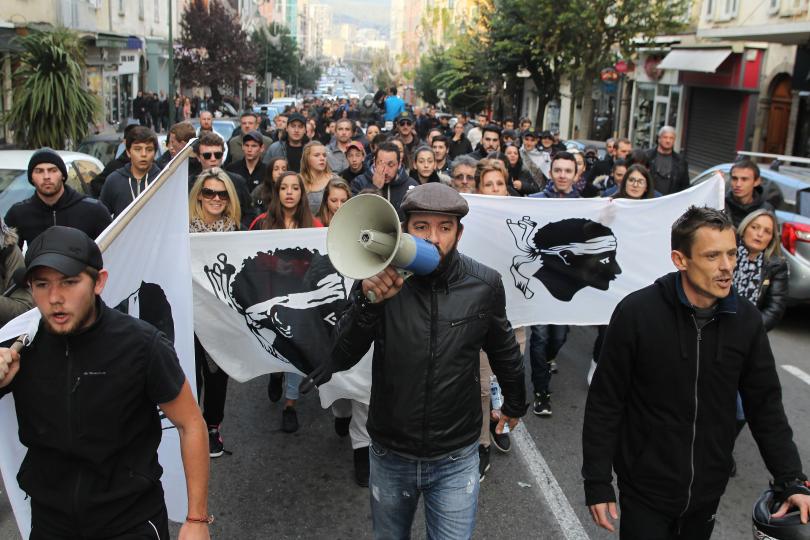
Although certain elements within Corsican society are highly passionate about independence and possible nationhood, even moreso than in Lombardy; however, just as with other defeated peoples... most are melancholy when push finally comes to shove. In contrast, support for formal Lombard nationalism might even be greater overall. Still, nobody has ever traded bullets with the state, as has been the case in the Corsican conflict. The two main Corsican nationalist political parties are the left-wing Corsica Libera, and Party of the Corsican Nation. A distinction should be made between Socialist-Nationalists and open-borders Socialists. Socialist-Nationalists are concerned with issues such as nationalism, social welfare, and labor; while open-borders Socialists are concerned with a whole slew of separate issues which International-Capitalists have no real issue with.
While both lingo-cultural regions have legitimate political parties to address their issues and goals, Corsica has the militant National Liberation Front of Corsica. The "FLNC" came out of a number of terrorist groups which started in the 1970s. They bombed infrastructure and symbols of French rule until their proclamation of ending the armed period of their struggle in 2010. The FLNC has however stated that if Muslim extremists commit terrorist acts within Corsica, then they will respond to it. Just in general, the Corsicans have showed their displeasure at the increasing presence of Moroccans and other Muslims much more openly than has been the case in Lombardy. There has been terrorism in Lombardy, however it was due to something entirely different; namely "Operation Gladio," where the deep state committed false-flag terrorism in the name of fake Communist organizations to achieve an end. The "deep state" is an international milieu of well-placed rouge intelligence operatives controlled by Globalist elites to finally achieve their internationalist dream of one-world, one-government, one-race, etc.
I never could understand why Italian-Americans never took--even just a little bit--to the Corsican issue since it was so similar to the circumstance in Ireland. You could go into many Irish-American bars today and see signs on the wall "BRITS OUT OF IRELAND!!" Corsicans speak a dialect of Italian, they're Roman Catholic, and the island has had Etruscan, Greek, Roman, Lombard, and Italian influences throughout its history. It's very similar to Sardinia. It's definitely not "French," despite the fact that French has been installed as the official language. It's more "Southern Italian" in it's culture and sensibilities.
'Globe: Nationalism Comes To Corsica'
'Thousands of Corsicans Demanded Greater Autonomy from France'
'World Directory of Minorities and Indigenous Peoples - Corsicans'
.
Labels:
Corsica,
France,
geopolitics,
Italy,
Lombard nationalism,
Lombardy
Wednesday, June 5, 2019
Lombard nationalism: Part III
Definition of Lombardy
During the ages the concept of Lombardy changed quite frequently. In Early Middle Ages the word Longobardia indicated all the Lombard Kingdom. Since the 12th century the archaic term was gradually replaced by Lombardia (as a linguistic evolution, first appeared in the Pauli Continuatio) and in the geographic view it indicated first the area of the Langobardia Maior and then only the Po Valley, where was the centers of the Lombard power. Meanwhile, Lombardia took on a political meaning, with the creation of the Lombard League and the fight with the emperors for the municipal liberties. The definition remained such until the 19th century, when the new Italian state created today's region in the territory of the so-called Austrian Lombardy, with the addition of Lomellina and Oltrepò Pavese.
Linguistically, the Lombard-speaking area is bigger than the administrative region, and also includes the provinces of Novara, Verbano-Cusio-Ossola plus a part of the Alessandria one in Piedmont, Canton Ticino and the southern valleys of Grigioni in Switzerland, and the western valleys of Trentino. It partially corresponds to the territory of the first Visconti domain in the 13th century.
Some independence parties use alternative expression, such as Historical Lombardy, in opposition to the today's administrative region. According with pro Lombardy Independence and Eurominority, it corresponds with the joined Lombard-speaking and Emilian-speaking areas.
Symbolism
The Lombard movements today have not a unique symbol recognized by all.
The statue of Legnano Warrior, erroneously identified as Alberto da Giussano, was first used in the end of 50s by the journal La Regione Lombarda, official organ of the Movimento Autonomista Regionale Lombardo. Later was adopted by the Lombard League and finally became the symbol of the Northern League; today is recognized only as a symbol of that political party.
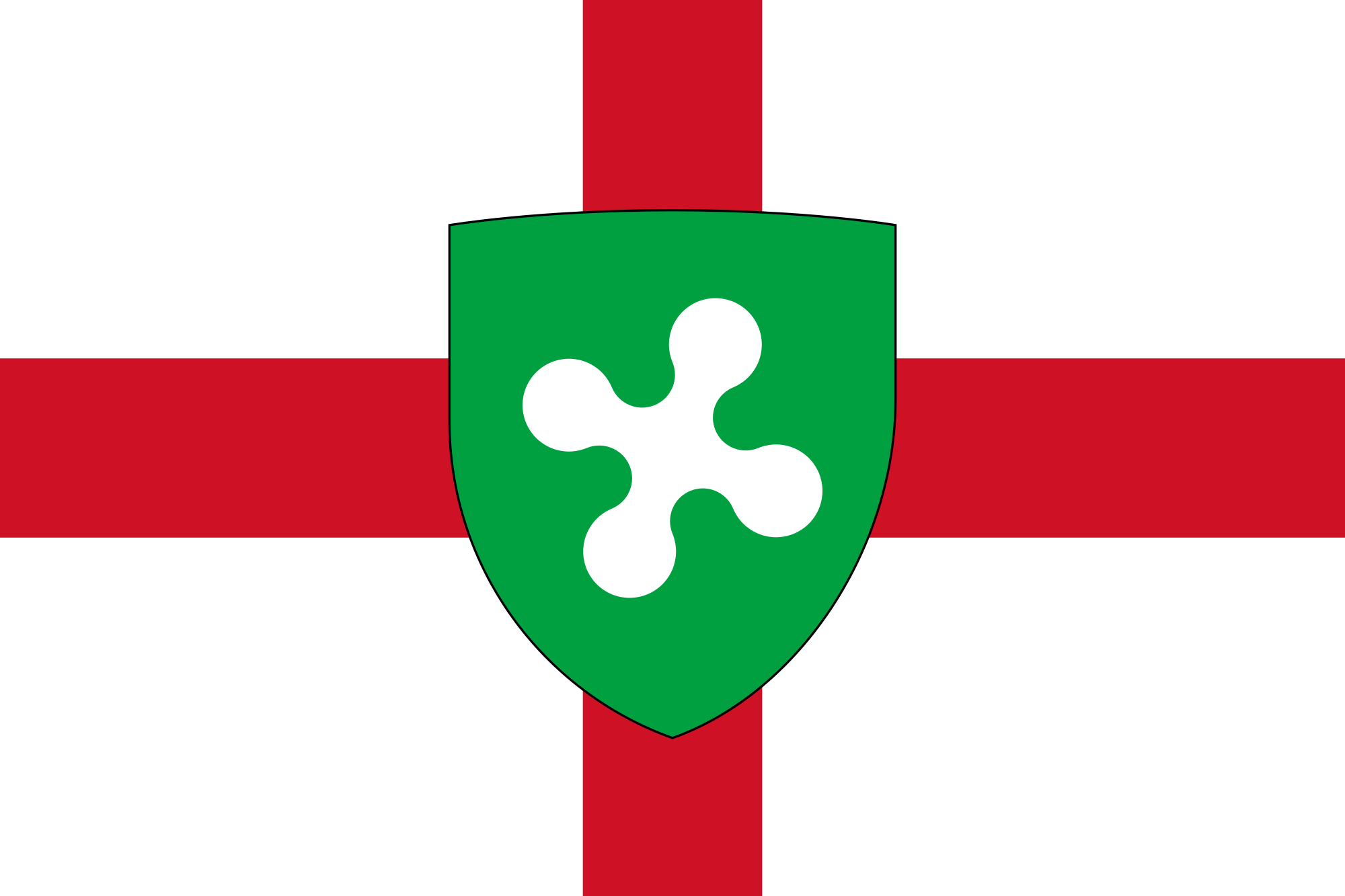
The St. George Cross is used by most independence and autonomy parties, despite some of them also use the flag of the Duchy of Milan, the Camunian rose or a flag inspired by federalist movements of 1848, with St. George Cross superimposed by green. There is also the idea of using a flag with both the red cross and the Biscione of the House of Visconti.
************
Lombard flag reflecting west Lombard heritage, with the Visconti family or Milanese arms....
************
Lombard flag reflecting east Lombard heritage, with the Camunian rose motif....
.
Labels:
geopolitics,
Lombard history,
Lombard nationalism,
Lombardy
Tuesday, June 4, 2019
Lombard Nationalism: Part II
History
Like in the rest of Europe, during the Romantic Era there was an awaken of the national sentiment in Lombardy. The napoleonic creation of the Cispadane Republic, which was later replaced by the Cisalpine one, opened the doors to the political debate. Carlo Botta, a piedmontese politician, wrote a book entitled Proposition to the Lombards about a way of free government, where he claimed the need of a constitution for the Lombard Nation, independent from the French one inspired by the Revolution. In the same years, Giuseppe Faroni proposed a draft constitution entitled Constitutional pole for the Lombard Republic.
The first independence movements appeared in the first half of the 19th century. Carlo Porta, one of the most important lombard intellectual, shows his adhesion to this idea in some writings. They are often associated to the Italians federalist movements, but they consider Lombardy as a nation instead a mere administrative division of the future state:
Che vegga Italia e la nazion lombarda strette ad un patto (That I'll see Italy and the Lombard nation close to a deal)
-- Pater Noster (dei Milanesi), a patriotic song of 1848
| 'Allegory of Lombardy' -- Giovanni Baratta |
After the annexation to the Kingdom of Sardinia (and the creation of the Italian state), it seems that some republicans and federalists movements want the creation of a State of Milan, because of the cultural, economical and social differences between Lombardy and the rest of Italy.
During the riots of Milan in 1898 and the other strikes in the following years (especially in 1913), when the Kingdom had to move 30,000 soldiers), some rumors of separatism came to the Italian government.
In the 1950s some small movements for autonomy appeared, such as the Movimento Autonomista Bergamasco, founded in 1947 by Guido Calderoli, that participated to the local elections in 1956, and later involved other Lombard provinces, changing first in Movimento Autonomista Regionale Lombardo (asking the creation of the Lombard Region, as required by the Italian constitution) and at last in Movimento Autonomie Regionali Padane (participating at political elections in 1958 and 1967), before disappear in 1970. Another movement is the Unione autonomisti padani, created by Ugo Gavazzeni with the union of various autonomist movements in northern Italy, that participated at political elections in 1967.
From the legacy of this experiences in the 1980s was founded the Lombard League (since 1989 flowed in the Northern League). During the years, its target changes between the separatism and the ask of a greater autonomy in the Italian state. In 2018, the independence was officially abandoned by the federal secretary Matteo Salvini, after five years of ambiguity.In the first decades of the 21st century, some cultural initiative and political parties appeared (among which Pro Lombardia Indipendenza is the best structured one).
In 2017 an advisory referendum (done simultaneously with the Venetian one) about the concession of a greater autonomy to the Lombard Region obtains the 95.3% of Yes, with the 38.3% of affluence. So the president of Lombardy, Roberto Maroni, opened the negotiations with Rome.
After the contemporary elections for the central and regional government in 2018, the new lombard president Attilio Fontana designates Stefano Bruno Galli as autonomy assessor, waiting for the formation of the new Italian government.
.
Labels:
geopolitics,
Italy,
Lombard history,
Lombard nationalism
Monday, June 3, 2019
Lombard Nationalism: Part I
Lombard nationalism
Lombard nationalism is a nationalist, but primarily regionalist, movement active primarily in Lombardy, Italy. It seeks more autonomy or even independence from Italy for Lombardy and, possibly, all the lands that are linguistically or historically Lombard.[1] During the 1990s, it was strictly connected with Padanian nationalism.
Today the main Lombard nationalist parties are the Lombard League and Pro Lombardy Independence.
************
Lombard language
Lombard (native name lumbàart, lumbard or lombard, depending on the orthography; pronounced [lũˈbɑːrt] or [lomˈbart]) is a language[7] belonging to the Cisalpine or Gallo-Italic group, within the Romance languages. It is a cluster of homogeneous varieties used by at least 3,500,000 native speakers in Northern Italy (most of Lombardy and some areas of neighbouring regions, notably the eastern side of Piedmont), Southern Switzerland (cantons of Ticino and Graubünden), and Brazil (Botuverá, Santa Catarina). The languages closest to Lombard are Franco-Provençal, French, Romansh, and Occitan.
************
The ancient nation of Lumbardia (pronounced "Loom-bar-DEEE-ah")
"This is OUR land, culture, language, and nation! We did not take it from anyone."
Not to be confused with the old Teutonic Lombardic language, the borders of what had been the Lombard language is a good geographical gauge of what our ancestral nation looked like for many centuries. Somewhat oddly, the Lombard people already had won their national independence with two rebellions against the Austrian-Hapsburg Empire back in the mid-nineteenth century. The first was the Five Days of Milan in 1848, largely under the direction of the Milanese Carlo Cattaneo. The second was the Ten Days of Brescia in 1849, under the direction of the Brescian Tito Speri.
It should be noted that Lombardy and the Veneto were under the same Austrian colonial administrative state of the Kingdom of Lombardy-Venetia. Also, these revolts did not include the Lombard-speaking regions outside of what we know today as Lombardy, such as the Ticino canton in Switzerland.
![]() |
| The Milan Cathedral, a symbol of Lombard culture |
.
Labels:
geopolitics,
Italy,
Lombard history,
Lombard nationalism,
Lombardy,
Milan
Subscribe to:
Posts (Atom)