
Showing posts with label Lombard language. Show all posts
Showing posts with label Lombard language. Show all posts
Saturday, July 28, 2018
Rediscovering people's Swiss-Italian roots (Australia, California)
Rediscovering people's Swiss-Italian roots
SWI swissinfo.ch - English
Many people with Swiss-Italian roots who responded to a swissinfo survey last year, recalled their first visit to the land of their ancestors. (Production, photograph/old postcard selection: Christoph Balsiger)
.


Tuesday, September 27, 2011
Lombard bilingual signs
Lombard bilingual signs
See also: http://www.squidoo.com/padaneis - Some bilingual road signs in Lombard and Italian. Also featuring a few signs in Emilian.Some frames have been driven beyond their natural resolution limits so they are now of low quality; however the primary goal of this video is documentary and educational. No audio.
Photos taken between 2009-08 and 2011-09. Most photos by the author.
We are proud to thank the following persons (here listed in alphabetical order):
1) Joan Francesc Roger for suggesting us many places with Lombard panel signs in Bèrguem province ["provincia di Bergamo"] as well as for sending us a photo from Bèrguem;
2) Robert Stefenaç-Boss for sending us a photo from Cassan Manyag ["Cassano Magnago"];
3) Antjol Veronés for sending us photos from Varés, Gatjava-Schan, Bugutjà, Moraçom, Lonà-Cepin, Tradaa, Visévar [Varese, Gazzada-Schianno, Buguggiate, Lonate Ceppino, Tradate, Castelseprio];
4) Danyel Vitæl for sending us photos from Bonden and Campsent [Bondeno, Camposanto].
To get constantly updated info, please subscribe, free of charge, "The Padanian newsletter":
https://groups.google.com/group/the-padanian-newsletter?hl=en
.
Monday, February 14, 2011
Two big revelations from a little pocket book
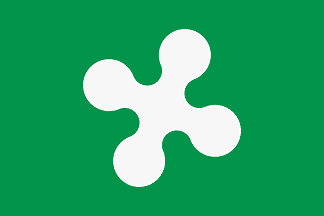
Let's get the negative one out've the way first. On page 9 under the heading "Language," it states: Un omm al gheva a düü fiö ("A man had two sons") could be the opening of any local fairytale, and anyone who's just done a course in Italian will be annoyed to discover that he doesn't understand a word. The strange language is Lombardian. Never fear, however, only a few small communities high in the mountains continue to communicate in it. The language of Dante - which marked the beginning of Italian literature - was Tuscan, and over the centuries Lombardian was gradually squeezed out by Tuscan Italian as the favored dialect.
Would I be overreacting to conclude that what I just read was someone gloating over the fact that a major part of one of the world's cultures was almost gone? The wording of it, at the least, showed a mindless slant towards the mere temporary visit of a tourist. Heaven forbid, should a person actually believe that Lombardia should still be a sovergn nation, still officially speak their own "strange language," and still be maintained as a intrinsic-homeland for the Lombardian people.
The second one was on page 54 of the chapter entitled 'Route 7' (Lake Iseo). It states: One very rewarding car excursion from the Lago d' Iseo is to Capo di Ponte, halfway up the Val Camonica to the northeast, famed for its prehistoric rock engravings. Around 158,000 of these have been discovered, and they date from different periods - some even from Neolithic times (8,000 years ago). The engravings, many of which show hunting scenes and religious symbols, can be admired in Capo di Ponte's National Rock Engravings Park (Parco Nazionale delle Incisioni Rupestri), which was declared a World Heritage Site by UNESCO in 1979.
The Neolithic dating for some of the Camunian symbols is very significant. It shows an incredible continuity of culture. This was long before the Celts migrated to this region. These were very ancient Alpine people who predated Mediterranean and Nordic peoples in Europe (both having later migrated westward from the Middle East and northern Eurasia). Also, the religious nature of some of the artifacts is significant. Imagine our ancestors, who had great knowledge of the stars, observing them on a perfect night.... 8,000 years ago. Lastly, this second revelation of Neolithic origins gives a perfect basis for why the first is such a negative.
.
Saturday, April 4, 2009
Italian Swiss is Lombardian
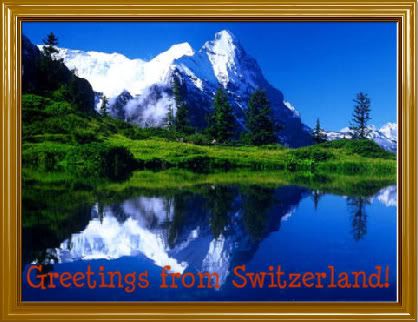 We've covered this area a number of times, but not specifically. Anything "Italian Swiss," or "Svizzera Italiana," is from the Lombardian culture. In other words, any time we hear it, it's in reference to our culture. Our people.
In rural areas, the Lombard dialect can be spoken without any stigma, as there is in Italy. A time, not really long ago, everyone in Lombardia and Lombardian Switzerland spoke the Lombard dialect. Actually, it's the Lombard language, with a Western Lombard dialect.
On the Wikipedia webpage called "Linguistic geography of Switzerland," we can see maps of the language distribution of Switzerland. We can see the canton of Ticino, and east of it the canton of Graubünden (Grigioni). Three separate southernly parts of Graubünden speak the Lombard language. In Graubünden, an ancient form of Latin called "Romansh" is spoken, as it is in certain parts of northeast Italy. This language goes back to the Roman province of Raetia, which encompassed a part of what is now northeast Italy and up to Bavaria and Swabia. We can cover this subject at a later time.
Ticinese is the language, people, and culture of Ticino. In this video, people in Ticino are asked what language they speak? Only the second to the last woman seems to mention "Lombardo" as her language.
Subscribe to:
Posts (Atom)