MILAN (AP) — The presidents of Italy's wealthy northern regions of Veneto and Lombardy on Sunday claimed victory in autonomy referendums that seek to grab additional powers and tax revenue from Rome, riding a global tide of self-determination that has swamped Spain's Catalonia region.
The votes were nonbinding, but the leaders of the neighboring regions hope to leverage strong turnout in talks with Italy's center-left government. As leading members of the anti-migrant, anti-EU Northern League, they want to keep more tax revenue and have autonomy over such policy areas as immigration, security, education and environment.
"This is the big bang of institutional reform," Veneto President Luca Zaia said in Venice. "We are convinced, and I hope Rome understands, that this is not the wish of a political party. These are the wishes of the people."
In Milan, his counterpart in Lombardy, Roberto Maroni, said that with the votes, the two regions "can unify our forces so we can do the battle of the century." The two leaders say they will meet with their regional councils to finalize their requests before going to Rome to meet with Premier Paolo Gentiloni.
Unlike in Catalonia, the referendums do not seek independence and were approved by Italy's constitutional court. Still, the autonomy drive is a powerful threat to Rome's authority. Together, Veneto and Lombardy account for 30 percent of Italy's GDP and nearly one-quarter of the nation's electorate.
Maroni said an overwhelming 95 percent of his region's vote went to "yes," with turnout above 40 percent of Lombardy's 8 million voters. That far exceeded the bar for success that he set at 34 percent, which was the turnout for a national referendum on constitutional reform in 2001.
Independence-minded Veneto easily met a turnout threshold to validate the vote set by Zaia, with some 60 percent of the region's 4 million voters casting ballots. According to early returns, 98 percent voted "yes."
"It is said that blood is thicker than water. It is what defines us, binds us, curses us. For some, blood means a life of wealth and privilege. For others, a life of servitude." -- Barnabas Collins in the opening scene of the film 'Dark Shadows' (England 1760)
Right up until America established itself as a supreme world power, most of the world was ruled by deep-rooted semi-despotic aristocratic systems. Systems in which nation states, and right down to small rural impoverished territories, were dominated by a privileged few based on their direct family lineage. These systems conflated with the power bases of a society; generally monarchy, religion, banking, economics, and the institution of law. Once established, it was extremely difficult to wrestle power from their powerful grip. It should be noted that many of these aristocracies became disgenic and inbred over time.... aka "genetically unfit" in the eyes of nature. False evolutionary struggle. Underneath these established choke points of a nation were the aristocracy of large cities which ruled over the provinces. For example, the Brescian Council of the Middle Ages was clearly a regional aristocratic oligarchy. There were too many aristocratic families involved to be considered a monarchy; however, for example, the fine reputation of your great-grandfather was literally a requirement for membership. That is not an exaggeration. In fact, certain legal and necessary businesses were shunned because they were just too dirty or harsh in their activities. Are we so much better today? Many snobby urban "intellectual" conservatives and liberals totally dismiss "farmers" or people who merely live in rural areas as somehow "beneath them." Even within an impoverished rural province, such as the Swiss Canton of Ticino in the nineteenth century, who your father was dictated your upward advancement in that society. Not surprisingly, after living generations amid that type of social restriction, Ticinese immigrants became very industrious in capitalist-friendly California, Australia, or Britain. Capitalism can be either a blessing or a curse within this concept; although more often it removed the invisible shackles of aristocracy. If not kept in check however, it can coalesce into an oligarchic defacto-aristocracy with bloodline merely replaced by money.
Communist dictatorships create a type of aristocracy even more than Capitalism does, because it will always be the few ruling over the many. "The intellectuals" who led the revolution now become the new dictators.... usually worse than the old ones. Cubans in south Florida dominate many of those economies, but only after initially living under a Communist dictatorship. Even to use a religious example, the Mullahs who now rule Iran are at least just as despotic as when the Shah was in charge. The Shah was only brutal towards anyone who opposed him, the Mullahs are full on religious tyrants.
Digressing to the original concept of "aristocracy" based on the bloodline, those family bloodlines have a terrible track record in terms of how they treat the people of their own culture. In other words, their concept of a bloodline ends outside of their monarchical circle. This has been proven time and time again, over centuries. In my opinion, it was their very worst trait! At times, they acted almost as though they hated their people. Only during times of war did the scoundrels start talking "we and us." I think that can hold equally true in Capitalism, Communism, monarchies, and religion. Outside of the realms of the usual aristocratic suspects, native folkways provide for a love of one's people and the land. Although one can find some historical elements of brutality, much more often they displayed the qualities of 1) love for one's people, love for the land, love for animals, the divine masculine (law), the divine feminine (justice), and fairness; and 2) respect for nature's laws, including accepting the concept of evolutionary struggle and the necessity of defending their communities.
Law and justice worked together! Everyone within a community was cared and looked after; however if someone was destructive upon their society, there would be consequences. Pulling one's weight to their ability was a requirement. People like the Koch Brothers or George Soros wouldn't last very long. Activities which would harm society would not be tolerated in the tribal-minded society. Had those societies been allowed to ascend in the world, there wouldn't be poisoned water from fracking or sex parades in front of children.
If patriarchal societies based on wealth, aristocracy, and Abrahamic religion is "traditionalism," then ancestral folkways represent "radical traditionalism." Aristocracy wasn't "bloodline" as much as just greedy selfish families in control. Folkways are the love of one's people and respect for nature's laws. The real struggle isn't "Left vs Right," which are just two expressions of the same thing ("opposames"), but the aristocratic mindset vs. the ancestral folkways... true opposites. I think mankind is at it's best when we are energetically humble. Not the disempowering type of humble, but the type of humble such as when someone is a gracious guest. I'm enriched when raccoons, foxes, skunks, hawks, and owls come out've the nearby mountains and woods and travel across the hillside where I reside. I like that I can share the earth with them, while still understanding and respecting nature's laws and evolutionary struggle.
I don't think we are served best when society attempts to make us "totally safe." I like to hear coyotes howling in the darkness of a nearby canyon at night. Awhile back I saw all sorts of white feathers outside my window. Several ravens were attacking and killing a sea gull. Nature is both beautiful and harsh. We are part of that.
One common feature amid the sewer of modern politics is a prevailing attitude that "everything is about ME!!" We're a good fifty years into the era of bad people making decisions for us, so I would have some sympathy for that problem; but everything is not about us. We already had it right thousands of years ago. Nobody can explain why technology is rising so fast, but not as fast as IQ scores are plummeting! People are being killed walking into heavy traffic, across train tracks, or off of cliffs because they can't take their eyes off of their devices. Everything is completely out've balance in human society. .
The Lombard autonomy referendum of 2017 will take place on 22 October in Lombardy, Italy.
The poll is not binding, but might have consequences in terms of negotiations between the Italian government and Lombardy as the regional government will ask for more devolved powers if the "Yes" wins. Also neighbouring Veneto will hold a similar referendum on 22 October. Both President of LombardyRoberto Maroni and President of Veneto Luca Zaia are members of Lega Nord and, more specifically, of Lega Lombarda and Liga Veneta, respectively. *************************
[Right: Lombardy region president Roberto Maroni answers reporters' questions during a news conference to present the referendum for autonomy in Lombardy, in Milan, Italy Friday, Sept. 15, 2017. Voters in the Northern League-governed regions of Lombardy and Veneto will decide Oct. 22 if they want their presidents to seek greater autonomy, as already allotted to five other Italian regions. (AP Photo/Luca Bruno)]
MILAN (AP) — Referendums that seek greater autonomy for two of Italy’s most prosperous regions have the potential to join the Brexit campaign and the Catalonia independence vote in changing the face of Europe, Lombardy president Roberto Maroni said Friday.
Speaking to reporters, he stressed that the goal is not to secede from Rome.
Voters in the Northern League-governed regions of Lombardy and Veneto will decide Oct. 22 if they want their presidents to claim powers from Rome, as already granted in varying measures to five other Italian regions. The referendums will come shortly after voters in the Spanish region of Catalonia are to decide on independence from Spain and as Britain negotiates its exit from the European Union.
Maroni said one of his primary aims is to retain half of the 54 billion euros ($64 billion) in tax revenue from Lombardy that goes to Rome each year, something that could be achieved with a change of law. But the former interior minister also wants control over security and migration, which would require harder-to-win constitutional changes.
“My ambition is to create in Lombardy a model of excellence, security and control of the territory,” Maroni said. “It is a very ambitious project. But it is not that I just want some additional competencies. I want to change history, and this referendum gives me the possibility.” [Left: Party flag of Lega Lombarda. Lega Lombarda ("Lombard League"), whose complete name is Lega Lombarda–Lega Nord ("Lombard League–Northern League"), is a regionalist political party active in Lombardy.]
While the Italy votes are non-binding, Maroni said he and Veneto president Luca Zaia will travel to Rome the next day to begin talks with Premier Paolo Gentiloni, with their demands corresponding to the strength of the vote.
"I hope that the government will be willing (to negotiate), because it would not be against the governors, but against the people," Maroni said.
He said he wants to use any popular impulse demonstrated in the vote to seek greater regionalization within the European Union while respecting national borders. He cited a pan-Alpine region established last year that gives the mountainous area across seven nations the power to negotiate directly with Brussels on limited topics and seek direct financing for projects.
“I am not against Europe. I am for a different Europe. What we call Europe of the people, or Europe of regions,” Maroni said. “I think that the push that will come from our referendum, from Brexit and from Catalonia, all go in that direction.” .
Solar Stones of the Goths - Gotland Survive the Jive The famous picture stones of Gotland are like Viking rune stones from Scandinavia, but they have pictures and fewer runes. The themes and images depicted on them developed over the Iron Age and into the Viking Age. Originally they seem to have pertained to some kind of Indo-European solar cult involving horses, but later stones have more familiar figures from Norse mythology. Early stones could have served as grave monuments which may explain the solar iconography focusing on the eternal solar cycles. There are many images relating to death - including sleipnir, the sacrifice, battles and possibly valknutl. Cremation graves sometimes found at foot of stones. I also explain that Gutasaga records Gotland as the homeland of the Goths and that the nation was founded by Tjelvar, servant of Thor, whose grave I visit. It is a stone ship setting. This channel depends on your support: Paypal: https://www.paypal.me/survivethejive Patreon: https://rootbocks.com/projects/survive-the-jive FB: https://www.facebook.com/SurviveTheJive Thanks to Gotland Museum, Visby. Music: Sun and Moon Dance - Hymne til Freyja Wolcensmen - Sunne Faunus Amadeus Loki - Strange Aeons ************************* Quote "When cops break the law, there is no law." -- Author unknown *************************
Amazing: Leopard Rockets Up a Tree to Catch Owls Smithsonian Channel Thirty feet up in a tree, a group of owls are not expecting this four-legged predator to come calling. The lesson here: Never underestimate a leopard's speed and agility. From: AFRICA'S PREDATOR ZONES: Coliseum http://bit.ly/1NTxvMf *************************
Nena - 99 Luftballons TV80s Music video by Nena performing 99 Luftballons (P) 1983 CBS Schallplatten GmbH For Entertainment Purpose Only. See more 80s music videos at http://tv80s.com *************************
North Korea is dark GlobalSecurity.org South Korea is bright, North Korea is dark. This amazing image is included in the standard US Department of Defense briefings on North Korea. It was mentioned in a news briefing on 23 December 2002 by Defense Secretary Rumsfeld, who stated that "If you look at a picture from the sky of the Korean Peninsula at night, South Korea is filled with lights and energy and vitality and a booming economy; North Korea is dark." con't... *************************
Katarina Witt nude The former German Olympic figure skater has a very muscular-feminine body for a figure skater, even back when she was competing. Ukrainian-French model/actress Olga Kurylenko has the more willowy-feminine body... just slightly too racy for this blog. ************************* Quote "If the freedom of speech is taken away then dumb and silent we may be led, like sheep to the slaughter." -- George Washington *************************
Roxette - It Must Have Been Love Roxette *************************
Jim Marrs Secrets of the Holy Lance Collin Danika *************************
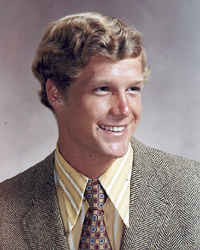
Joe Roth - 40 years later From FindAGrave biography: In the spring of 1975, Joe Roth, a 19 year old transfer student from Grossmont College in San Diego, enrolled at the University of California, Berkeley. Joe hoped to earn a degree, meet new people, and learn more about himself. In his two short years at Cal, Joe accomplished so much more. Joe was a quiet, down to earth guy who was dedicated to his school work. He was a Physical Education major who would have blended in perfectly with the general student body if not for one major difference, the golden right arm attached to his body. His arrival on the Cal campus was not by coincidence. Joe was a quarterback recruited from Grossmont to play football. And play football he did! On 22 Fall Saturday's during the 1975 and 1976 seasons, Joe crafted his quarterbacking skills, became a Heisman Trophy contender, and dazzled NFL scouts. Joe's on-field presence and leadership skills won over his teammates while his gentle demeanor and team-first attitude captured not only the hearts of Cal football fans but of an entire University campus. Joe was the face of the Cal football team and he elegantly represented the ideals of a student-athlete by excelling in both the classroom and on the field. In January 1977, while preparing for the Hula Bowl, a post-season all-star game in Honolulu, HI, Joe revealed publicly for the first time that he was again suffering from cancer (melanoma). Unbeknownst to most of his friend, fans, teammates, and classmates, Joe had battled cancer once before. While no one really knows for sure when the cancer returned, it is believed Joe played the 1976 season knowing something was different. Silently and unknowingly during the 1976 season, the gridiron became much more than a football field for Joe. The gridiron became Joe's classroom and on Saturdays Joe taught his teammates, classmates, friends, fan, and family members just what it meant to cherish life. Joe was determined to live his life without pity, excuses, blame, and special attention. His teammates later said that Joe showed everyone how to face adversity with faith, humility, and courage and how to never give up. On February 19, 1977, just three months from his 22nd birthday, Joe lost his battle to cancer and we lost a friend, a son, a brother, a teammate, a classmate, a hero, a role-model, and an outstanding human being. And yet, while we lost, we also gained a clear example on how to embrace adversity, to live life to the fullest, and to never give up. Twenty five months after stepping onto the Berkeley campus Joe's journey was complete. He arrived as a student and ultimately left a teacher. ************ This story would be just as powerful if Joe Roth had been a third stringer, but for all we know he could have ended up the greatest quarterback of all time. Joe Roth (Wikipedia) Don't Quit: The Joe Roth Story (2015 documentary) Joe Roth #12 (memorial website) *************************
"Universal access to all knowledge" website The old Christian Science reading room building in San Francisco was sold in 2009 to the Internet Archive. The stated goal of this non-profit organization is "universal access to all knowledge" though it's website, which apparently has archived over 400 billion texts and media. The organization chose the church based on its Greek Revival design, which resembles the logo of the Internet Archive. I ran into it just by accident as I was reading up on Christian Science just out've curiosity, and it led me to the archive. Just from a few searches, it's very substantial; and in some ways a better search than google. Internet Archive website *************************
Cub Scouts I was a Cub Scout when I was a kid. In hindsight I would have liked to have remained in it I think, eventually to a Boy Scout. Children and teens often don't have all that much choice; someone is always telling them what they ought to be doing. Often the push is into sports, as with myself. I had a friend whose father had all six children learn to play the piano, model, and partake in the theater department. I'm just wondering... who was it really for? For me it was the sports thing. I enjoyed competing, but wasn't much for fitting into a pack of random boys. I could have really lived without it, and did other things that interested me, such as scouting. *************************
Naked Eyes- Always Something There To Remind Me 80sMuzic *************************
Graham Hancock New Clues in Cave Art REVEAL OTHERWORLDLY INSIGHT GROSS SLIME BAFF *************************
*************************
Walkabout (1970's) FunFilm Mix Classic Oz film about a sister and a brother left in the desert to fend for themselves .. ************ I remember seeing the 1971 UK/Australian film 'Walkabout' on TV when I was a child, and it struck me as a powerful movie at that age. I remember having a crush on the 18 or 19 year old Jenny Agutter. I truly felt like it was a true fight for survival, and with the mysterious Aboriginal friend leading the way. The film quality and its cinematography really hold up today. This is the full movie, and that channel has many full movies; mostly forgotten TV films. Sometimes you can find a real gen in the mix. ************************* Quote "The government was set to protect man from criminals--and the Constitution was written to protect man from the government." -- Ayn Rand *************************
Shania Twain - You're Still The One ShaniaTwainVEVO *************************
Dracula's Daughter (1936) Dracula's Daughter tells the story of Countess Marya Zaleska, the daughter of Count Dracula and herself a vampire. Following Dracula's death, she believes that by destroying his body she will be free of his influence and can live as a human. With the aid of her manservant, Sandor (Irving Pichel), she steals Dracula's body from Scotland Yard and ritualistically burns it, hoping to break her curse of vampirism. However, Sandor soon makes her realize that her thirst for blood has not been quenched and that all that is in her eyes is "Death." ************ I saw this 1936 film a few days ago on American Movie Classics. It was pretty good; considered excellent for that time. There were no scenes of violence as it would not have been acceptable for a woman to be shown committing acts of violence, or even being too overtly evil acting, at that time. Still, the character's alluring yet vulnerable personality could keep the audience on edge. *************************
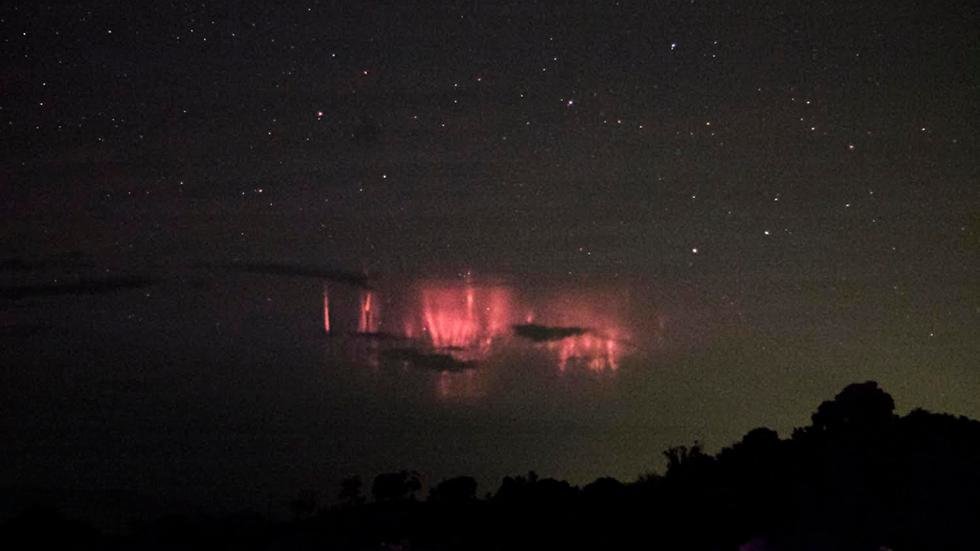
Sprite - "Red Lightning" above the storm clouds Sprites are large-scale electrical discharges that occur high above thunderstorm clouds, or cumulonimbus, giving rise to a quite varied range of visual shapes flickering in the night sky. They are triggered by the discharges of positive lightning between an underlying thundercloud and the ground. Sprites appear as luminous reddish-orange flashes. They often occur in clusters above the troposphere at an altitude range of 50–90 km (31–56 mi). *************************
Family Ancestry and Veneration The Slippery Spirit - July 17, 2017 The following topic could possibly illicit some horrible reactions. Given that everyone wants to be focused on issues of racism and cultural misappropriation these days, there may be an assumption that this entry is about race. To address that, I have to first note that this is my blog and I can write whatever I want, because until further notice, I do still have the freedom to express myself. You, the reader, also have the freedom to navigate away from my words and not read them. Secondly, let me note that this blog entry is not about race at all, it is about families and their cultures. If you can't separate the two in your head, you need to stop reading now and go away. The honoring of our past relatives is extremely important. Without diving into an extremely long blog entry on why it's important, just follow me down this thought path. Wouldn't you rather your descendants remember and honor you, instead of completely forgetting you? If you aren't going to leave a significant mark on this world through an invention or some major discovery, don't you at least want the mark you leave (your progeny) to recognize your contribution to their existence? And if the previous is true for you, why wouldn't you want to provide the same recognition to those who were responsible for your existence so that they are not forgotten? You exist because of them. To me, that alone makes them worthy of honor. con't... *************************
Elizabeth Gale Last week I was watching an episode of 'Scientology and the Aftermath' with ex-Scientologist Leah Rimini. The episode, which was entitled 'The Perfect Scientology Family' (see above), was about a family in which there was a Scientology-related suicide some years ago. His name was Phillip Gale, a computer/software prodigy who may have gone onto some big things. They interviewed his sister, Elizabeth Gayle, an Oregon woman in her early 30s. At first I ignored her ample beauty, as it was entirely besides the point of her story. By the end of the interview however, it was apparent to me that she was incredibly beautiful; perhaps more so than any Hollywood actress that I can think of! She seemed so on the inside as well, and was really just like any gal next door. She is a good singer, as one can see on one of her YouTube videos, and a mother. Perhaps "Gale" comes from "Gael," as she looks like a Gaelic beauty. Elizabeth Gale - YouTube An overseas episide link in case the above one is removed ************************* Starbuck - Moonlight Feels Right
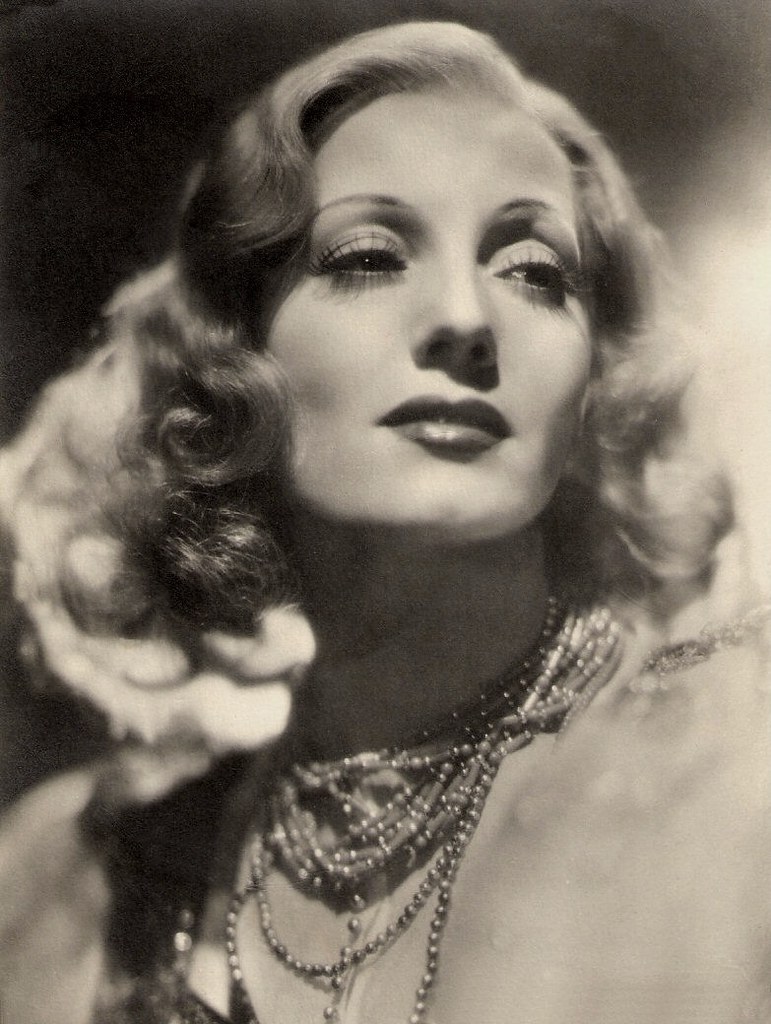
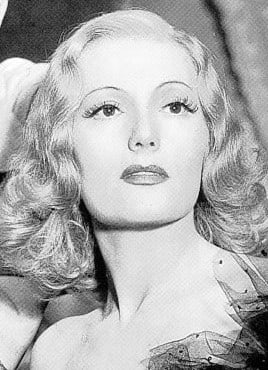
This article on Isa Miranda was written by Chiara Ricci, author of the newly released book “Anna Magnani. Vissi d’arte, vissi d’amore.” It has been translated from Italian. Trying to explain what Isa Miranda means to Italian cinema is not easy because of her life-long sensibility, her professional choices, and her unique and rare gift of versatility and being able to adapt under every circumstance. Isa Miranda worked in Italy, in Switzerland, in France, in the United Kingdom, and in the USA. She is the first Italian actress – after Rodolfo Valentino and Francesca Bertini – to be called to Hollywood to sign a contract with Paramount. Isa Miranda was born in Milan as Ines Isabella Sampietro, a humble peasants’ daughter. She managed, only with her strength and her ambition for a better life, to become one of the most important actresses during the period 1934–1944. In 1934, her true entrance in the world of cinema came with her performance in La signora di tutti, directed by Max Ophüls, where she is Gaby, a young femme fatale. After becoming a star of Italian cinema, Isa made her way to Hollywood. In 1937, with producer Alfredo Guarini (who she will marry in 1939 in Tucson, Arizona) Isa traveled to the USA to get away from a fascist cinema. She was considered an antagonist of Greta Garbo and Marlene Dietrich. The star system worked on her image and attitude, creating the appearance of an unattainable woman, much like the other female stars of the day.
Miranda does not consider herself a diva, but an actress. In the USA, she takes part in two films: Hotel Imperial (1939) directed by Robert Florey with Ray Milland, and Adventures in Diamonds (1940) directed by George Fitzmaurice, the same director of Mata Hari. But these films are not successful. The relationship between Miranda and the American star system is not idyllic. Adding to this stress is the outbreak of the war, and more importantly, the illness of Isa’s mother. This brings an end to Isa’s American adventure, and in 1940, she returns to Italy where she finds many surprises. Because of her antifascist opinions, Isa runs into a lot of problems with the regime and with other actresses. The press receives orders from higher-ups, forbidding them to talk to, write about, or advertise Miranda. In fact, her return to Italy is completely unpublicized and her career comes to a halt. Her husband tries to help by producing and directing three of her films between 1940 and 1942, without success: Senza cielo, E’ caduta una donna and Documento Z3.
Finally, things begin to turn around. It is 1942 and Mario Soldati wants Isa Miranda to be Marina in Malombra, a film inspired by Antonio Fogazzaro’s novel of the same name. This is a great success! The same year, Renato Castellani chooses her for the title role in Zazà. In this film, a singer falls in love with a married man, so she decides to leave him to his family, sacrificing her love. This is another success and the public discovers a new Isa Miranda. These films are two gems in Miranda’s filmography where she is in her maturity as an actress, finding the perfect balance between herself and her characters. In fact, she loves to study, to create her roles, but she wants to live them, to have them, to build them, and to cry and to laugh with them, too! She wants to be the character, and she wants to give it life by inserting her vitality and her temper. Then Miranda divides herself between Italy and France where she makes other films, though they pass almost unseen: La carne e l’anima by Wladimiro Strichewsky (1943), Lo sbaglio di essere vivo by Carlo Ludovico Bragaglia (1945) and L’avventura comincia domani by Richard Pottier (1947). But in 1949, things change. René Clément directs her with Jean Gabin in Le mura di Malapaga. In this film, she is Marta, a hostess who falls in love to a man who is wanted by the police for homicide. She hides him, but in the end, he is arrested. Thanks to this part, Miranda wins the International Gran Prix as Best Actress at the Cannes Film Festival and the New York filmgoers vote her the Best Foreign Actress of 1949–1950.
In 1950, she again works in France with director Max Ophüls. She takes part in La ronde, inspired by the namesake piece written by Arthur Schnitzler. It is a choral film and tells how love is like a merry-go-round. After this film Miranda will have only little parts, short presences in film that are unimpressive, for example: Cameriera bella presenza offresi (1951) directed by Giorgio Pàstina, I sette peccati capitali directed by Eduardo De Filippo (1952) in the episode Avarizia e ira and in the forth episode of Donne where she is directed by Luigi Zampa. This last performance is one of her most intense; she tells about the pain of not having children and her deep feeling of motherhood.
Miranda is almost completely forgotten in Italy and decides to work abroad: in France with Prima del diluvio (1954) directed by André Cayatte, Il tradimento di Elena Marimon (1954) directed by Georges Combret; in the USA she takes a part alongside Katherine Hepburn in Summertime (1955), directed by David Lean.
In Italy, she has only a few short roles in Arrivano i dollari! (1957) directed by Mario Costa with Alberto Sordi, Nino Taranto, Riccardo Billi, Mario Riva and in Gli sbandati directed by Mario Costa. It is hard to understand and to explain why her career is so varied. She is not stereotypical because she gives life to so many different women; to think differently would be to misunderstand her work. But it is true that she chose to play all these women after 1946, to help her husband following a financial breakdown. So she appears in La corruzione by Mauro Bolognini (1963), La noia by Damiano Damiani (1963), Lo chiameremo Andrea by Vittorio De Sica (1972) and Il portiere di notte by Liliana Cavani (1974). These are Miranda’s last performances and we see the same professionalism and seriousness as she had at the beginning of her career. Finally, she decides to live in England. It is difficult for her because she has to start over with nothing. She works as babysitter and as secretary. But she has no regrets; she has a perfect inner-balance, and she is happy about what life has given her. Even today, Isa Miranda is the representation of Italian (and international) cinema and of an era. She is the girl from Milan and the perfect diva; she is the femme fatale, and the mother she never became in real life; she is the secretary and the muse of the most important painters of last century. She is Isa Miranda. She is always Ines Isabella Sampietro, La signora di tutti. I would like to thank Chiara Ricci for the hard work that went into writing this article. Please take a moment to visit Chiara’s website at www.riccichiara.com and purchase a copy of her new book!
Hotel Imperial 1939 - Ray Milland - Isa Miranda - Gene Lockhart ClassicMovieShop Want to get the full film on DVD? Visit https://www.lovingtheclassics.com/hotel-imperial-1939.html ************ Don't order this from http://lovingtheclassics.com/ they are listed on http://www.ripoffreport.com/reports/specific_search/Loving+the+Classics they are also listed as the fourth highest business with complaints at the Ohio Better Business Bureau. If you want to purchase old movies go to a reputable site like oldies.com they are very inexpensive unlike the above site which prices are a lot higher and you will most likely not receive anything if you do, which most don't it will be something recorded from TV in garbage quality according to the complaints at ripoff report.I don't know why youtube lets them promote sales on their site without paying for it or verifying their business licence and status. All other advertisers pay to have their products promoted on sites. -- Jim Smith, YouTube user ************************* IMDB Mini Bio Isa Miranda was one of the most significant actresses in Europe from the 1930s-'50s. Her remarkable talent expressed itself both in cinema and theater. She reached international popularity in the 1930s, especially in France, Germany and Austria, and became the only international movie star produced by the fascist cinema. In the 1950s, when her film career began declining, she played on stage in Italy, the US ("Mike McCauley", 1951), France ("Le serpent à sonettes", 1953) and England ("Orpheus Descending" by Tennessee Williams, 1959), receiving positive reviews everywhere. In the 1960s she started a TV career in England, appearing in many made-for-TV movies. She was a versatile actress, exceedingly sensible, a charming woman, and unjustly forgotten at the end of her life even by those who should have remembered her. -- Giuseppe Alessi .
Born Ines Isabella Sampietro in Bergamo, she worked as a typist whilst attending the drama academy in Milan and training as a stage actress. She went on to play bit parts in Italian films in Rome. She changed her name to Isa Miranda and success came with Max Ophüls' film La Signora di tutti (Everybody's Woman) (1934) in which she played Gaby Doriot, a famous film star and adventuress with whom men cannot help falling in love. Having brought several of them to their ruin, she slits her wrists. This performance brought in its wake several film offers and a Hollywood contract with Paramount Pictures. There, billed as the "Italian Marlene Dietrich", she played several femme fatale roles in such films as Hotel Imperial (1939) and Adventure in Diamonds (1940).
She returned to Italy soon after the outbreak of World War II and continued to act on the stage and to make films. In 1949, she starred in René Clément's The Walls of Malapaga, which won an Academy Award for the most outstanding foreign language film of 1950, and for Miranda, the Palme d'Or at the Cannes Film Festival. Another success of that period was La Ronde (1950), also directed by Ophüls. Her career took her to France, Germany and England, where she frequently appeared in TV films, including The Avengers. Other notable film appearances include Siamo donne (1953), a portmanteau film where Miranda shares the screen with three other screen legends, Anna Magnani, Alida Valli and Ingrid Bergman, Summertime (1955), Gli Sbandati (1955), La Noia (The Empty Canvas, 1963), The Yellow Rolls-Royce (1964), The Shoes of the Fisherman (1968) and Liliana Cavani's Il portiere di notte (The Night Porter, 1974).
Miranda was married to the Italian director and producer Alfredo Guarini until his death in 1981. She died in Rome in 1982, three days after her 73rd birthday.
Movie Legends - Isa Miranda Movie Legands Isa Miranda was an Italian actress with an international film career.
************
Isa Miranda, was meant to be the Italian answer to the legendary Marlene Dietrich. Miranda between 1930s and 1940s has been one of the greatest actresses of Italian cinema with Clara Calamai, Anna Magnani, Assia Noris and Alida Valli. BAZ, this is a special tribute to a beautiful actress who unfortunately has been forgotten. Malombra is one of her most famous roles, but unfortunately her films are not remembered on television. Congratulations for this work! -- The Big Valley, YouTube user
Most beautiful actress... C.J. Blanda, YouTube user
Harvest Moon Thursday evening is the Harvest Moon. It's not a supermoon; it won't be reddish. It's been looking its usual eggshell color as of late. ************************* Tracy Twyman "Everything really that we know about science is just someone
building a model to explain some data, and you could build a different
model to explain the same data and present either one of them to someone
and tell them 'this is the world you live in', and they would believe
either one of them." -- Tracy Twyman ************ I've been listening to a lot of Tracy Twyman interviews as of late. She's the new Jordan Maxwell, and isn't afraid to push the application of the usual limits. I took this quote from one of those programs. I don't know that one particular program stood out, but if you're interested in no holds barred occultism and metaphysics... you may want to check her out. You could replace the word "science" in that quote, with almost any word which defines any area of human endeavor, and it would apply. ************************* American Girl performed by Tom Petty
jaxdriver American Girl by Tom Petty, illustrated with photographs of beautiful, yet unfortunately dead, American actresses: Ethel Barrymore, Mary Pickford, Lillian Gish, Norma Talmage, Louise Brooks, Mary Astor, Katharine Hepburn, Bette Davis, Joan Crawford, Ava Gardner, Jean Arthur, Helen Hayes, Gene Tierney, Carole Lombard, Barbara Stanwyck, Rita Hayworth, Donna Reed, Hedy Lamarr, Loretta Young, Rosalind Russell, Paulette Goddard, Audrey Hepburn, Susan Hayward, Natalie Wood, Grace Kelly. ************ The Improbable Story Of ‘American Girl,’ Tom Petty’s Biggest Non-Hit .






_01.jpg)