Saturday, October 15, 2011

Game Hunting: Pro and Con: Part 2

Now another simple article, taking the "pro-hunting" stance:


Sean Patrick Farrell - New York Times - November 24, 2009

Charlottesville, Virginia

THE call to forge deeper connections with the food we eat has pulled thousands to the nation’s farmers’ markets, sprouted a million backyard seedlings and jump-started an interest in scratch baking, canning and other county-fair pursuits.

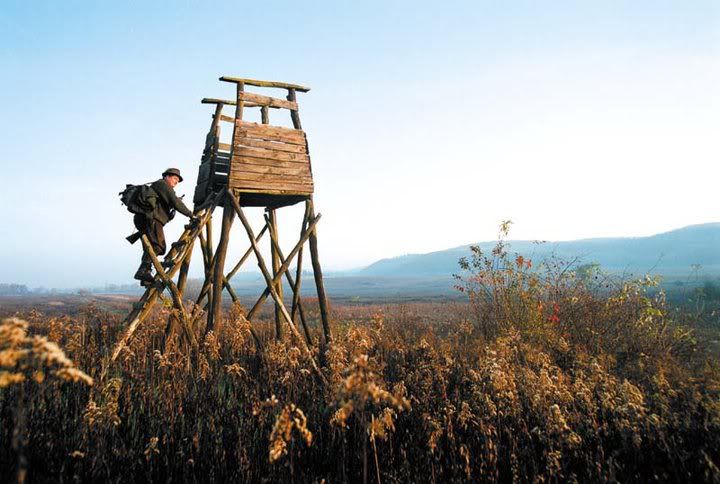
Now add hunting to the list. Novice urban hunters are forming classes and clubs to learn skills that a few generations ago were often passed down from parent to child.

Jackson Landers, an insurance broker by day, teaches a course here called Deer Hunting for Locavores. Mr. Landers, 31, started the classes earlier this year for largely urban adults who, like him, did not grow up stalking prey but have gravitated to harvesting and cooking their own game.

He tailored his course to food-obsessed city people with lessons on deer biology, habitat and anatomy, and rounded out his students’ education with field trips to a firing range to practice shooting and a session on butchery and cooking. One of the last lessons covered field dressing a freshly killed deer. As the students gathered around, Mr. Landers produced a hunting knife and explained its gut-hook feature, which promised to open the deer “like a zipper.”

“I’d never fired a gun before,” said Michael Davis, 44, a graphic designer and a student in the class. “I grew up in Southern California. We surfed, we didn’t hunt.”

But Mr. Davis, a self-described foodie, said he needed to understand what it means to hunt for food.

“I think going through my life without at least experiencing that most primal thing of hunting would be cheating,” he said.

It was a taste for wild boar that spurred Nick Zigelbaum, 26, and Nick Chaset, 27, to form a hunting and dining club in San Francisco that they call the Bull Moose Hunting Society. The society, founded in 2007, was designed to appeal to young urban residents looking to expand their horizons.

The club now has roughly 55 dues-paying members, many of them in their 20s and 30s, who hunt for boar, pheasant and waterfowl together. They share local hunting knowledge and the spoils of a good day in the field at semi-regular events they call boar-b-ques and wild food dinners.

Mr. Chaset, who is now attending graduate business school in Washington, D.C., recently established a chapter of the club there. The founders hope that someday they’ll have a chapter in every major American urban area.

Nationwide, the number of hunters has been in decline for decades. The country’s shift from rural to urban life is the main reason, said Mark Damian Duda, executive director of Responsive Management, a survey and research firm that specializes in natural resources and outdoor recreation issues.

According to his firm’s research, only 22 percent of hunters now say they hunt primarily for food. Most say they do so for recreation or to spend time with their families.

“Thirty years ago it was about half the hunters who were hunting for food,” Mr. Duda said.

The connection never completely faded, though. Some American chefs who grew up with rifles in their hands have long been passionate about wild game, even if the law forbids them from serving it in their restaurants. The subject has also been taken up recently by the writers Michael Pollan, who shoots a wild boar in “The Omnivore’s Dilemma,” and Steven Rinella, who chronicled his quest to kill a wild American bison in “American Buffalo.” But until recently, tree stands and Mossy Oak camouflage were rarely mentioned in the same breath as, say, heirloom tomatoes.

Anthony Licata, editor of Field & Stream magazine, said he wasn’t surprised that a new generation of eaters was discovering what traditional hunters have known all along: “There’s nothing more organic and free range than meat you hunt for yourself and your family,” he said.

Mr. Licata, who is 35 and lives in New Jersey, said he thought interest in hunting among young urban locavores was bound to grow. “When you do hunt and if you’re lucky enough to fill your freezer with venison and feed your family, it’s a powerful thing,” he said. “They aren’t going to want to stop.”

Mr. Landers, who tries to take Virginia’s full limit of six deer a year, agreed. For the cost of the necessary licenses, $36.50, he said he can stock his freezer with nearly free protein.

He also argued that for the environmentally conscious, hunting is fairly carbon neutral.

“If you can shoot a deer in your own backyard, butcher it there, that’s zero food miles,” he said.

A recent convert to hunting, he became interested in wild game a few years ago when he inherited his great-grandfather’s hunting rifle. He read up on deer management, queried his in-laws, many of whom are lifelong hunters, and was soon putting venison on the table.

Like many people, he’d also become concerned about large scale agricultural methods, the use of antibiotics in livestock and the ethics of raising animals in tight quarters. Hunting seemed like a good alternative.

“I felt bad about meat, but not so bad that I was willing to give it up,” he said.

Before founding the Bull Moose Hunting Society, Mr. Zigelbaum and Mr. Chaset wanted a closer connection with their food, but finding information about hunting in the Bay Area was daunting.

Mr. Chaset recalled searching for a suitable wild boar hunting weapon at a gun shop in the Mission District of San Francisco. The staff tried to convince him that a pistol would be fine. He left with the shop’s only rifle, a .308, which he used to fell his first boar in the hills of Mendocino County, an experience he described as “an epiphany.”

“I got this strong sensation of the cycle of life,” he said. It didn’t hurt that he thought the taste of the boar was amazing.

Mr. Zigelbaum said the meat, which tends to be darker and denser than domesticated pork, was “lean, but tasted like bacon.”

He’s heading to the south of France soon where he hopes to study traditional charcuterie methods. Wild boar prosciutto, he said, would be “awesome.”

Their club, named with a nod to the hunter and conservationist Theodore Roosevelt, is as much about rural foodways as it is about environmentalism. Mr. Zigelbaum, who is a consultant to the Natural Resources Defense Council, the environmental group, noted that the wild boar is an invasive species whose rampant rooting has caused considerable damage to California rangeland.

In Virginia, and across much of the East, the white-tailed deer population has shot up dramatically, causing fatal auto accidents, damaging crops and gardens and out-competing other animals for food and habitat. State game agency officials have supported Mr. Landers’s efforts to introduce new hunters and they plan to supply him with deer to demonstrate field dressing and butchery even after the season.

Few of the 20 students who have signed up for his class, which he advertised on his blog and a site for local news, had firearms experience or had ever gutted a deer. But all were lured by the idea of harvesting wild food from nearby woods and providing it for their friends and family. A few thought they were missing a part of the human experience, and others saw road kill as wasted meat littering the sides of the highway at a time when many are struggling to pay grocery bills.

On a recent Saturday, Mr. Landers convened a half-dozen of his students for an impromptu class on proper field dressing.

Mr. Landers is a fan of quick basic field butchery, which he says reduces the gaminess usually associated with venison. He also favors a large cooler to transport meat back to possibly squeamish urban areas, especially for those who don’t have a truck.

Soon the students, working in tandem to clean the animal, began to see the progress of their work.

“It really began to look like meat pretty quickly,” said Brian Donato, 43, who helped to gut, skin and break down the deer into quarters, loins and scraps for sausage.

For Ted Peters, 77, hunting seemed like a natural solution to an overabundant deer population, which had begun to impede another local food pursuit.

“They eat my garden, so I thought maybe I should eat them,” he said.

The deer was the centerpiece of a dinner held the next evening at the home of one of Mr. Landers’s students. In a graduation of sorts, they balanced glasses of local wine and plates of homemade spaetzle with slices of spice-rubbed, pinwheeled and beer-braised venison backstrap, a prized cut that runs along a deer’s spine.

Eddie Harrison, 16, the youngest student in the class, who attended with his father, declared the meat “some of the best I’ve ever had,” and compared it to a dish from Mas, a popular Charlottesville restaurant.

In a corner, Scott Swanson and another student made plans for post-graduation hunts. Two weeks later, Mr. Swanson, who keeps a version of the popular bar video game “Deer Hunter” on his iPhone, managed to get “a nice little doe,” which filled the trunk of his car with about 50 to 60 pounds of bone-in meat.

“From the time I pulled the trigger and the time I had it my trunk was just under two hours,” said Mr. Swanson, 31, a technical project manager at a Web development company.

He said he was planning to slice the backstrap into medallions to marinate and roast them over his grill.

For Nina Burke, 50, a systems administrator, who made the two-hour drive from Fredericksburg, Va., to Charlottesville to attend Mr. Landers’s classes, it was about the flavor.

“I really like venison,” she said, explaining she’d often exchanged baked goods for the fine-grained low-fat meat.

“This class was the chance of a lifetime,” she said. “I always thought that the only way I would get a deer was with my car.”


**************************************************


For a much more comprehensive look at this issue, from this perspective, see 'Hunters: For Love of the Land' (www.nationalgeographic.com)

.

Friday, October 14, 2011

Game Hunting: Pro and Con: Part 1

To the dismay of many, there are two sides to every argument. The following is an anti-hunting article from a guest commentator at The Mountain Lion Foundation website:


Trophy Hunting is the Ultimate Double-Cross

By Constantine Chuchla - 2011

Trophy hunters claim to be true sportsman, heroically conquering beasts while promoting wildlife conservation.  Not quite.  This ego-driven and bloody pastime destroys natural ecosystems and goes against everything it means to be an outdoor enthusiast.  Humans should observe and appreciate nature while preserving its integrity.  By interfering—killing and removing animals for trophies—the system begins to fall apart.  Obliterating nature while claiming a respect for it is the ultimate double-cross.

The yelping of the hounds pierced the cold, crisp mountain air, shattering the silence of the wilderness. The dogs would run for miles over the rugged terrain until their exhausted and stressed quarry finally sought refuge in a tree. Their baying alerted the sport hunter and his guide to the location. The high-powered rifle made it an easy shot and brought the cat tumbling through the branches until its lifeless body hit the snowy ground with a thump. The cougar, well over 150 pounds, would make a fine trophy.

Trophy hunting is a sport, a form of recreation. It’s a pleasurable (although at times, demanding) pastime for its advocates. For those with a trigger itch, it fulfills that enigmatic urge to connect with nature. The goal of the trophy hunter is not sustenance, but rather victory over an opponent. The quarry, facing the reality of the struggle for survival on a daily basis, is now pursued by an adversary for whom the hunt is a game.

Over the years, I have read many accounts of the prowess of “big-game” hunters. The tales of pursuit resonate with the same theme: the challenge of outwitting wildlife in its own habitat, on its own terms. The hunter is honor-bound to do so in a respectful manner.

Not quite.

All outdoor enthusiasts have a relationship with the natural world. There are choices in the relationship that can be broadly categorized as respectful and non-respectful. Traveling to wild places to observe wild animals in their natural habitats is a meaningful experience for those with an interest. Killing and removing animals from natural systems for sport while espousing a respect for them is the ultimate double-cross. Such killing perverts the relationship. Each animal removed as a trophy is a stolen piece of nature. Trophy hunters are not visitors, they’re takers.

The pursuit of game as trophies is a pursuit of vanity. It is a self-indulgence that amounts to a bravura by those with a predilection to kill wildlife.

Often, observers of a stuffed trophy extol the magnificent beauty of the animal. The true magnificence of that mountain lion was its presence in its environment, a functioning organism, fulfilling its niche, not as a sterile trophy-room fixture. The size and health of the predator was testimony to its success in its role, intimately connected to its landscape. Now, in a mimicked life pose, it will adorn a suburban trophy-room of a person with no connection to the land from which he “took” his trophy. What a waste!

There are situations where trophy hunting can serve as a wildlife management tool. An example would be the need to hunt black bears in New York State because of their expanding population coinciding with an increasingly limited habitat due primarily to human activity, land development and human population growth. Booking trips to remote areas where wildlife is not in conflict with humans and is an intrinsic part of that ecosystem’s natural functioning is not a management tool. There, ecological relationships do not require human interference.

In essence, there is a balance of nature. Taking animals out as trophies in areas like that is taking something that does not need to be taken. There, trophy hunters are interlopers — nature takers.

Aldo Leopold, who helped to develop the idea of ecology in the first half of the 20th century, coined the term land ethic. It’s the idea that we should all have a respect for the land and its occupants as a community of interdependent components. It’s much like the classic Native American outlook concerning the land. Leopold’s ecological awakening took a long time coming and he himself advocated and participated in killing predators. His famous story of extinguishing the fierce green fire in the eyes of a female wolf that he shot while she frolicked with her pups in a New Mexico stream has become a classic in wildlife literature. For that wolf and her pups, his land ethic came too late.

As the U. S. human population continues its exponential growth beyond 300 million and the world population approaches 7 billion, ecosystems continue to become more biologically indigent. For those systems that are left functioning naturally, it seems a violation of trust to plunder their parts. A guest should not steal from the host.

Constantine Chuchla, a high school biology teacher who lives in Hamburg. He participated in a study of mountain lions in 2005 as part of an Earthwatch Institute Field Research Project in Mexico.


**************************************************


For more extreme positions on this issue, see 'Why Sport Hunting is Cruel and Unnecessary' (www.peta.org), and 'Facts: Hunting' (www.idausa.org).

.

Thursday, October 13, 2011

Guido von List: Part 9

The Ansuz rune

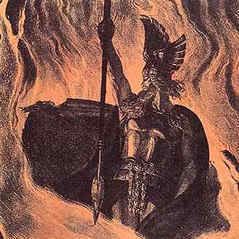
On page 51 of the English-speaking translation of 'The Secret of the Runes," the description of the Ansuz rune caught my attention. The names attached to it, as well at the shape of the rune itself, were so different from the modern depiction that I actually had to look it up. List's "Ansuz rune" depicted the two lines from the stem as: 1) Coming from almost the top, all the way to the bottom; and 2) Coming from the center, all the way to the bottom. A little like the image here, except that the lines were to the opposite side. Actually, there were many variations of this symbol; apparently starting from the Phoenicians, and migrating to the Etruscans, and eventually making it's way all the way to Iceland. I suppose this reality wouldn't be very popular in a lot of Odinist or runic circles; however, it could be thought of as a link tying together cultures which in many ways came to define "the West." In von List's day, this tie-in probably wasn't part of the historical consensus. Not that we should always agree with "the consensus," but it apparently was not perceived as anything but Germanic in origin. Of course, many aspects of the runes changed over many centuries, fitting into the mythology of the native people, like the Teutonic people.


**************************************************


The Thora Design website's description of this rune:


Ansuz literally means "god". But to early germanic people, this rune was associated with the "breath of god" in this case, Odin. Odin came and breathed air into inanimate beings which came to life and aquired consciousness. For these reasons air, the spoken word, communication, higher consciousness and Odin are all tied to this rune.


**************************************************


The a-rune ᚨ, Younger Futhark ᚬ was probably called *ansuz in Proto-Germanic, to which the Norse name Æsir is attributed.

The shape of the rune is likely from Neo-Etruscan a (EtruscanA-01.png), like Latin A ultimately from Phoenician aleph.

Its name survives only in the Icelandic rune poem as óss, however, referring to Odin, identified with Jupiter:

    ᚬÓss er algingautr
    ok ásgarðs jöfurr,
    ok valhallar vísi.
    Jupiter oddviti.
    Óss is aged Gautr
    and prince of Ásgardr
    and lord of Vallhalla.
    chief Jupiter

The Norwegian rune poem, óss has a meaning of "estuary" while in the Anglo-Saxon one, Futhorc ōs ᚩ has the Latin meaning of "mouth". The Younger Futhark rune is transliterated as ą to distinguish it from the new ár rune (ᛅ), which continues the jēran rune after loss of prevocalic *j- in Proto-Norse *jár (Old Saxon jār).

Since the name of Gothic a.svg a is attested in the Gothic alphabet as ahsa or aza, the common Germanic name of the rune may thus either have been *ansuz "god", or *ahsam "ear (of corn)".

A variant of the rune is Futhorc æsc ᚫ "ash." The Latin ligature æ in Old English was called æsc after the rune. Another variant is ac "oak" ᚪ.


**************************************************


The Romans confused the issue by "attaching" Roman gods to the gods of the newly occupied peoples in order to make colonization easier. For example, attaching Wotan to Mercury, as well as many other examples of this. Although many put the blame squarely on the Romans for dismantling the native spiritual beliefs of the north; actually Charlemagne possibly did more to actually force these ancient traditions out of existence in favor of Christianity, than did the Romans.


**************************************************


Guido von List's "Ansuz rune" (he used different names):

os, as, ask, ast = Ase [i.e., one of the Æsir], mouth, arising, ash, ashes.

A fourth still I know, when someone throws
          my arms and legs into fetters:
as son as I sing it, I can go forth,
          from my feet fall the fetters
          the hasp fall from my hands.

The mouth, the power of speech! Spiritual power working through speech [power of suggestion] bursts physical fetters and gives freedom, it itself conquers all conquerors, who only gain advantages through physical force, and it destroys all tyranny.* Therefore: "Your spiritual force makes you free!"

*In the struggle for existence, the people [Volk] who always remain lasting winners are those who develop themselves with the preservation of their moral force. With the disappearance of morality, higher spiritual and intellectual rank is also lost, as history--the "Final Judgement"--will prove.


**************************************************

I thought that I would inject just a few further thoughts on the "magical element" to some of these studies. First of all, that element is present in native pagan spiritual traditions of many parts of the world. This element can simply be ignored, if one desires. My current belief is that it would be best to do so. The natural way seems to be inspiration, mixed with spiritual growth, tied to ancestral focus, and just using what's between your ears in a pragmatic way, can get you to where you want to go in life. Without "magic." Magic can lead one into trouble, because few understand this power of nature, which is like any other instrument in that it can be used for positive or negative ends.

I believe that the magician Criss Angel is a very high initiate of some type of secret order. Although some of his entertaining stunts are illusions; some are indeed "magic." Levitation, for example, goes clear back into the ancient world. This is how stones, weighing hundred of tons, were placed. I have no idea of how it's done, but I do know that it involves creating an intrinsic gravitational force for an object. In other words, "weightlessness." Angel's motto is "Mind, Body, and Spirit." That almost sounds like a Listian concept. Also, Angel has spoken often of "the power of suggestion," which again, ties right into what we're looking at here with List's Ansuz rune.

As far as the Ansuz rune is concerned, so much of life is tied to how one expresses their thoughts and ideas. If you think of it, it's almost like a light form of magic; and just like magic, it can be used for positive or negative ends. The incredible, often untapped, power of the mind; speech is part of the body, expressing itself from the will of the mind; and the spirit, which I believe has a lot to do with ancestral ties and symbolism.

.

Wednesday, October 12, 2011

The Heart of the Cat

We often associate "the cat" only with the common domestic house cat. Over the centuries, we have made the house cat soft, just like we are. We generally don't associate the word "heart" with cats. However, when observing the cats of the wild, we can clearly and plainly see that they're 100% pure fighting machines.

A good example of this occurred several years ago in California. A mountain lion wandered into a suburban setting, looking for food; which has become a problem in the state. A man approached the big cat, and attempted to use his open hand gestures to "shew him away." The cat lunged forward with it's incredible combination of speed and power and snapped all four of the man's fingers off with one bite. He seemed believe that it was maybe just a big house cat.

YouTube is a good source of videos showing the fighting ability of big cats, and even sometimes house cats. Even the biggest, strongest canines are no match for the bigger felines. By "bigger" I mean from the lynx or bobcat, or bigger. There is one video where a mountain lion mother stands up to a large bear, and in defense of her young, is given the impetus to put it all on the line. Another shows a mountain lion making quick work of a wolf. Wolves are the most powerful canines of all. Apparently, the larger cats have no problem with alligators or crocodiles, getting on top of them and biting the neck. Below, even a smaller jaguar has an easy time defeating an crocodile.


This dynamic reaches it's zenith with the African lion, or even the Asian lion. Lions are incredible brutes, eating hundreds of pounds of meat in one sitting. They're big, loud, nasty, and tempermental; which makes them so different from the common house cat. One video shows a large African lion sparing with a North American black bear, which seemed to show that the lion was bigger, stronger, faster, and more tenacious. Now it might be a different story with a grizzly, kodiak, or even polar bear; but the point is made I think. It is said that a lion can break a zebra's neck with one blow. The fleet cheetah would be at the opposite end; using sheer speed to hunt extremely fast antelopes.

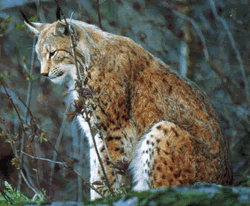
Even the smaller thirty or forty pound lynxes or bobcats of the Northern Hemisphere can be fearless and ferocious fighters. If a lynx can stand up to a mountain lion, while a wolf apparently cannot; it seems to show that a wolf would have a big problem with a lynx or bobcat. Of course, the Eurasian lynx is native to our ancestral homeland; and for that matter, the gray wolf is also native to there. The Eurasian lynx to the left is particularly large, and they can be as heavy as 66 pounds. That one must be about 65-70 pounds.

However, despite the loud, brutish lions or tigers, most species of the cat family are pretty solitary, beautiful, graceful, almost spiritual creatures. Usually, in the northern lore, or even in Asian or Native American mythology, it's the wolf that seems to have the top spot as far as an iconic and symbolic animal. Perhaps it's because wolves possess many traits that are similar to humans. They mate for life, and they use teamwork to hunt. I don't think that cats mate for life, and they use physical attributes while usually hunting alone. At least besides female lions, who often hunt together, and groups of them are associated with a dominant male.

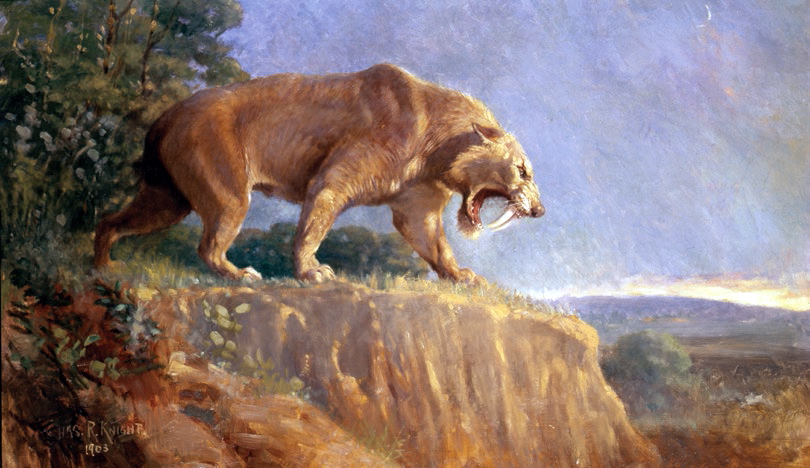
The metaphor "a heart of a lion" has a well grounded basis. Actually all wild cats possess this "fighting spirit," which is often obscured by their graceful way. They are very well adapted for nature's struggle. The prehistoric species of saber-toothed cats, like the American smilodon, could bring down very large prey. They became extinct only because those big game animals disappeared. Below, a smilodon restoration; showing that unlike the canine, the feline can be a monster. I think it's pretty safe to say that the saber-toothed cats knew exactly where the neck was located.


.

Tuesday, October 11, 2011

8,000 Year Old Sun Temple Discovered


by Sofia Echo - December 15, 2010


The oldest temple of the Sun has been discovered in northwest Bulgaria, near the town of Vratsa, aged at more then 8000 years, the Bulgarian National Television (BNT) reported on December 15 2010.

The Bulgarian 'Stonehenge' is hence about 3000 years older than its illustrious English counterpart. But unlike its more renowned English cousin, the Bulgarian sun temple was not on the surface, rather it was dug out from under tons of earth and is shaped in the form of a horse shoe, the report said.

The temple was found near the village of Ohoden. According to archaeologists, the prehistoric people used the celestial facility to calculate the seasons and to determine the best times for sowing and harvest. The site was also used for rituals, offering gifts to the Sun for fertility as BNT reported.

This area of Bulgaria was previously made famous because remnants of the oldest people who lived in this part of Europe were found.

Archaeologists also found dozens of clay and stone disks in the area of the temple.

"The semantics of the disks symbolise the disk of the Sun itself, which means that this is the earliest ever temple dedicated to the worship of the Sun God, discovered on our lands," archaeologist Georgi Ganetsovski told the BNT.


8000 year-old Sun temple found in Bulgaria.

Uploaded by N0LINKNEWS on Jul 15, 2011

thank nolinknews on youtube for sharing the info again by voting. Please visit and subscribe to the channel.

.

Monday, October 10, 2011

During lean times, visiting local parks is a good option

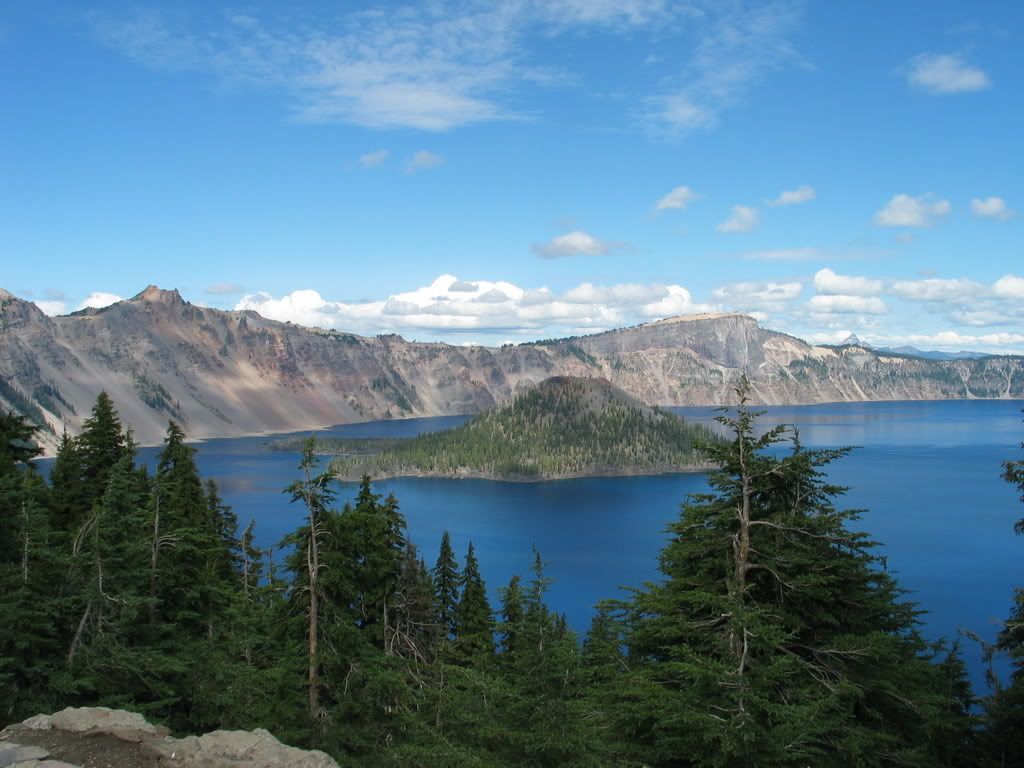
Recently, I did a search for local national, state, and county parks, and was surprised to see that there are a lot of interesting-looking parks that I haven't seen before. I believe that they provide a great option, especially during recessionary times. Some of these parks sit side-by-side with heavily populated areas, yet they often are relatively unvisited. However, when you're there, you can see that people are having a great time.

This probably would have been a better message last spring, but the parks are open all year round. Only for two months or so are some of them closed only for campers. One good easy way to take a look at what parks are in your area is to go to Wikipedia, look up nearby counties, and you should see a list of county trails, county parks, state parks, and state state beaches (if any). I looked at Canadian regional districts, and didn't have much luck. In any case, it's not all that hard to find them in a direct search of your area.

One thing that amazes me about the wild areas which border urban districts, is how there is no separation between them. In the day, people roam into the animal realm; and during the night, the animals roam into the human realm. Spiritually, it's an interesting concept, that there is no wall or fence. It can't ever be forgotten, however, that they're "wild animals." Just last week I was sitting on a deck, overlooking a hillside which was basically connected to San Bruno Mountain State Park. This deck was right on the hillside, rather than placed in a higher spot. At about 10:00 PM, a racoon approached the deck. I had seen this racoon before I think, only this time it wasn't very please to see me. They're fiercely territorial, and it growled at me. They're usually about thirty or forty pounds, and have powerful jaws; and are especially dangerous when afraid or startled. I know, they look friendly, but wild animals can't be trusted.

Also, sometimes these parks can loosely be looked at as local meeting places. I mean you sometimes see the same people in these parks, who live nearby, and it could provide some connection or friendly interaction if you want it. I think people of any age can enjoy themselves out there, and I have seen that. I've seen people in their eighties hiking. Even a short hike can be nice. Sometimes people of different age groups casually interact, which is lacking in society in general. Lastly, it's a great place for pagans to spiritually connect to nature and enjoy time together.

Remote hiking experiences can be an adventure as well. Whenever, for example, I was visiting the South Lake Tahoe area, I se some serious hikers with backpacks. I hiked with a a small backpack, but I mean these are the really serious hikers. You can tell. They get to some very remote mountains and back country. However, you can find remote spots on short hikes. I enjoy being out there in any weather, except heavy rain.

.

Saturday, October 8, 2011

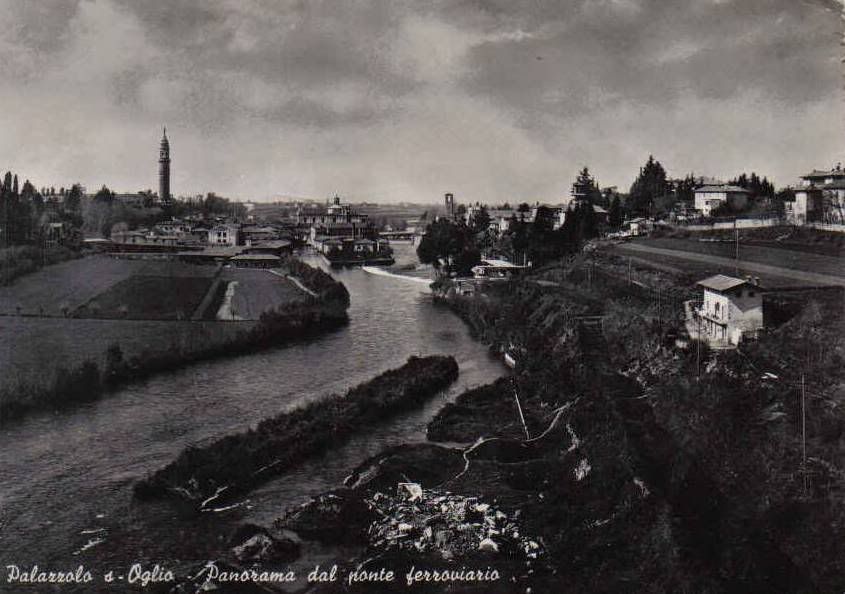
The River Oglio

[The river in Palazzolo sull'Oglio, lower Brescia]
The Oglio River is a river which runs directly through, north to south, the Camunian Valley. It begins in high Alpine mountain streams. Some of its more impressive stretches run through the Val Camonica, where it feeds Lake Iseo. It continues out of the lake, and down to the province of Mantua. The river is cammed "Òi" in the Lombard language, and the Camunian dialect.


The Oglio (Latin Ollius, or Olius; Lombard Òi) is a left-side tributary of the Po River in Lombardy, Italy. It is 280 km long.

The Oglio is formed from the confluence of two mountain streams, the Narcanello from the Presena Glacier, and the Frigidolfo, from Lake Ercavallo, in the Stelvio National Park. These two streams are born at the points of the Corno dei Tre Signori, at an altitude of about 2600 m. The streams merge near Pezzo di Ponte di Legno.

It flows in a southwest direction, through Valcamonica and then Lake Iseo. It joins the Po after traveling a zone of morraine deposits, at Torredoglio, not far from Cesole and Scorzarolo, in the province of Mantua. Its drainage basin, which corresponds to the region of Valle Camonica, covers 6649 km². It is part of the larger Po-Adige basin.


Course of the river Oglio
 
Origin: Corno dei Tre Signori, Prealpi Orobiche, Lombardy
Mouth: Po, near Torredoglio, province of Mantua
Basin countries: Italy
Length: 280 km
Source elevation: c. 2,600 m
Avg. discharge: 130 m³/s
Basin area: 6,649 km²


On the Wikipedia link above, there is a map of the river, but it's not especially clear. In the Val Camonica Wikipedia page, under "Hydrography," it states: The Valle Camonica is crossed by the River Oglio, the fifth longest river of Italy, which was born in Ponte di Legno from the confluence of rivers Frigidolfo and Narcanello. It flows into Lake Iseo between the municipalities of Pisogne and Costa Volpino. If you look at the Italian Oglio Wikipedia page, you can see a few good photographs of the river.

.