Showing posts with label ancestral memories. Show all posts

Saturday, October 13, 2018

Nahuel Huapi Lake, Argentina

 
Nahuel Huapi Lake

Nahuel Huapi Lake (Spanish: Lago Nahuel Huapí) is a lake in the lake region of northern Patagonia between the provinces of Río Negro and Neuquén, in Argentina. The tourist center of Bariloche is on the southern shore of the lake. The lake depression consists of several glacial valleys carved out along faults and Miocene valleys that were later dammed by moraines.

Nahuel Huapi lake, located within the Nahuel Huapi National Park, has a surface of 529 km2 (204 sq mi), rests 2,510 feet (770 m) above the sea level, and has a maximum measured depth (as of 2007) of 1,437 feet (438 m).

The June 2011 eruption of the Puyehue-Cordón Caulle volcanic complex, in neighboring Chile, caused parts of the lake's surface to be blanketed in volcanic ash.

During the Last Glacial Maximum of the Llanquihue glaciation the lake basin was wholly occupied by a glacier.


.
Nahuel Huapi National Park

Nahuel Huapi National Park (Spanish: Parque Nacional Nahuel Huapi) is the oldest national park in Argentina, established in 1934. It surrounds Nahuel Huapi Lake in the foothills of the Patagonian Andes. The largest of the national parks in the region, it has an area of 7,050 km2 (2,720 sq mi), or nearly 2 million acres. Its landscapes represent the north Patagonian Andean Zone consisting of three types, namely, the Altoandino (with perpetual snow above an altitude of 1,600 metres (5,200 ft)), the Andino-Patagónico (in the lower reaches of the hills) and the Patagonian steppe. It also represents small parts of the Valdivian Rainforest.

The park and the reserve lie at an altitude of 720–3,574 metres (2,362–11,726 ft), and are designated under IUCN management categories II (National Park) and IV (Management Reserve). The park is completely protected while the reserve is partially protected.[4] The national park is dominated by the high mountain chain of the Andes, many lakes, rapid rivers, waterfalls, snow-clad peaks, glaciers and extensive forests. It is bordered by Chile on its western side.


Etymology

The park derives its name from the lake which it surrounds, namely the "Nahuel Huapi". In the Mapuche language, nahuel means "jaguar" and huapi means "island."


.
I recall reading one time, although I forget the details, of some large forest in Eastern Europe discovered by the Germans of the early 20th century. Fascinated by the powerful image of the rugged and ancient forest, they proclaimed it--perhaps metaphorically--as a "primeval German forest." When I first saw the current Windows 10 image of Nahuel Huapi Lake, I thought it like something in the nature of a primeval Gaulish-Cisalpine lake. Staring at this particular photograph, feeling almost like I can feel the cool evening air against my face, or that I could place my hand in the cold water, and smelling the scent of the shoreline and mountain shrub. In addition, feeling the deep primitive craving for the wild; or quite frankly, a craving for the feeling of almost not being completely safe. Perhaps that image jogs something from my ancestral memory of a place like Lake Garda and its surrounding mountains; huge, primordial, powerful, dark, wild, harsh, beautiful, and eternal.

Nahuel Huapi Lake, Argentina images

Patagonia, Argentina images


Patagonia

.
Mountains are cathedrals: grand and pure, the houses of my religion. I go to them as humans go to worship...From their lofty summits, I view my past, dream of the future, and with unusual acuity I am allowed to experience the present moment. My strength renewed, my vision cleared, in the mountains I celebrate creation. On each journey I am reborn. -- Anatoli Boukreev

.

Sunday, November 12, 2017

Longing for the Darkness


.
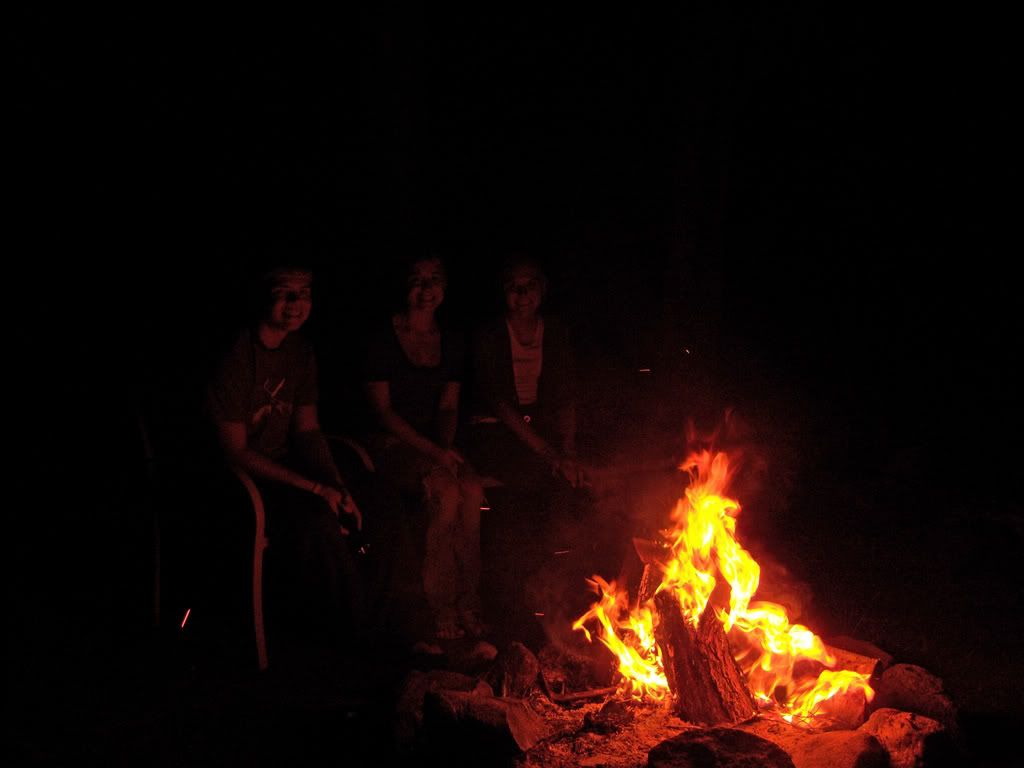
For tens of thousands of years, our ancestors feared the night. Half or more of their lives were spent in the darkness. More often than not, a fire was the only separation between dangerous nocturnal predators (including humans) and their vulnerable sleep state. When morning finally arrived, their beloved "risen savior" the Sun was there. Also, the Moon was a guiding light amid the darkness.

Most people today, despite occasional reminders, are more-or-less unaware of how dark the night really is. Around the time of the new moon, it's complete darkness. When hiking at night, one becomes aware of the sources of light; either direct nearby lights, the moonlight, or the clouds which are illuminated by the nearby city lights. Within our ancestral/DNA memory, we actually miss the darkness. We naturally crave it because it was once so much a part of our lives within this ancestral memory. Fighting against the night was an organizing principle of society. There was a tremendous spirituality attached to the daytime (Sun) and nighttime (Moon). There's a part of us which is addicted to the darkness, in the same way that an individual came become addicted to alcohol, narcotics, love, attention, revenge, or jealousy. However, predators aside, the darkness is not a negative. Intrinsically, it's beautiful.

There's an old saying among police that says "nothing good happens after midnight." That's probably a good rule of thumb. The darkness can be a predators paradise; however, so can the daytime. During the day, a human predator can size up their victim; whereas during the night, it's much more difficult as a person could be carrying a weapon of defense. Regardless of the danger factor, the darkness completely changes the atmosphere; although in a very urbanized area, not as much. It stands to reason that in our remote ancestral past, a type of "culture" developed within both predatory human groups and harmonious human groups. Both are part of our DNA memory, because our ancestors consisted of predators, prey, and everything in between; and all ultimately existing by nature's law: "evolutionary struggle."

The predatory humans developed a spirituality based on violence and spirits of blood lust, while those who lived by honest sustainable toil developed a spirituality based on defense and protective spirits. Rituals occurred during the hours of darkness from both sides. In recent years, numerous films have come out based on "vampires and werewolves"; in other words, "human predator cults." On the opposite spiritual side are the "Sun and Moon cults," whose emphasis was on protection, safety, and the defense of the "eternal verities." Varity: a true principle or belief, especially one of fundamental importance. They weren't entirely pacifists, but more-or-less embraced some degree of idealism for their society.

Last night I watched a program on the popular Investigation Discovery channel called 'Devil in Disguise'. From the program description: Devil in Disguise (Documentary, Mystery/Crime) - Troubled 16-year old Rod Ferrell forms a vampire cult, then his fascination with blood turns deadly. In short, he formed a coven of "vampires" which ended up committing murders of innocent people, mutilating animals, and engaged in bizarre rituals such as cutting and drinking each others blood. A person could commit crimes based on greed; but more particularly when predatory groups are formed, it's probably driven by some compulsion from their DNA memory that affects certain individuals. This may be inborn and/or "reawakened" from bad life experiences. This takes form on every level of human society; banking cartels, war profiteers, religious cults, gangs, etc. Within these societies---even if they're achieving their end, even if it's not necessary!---they still partake in blood lust rituals.

Aside from the predatory element, there's nothing wrong with embracing the night or darkness. Embracing it in the tradition of the defensive and positive energy minded Moon cults of the distant past. I feel sorry for those kids who followed Rod Ferrell and ruined their lives. They could have shifted their mindset. Even if they were "misfits," there's always a  practical way to follow the positive energy without betraying your natural instincts. The dark imagery of Halloween often resonates something within people. Much more often it's based on positive energy, but not always. Wiccans and those of the Goth subculture have produced some beautiful dark artwork. "Dark" not meaning negative energy. A dash of it is okay, as it reminds us of that aspect of our past.


*************************


"Vampire Resurgence"

In the comments following a Smithsonian.com article entitled 'The Great New England Vampire Panic' (1830s), I found an interesting glimpse into the minds of a few people. I'm not judging them; I just found the comments interesting. The article itself is like something out've the film 'Dark Shadows', so it obviously attracted a few "vampires."


************


"We have caused such panic and folklore over the years, haven't we?"

-- Juliet Morlet, Vampire Goddess


************


I am Davies Lytton from the united state, a strong supporter of the vampire race, how i was being transformed to a vampire through the help of a vampire spell caster, was just as easy as posible, at first i was skpetical it was going to take a while for my ( D.N.A.) to responed to the spell, all i did was just to follow the procedures that i was given, and i bet you that these procedures i took changed my life entirely to something i ever desired; freedom,extraordinary powers, fame, influence, connections and even more than i can ever think of.Thanks to my dear friend Mr Jorge who directed me to Mystic vampire spell home. Please if you`re a lover of vampires or wish to be like me contact the vampire mystic spell caster :

vampireresurgence@gmail.com

cell#:+17692872356[text only].

-- davies


************


I believe that real spiritual traditions, those which are ancestral and Earth-based, should not be conflated with fantasy role-playing.


*************************


"Feast to the Gods"

Now this is our kinda thing! Apparently the "Feast to the Gods" was an ancient tradition of the Gauls, and likely other ancient nations, which took place every first of June on a midnight. I'm guessing that this was a combination of a spiritual rite to the gods, sort've a followup of the April and May celebrations, celebrating the start of the warmest four months, a way of "taking charge of the night," and of having a great feast and social gathering. They worked hard and played hard! It took place outdoors, under the stars, big fire going, lots of food, a big roast, lots of mead, and lots of laughter and dancing! It probably even scared off the nocturnal predators a bit, at least on that night. Maybe this is a tradition that we should revive. A fire pit and roast wouldn't be necessary; a few lanterns, fold up chairs, and pizzas may do. Alcohols? That's up to you. I think being outdoors would be a must however. Under the stars; the gods! Even just saying their names, and the names of ancestors, out loud would be important.

.

Wednesday, June 22, 2011

Summer Camp as a Spiritual Experience

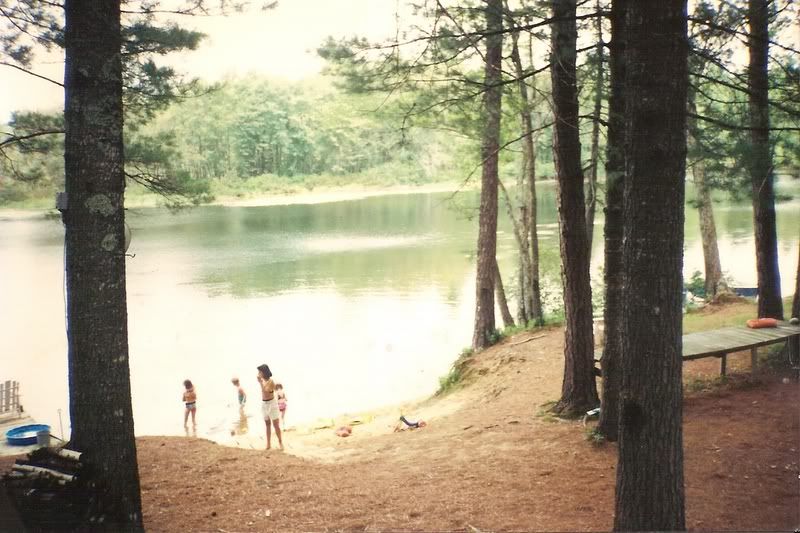
I thought that this fit into the pagan concepts that are discussed on this blog. Many times people underplay the significance of a youth summer camp, almost making fun of it in their wording. They will make statements like "oh, singing by the campfire at summer camp." I would disagree. It is a very memorable experience, and one that someone will not likely ever forget. I can even remember the words to songs that were sung when I went to summer camp. In fact, in a truly spiritual nation, it would/should be considered an essential youth experience.

It's the first experience away from home for many kids. For those from urban areas, which would more-or-less be the vast majority, the environment is completely different in every way, especially for me. I went to camp only once at age twelve. Although, in theory, adults could benefit from this experience too, it's not the same as when you a kid and everyone is not so serious or complicated as adults so often are. I can't imagine as to why most people would think that a professional sport game would be soo important, but a life-changing experience like summer camp is... not so special. 99.5% of all those "important games" are completely forgotten from one's memory, while camp is not something that you're likely to ever forget.

I attended through my grammar school. We left by bus on a Friday, probably early, and returned either the following Friday or Sunday. I forgot exactly, but it felt like three weeks! I won't go through every whistle and bell, but it was an hour drive at the most. The camp was run by the YMCA, and the name was/is "Camp Jones Gulch," which has been around since 1934. Upon arriving, the schedule was very fast-paced. The staff included regulars and volunteers. I can truly say that they were all very friendly and positive. We were broken up into boys and girls, and placed in small groups. One group for each cabin, and a volunteer councilor for each cabin.

The camp was located in the northern Santa Cruz Mountains, in an area not all that far from civilization, but it was plenty "away from it all." Anyone familiar with the Santa Cruz Mountains further south can attest to it's remoteness, but this area was significantly far enough from the lights of urban life to allow one to view a dark sky which was entirely full of stars at night. The camp itself was located in tiny La Honda, California, but in a remote area, apparently within the city limits, although it hardly felt like it as there were no houses anywhere, and there was only one main road cutting through the area. It was almost totally mountain forests, which in some places were so thick that even on the hottest days it was dark and cool in the shade. In some places it was actually dark, despite a clear sky and the sun beating down.

The days went by so fast because we were so busy. There was an outdoor eating area with a roof, and the rest of the time we were either hiking, learning how to make a shelter, taking night walks under the very stary sky, singing, sitting by the campfire, getting short lectures about nature. I can laugh now, but at the time I wasn't very crazy about the "open bathrooms." In other words, the cabin bathrooms had not stalls, with everything right out in the open, and the showers were like "group showers."

I don't really recall seeing many animals, outside of a few hawks or squirrels. I do know that there is a lot of wildlife up there though, including mountain lions. One time nature caught up with us, with one girl from my school getting stung by bees during a hike. Sometimes "nature" sounds almost like a passive word. Nothing could be further from the truth. People should sometimes ponder as to what they would do if they were lost and had to survive in a remote wilderness of any type.

When taking a hike at night, we did stop to gaze at the stary sky. Sometimes I think about how that sky is the same sky that our ancestors observed thousands of years ago. There were complex observatories in Val Camonica, near the villiage of Cevo. The god Cernunnos and other aspects of Camunian culture are based on astronomy. So on that night long ago, at age twelve, in the Santa Cruz Mountains, I observed the same sky that one of my distant forefathers or foremothers observed, at the same age, probably on the the exact same date, possibly eight or ten thousand years ago in the Alpine Mountains.

We don't usually think of it, but every living creature has within it, a "historical memory." I recently purchased an imitation owl to serve as a scare crow against birds who were leaving their droppings on a certain railing. I read where certain birds, like seagulls I think, are not afraid of the owl because they have no historical memory of them. Whereas most do have that memory and will avoid the statue. Foxes are being domesticated now, and it takes several generations to tame them for the same basic reason. That sky is part of my own historical memory.

Most of the children there were from Santa Cruz County. At that time, so many of them were blonde and Nordic-looking. Seeing them within this mountain-forest environment was almost like a historical memory. As the Langobards derived from the Winnili people of ancient Scandinavia, there were many generations who lived in the mountainous forests of central Europe. Perhaps I was having a flashback from the "ancestral memory" from that part of myself.

People could benefit from this type of experience at any point in their lives, but it wouldn't be the same if you could, hypothetically, go to a camp with random people from society, and you were with someone who couldn't wait to get online to check their stocks. I remember the 1993 movie 'Indian Summer', where some adults in their early thirties, had a "summer camp reunion" organized by the longtime facilitator of the camp who was either retiring or closing down the camp, which was located in the northwoods. I don't really think something like that would really happen in that way, but it was a great concept for a movie. What IF people could have types of obscure reunions like that? It's fun to ponder. If you haven't seen that movie, you should.

I was also a cub scout, and later a webelo, as a youth. It would have been interesting to have continued as a boy scout, but boys rarely continue in high school as it's a commitment of time, and with so many activities, it's hard to fit it in. It would be nice if scouting would make a comeback. I know that the woman who is the head ranger in the county I live in was a former girl scout in the area, and from probably about the same time as me, which is interesting.

.