Showing posts with label World Tree. Show all posts

Monday, June 2, 2014

The Arctic Home in the Vedas: Part 18 - "Arkaim"


Although I find myself shifting a bit while looking at all of this evidence, it seems virtually certain that the "Aryans" were neither Germanic, Iranian, or Indian in the modern sense of those terms; but rather clearly were a special fusion of ancient true-Mediterraneans with south-migrating pure Teutonic people. When I say "pure," I mean that they were a little different than modern Germanic people who are basically a proto-European and Teutonic mixture. I think they probably would resemble each other though. It would be fair to loosely label them "ancient Persians."


Arkaim: a time when science and magic were one
Arkaim (Wikipedia)

Arkaim is an archaeological site situated in the Southern Urals steppe, 8.2 kilometres (5.1 mi) north-to-northwest of Amurskiy, and 2.3 km (1.4 mi) south-to-southeast of Alexandronvskiy, two villages in the Chelyabinsk Oblast, Russia, just to the north from the Kazakhstan border.

The site is generally dated to the 17th century BC. Earlier dates, up to the 20th century BC, have been proposed. It was a settlement of the Sintashta-Petrovka culture [probably speakers of the ancient Persian-Aryan language].

The evidence shows that the general territory which we now call Kazakhstan was likely one of the first Teutonic settlements after the last glacial movement. As to whether or not Arkaim itself was constructed by Teutons, Mediterraneans, or Aryans--I don't think is truly known, and may obscure more important questions. I would guess, based on it's northern location, that the population was "Aryan," with more of a Teutonic mixture.


Settlement

Although the settlement was burned and abandoned, much detail is preserved. Arkaim is similar in form but much better preserved than neighbouring Sintashta, where the earliest chariot was unearthed. The site was protected by two circular walls. There was a central square, surrounded by two circles of dwellings separated by a street. The settlement covered ca. 20,000 m2 (220,000 sq ft). The diameter of the enclosing wall was 160 m (520 ft). It was built from earth packed into timber frames, and reinforced with unburned clay brick, with a thickness of 4–5 m (13–16 ft). and a height of 5.5 m (18 ft). The settlement was surrounded with a 2 m (6 ft 7 in)-deep moat.


There are four entrances into the settlement through the outer and inner wall with the main entrance to the west. The dwellings were between 110–180 m2 (1,200–1,900 sq ft) in area. The outer ring of dwellings number 39 or 40, with entrances to a circular street in the middle of the settlement. The inner ring of dwellings number 27, arranged along the inner wall, with doors to the central square of 25 by 27 m (82 by 89 ft). The central street was drained by a covered channel. Zdanovich estimates that approximately 1,500 to 2,500 people could have lived in the settlement.
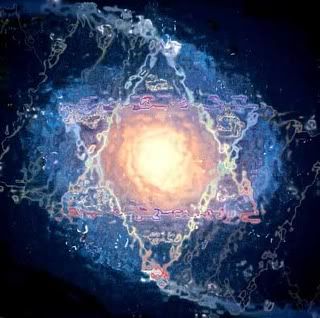

The six-pointed hexagram, sacred ancient symbol for Saturn
Surrounding Arkaim's walls, were arable fields, 130–140 m by 45 m (430–460 ft by 150 ft), irrigated by a system of canals and ditches. Remains of millet and barley seeds were found.

The 17th century date suggests that the settlement was about co-eval to, or just post-dating, the Indo-Aryan migration into South Asia and Mesopotamia (the Gandhara grave culture appearing in the Northern Pakistan from ca. 1600 BC, the Indo-European Mitanni rulers reached Anatolia before 1500 BC, both roughly 3,000 kilometres (1,900 mi) removed from the Sintashta-Petrovka area), and that it was either an early Iranian culture, or an unknown branch of Indo-Iranian that did not survive into historical times.


Arkaim: Russia’s Ancient City and the Arctic Origin of Civilization

This is a fascinating article, but long. I would recommend  http://www.fromtexttospeech.com/ for long articles. You can enter large blocks of text, and it will read it back to you... and you may even save the audio file. This important article both clarifies the bigger picture, as well as poses even more questions. Recent stunning archeological finds have added more credibility to these ideas. These very ancient sites were both cities, as well as "wisdom centers." They were constructed with magical properties aka "sacred geometry" based on ancient wisdom aka "science," with astronomical observatories. Their "Cult of the World Pillar" may have been the basis for the "World Tree" from numerous cultures.

Ancient symbols--such as the Swastika, the Triskellion,  the six-pointed Hexagram ("Star of David"), and the Pentagram--were a big part of this sacred geometry. Ironically, the Swastika (symbol of our "primary sun") and the six-pointed Hexagram (symbol of our once "second sun") were both once beloved sacred symbols of scientific geometry within this bio-astro-theology. Today, when the twin-spiritual infants--closed-minded religious supremacists and closed-minded scientific atheists--engage in debates, we can see just how far we have devolved spiritually.


Arkaim: Russia’s Stonehenge and a Puzzle of the Ancient World
 

Arkaim structure

Arkaim may have functioned as both a preemptive place of refuge, as well as centers of spirituality, science, and wisdom. A place where ALL FIVE POINTS of science were honored.


Arkaim Google images (must see!)



Saturn the dwarf star, once our "second sun"

The original Teutonic race first dwelt north of the Himalayas, and up to the north pole when Saturn was our active "second sun" in the north sky, and this region was daylight twenty-four hours a day. The Triskellion was likey their main pre-Aryan cultural symbol early on. Arkaim was one of the post-glacial cities, constructed within the science of sacred geometry. They lived in spiritual harmony with the Earth, and utilized its free energy. Magic and science were one. When Saturn became a dwarf star, this changed everything. The word "Satan" is really just another word for Saturn. There exists today, a strange "Cult of Saturn" which somehow believes that there is a competition between the suns, and the mere existence of the ancient Saturnian sun is something which must be kept from us... as an unfortunate part of "this fetish."


Arkaim swastika city 1 (video)

These videos are based on the above article, and are from a Slavic-nationalist view of the world. I think this outdates the world of 4,000 years ago by a lot, and we shouldn't be rushing to conclusions. Mainstream Western historians and archeologists, in usual fashion with things they cannot explain, for the most part... have simply chosen to ignore it. 


The Teutonic sky god Odin
Arkaim swastika city 2 (video)

Arkaim

Arka = "Earth"

Im = "Sky"

"The place where the sky touches the Earth"

The city was constructed in the model described in ancient text of Troy in Homer's 'Iliad', in Plato's "Atlantis," Electris in "Hyperborea," and Asgard in the Norse 'Edda'.


Arkaim swastika city 3 (video)

Arkaim was a shrine dedicated to the Aryan Sun religion. yet the roots of its dedication would have lain ultimately in the far older cult of the Pole star (Saturn). 

Swastikas are featured prominently among the many artifacts unearthed in Arkaim. It should also be mentioned that there are other ruins connected to Arkaim in the surrounding area.

It is the oldest religion known to us and goes back to the most remote antiquity when men saw the heavens as revolving around the axis of the Pole Star. Only later did the Sun, as the center of the revolving stellar system, replace the Pole Star as the supreme deity of the Pillar cult and lead to the elevation of the Sun God of the Indo-European peoples.

There it is. The "Pole Star" Saturn fizzled out thousands of years ago, and was replaced--at least in the northern hemisphere--by the Sun as the "supreme deity."

"Troy towns" like Electris--and Arkaim--were built as stellar observatories. Their function was to unite earth to the starry cosmos above according to the principle of "as above so below" by means of a central axis symbolized by a stone pillar.

Now it gets into some of the roots of early Paganism, some of which exists to this day; as well as early astro-theology and the "electric universe" mentioned in earlier sections. Just the fact that some of the concepts survived in forced underground schools of knowledge--or even within family lines!--is amazing just in itself.


Arkaim swastika city 4 (video)
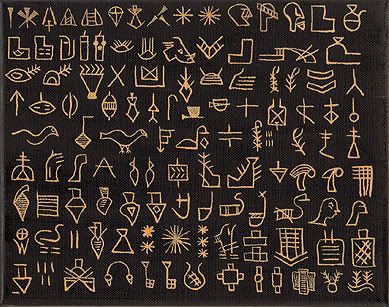
Some "Slavic nationalist" types have taken this pretty far, as you may see here with their history of "Slavic script." I think this should be pondered, but it seem pretty clear that this civilization predated modern ethnic groups as we may know them today.


Arkaim swastika city 5 (video)

The various types of Swastikas and sun wheels found in Arkaim and with the Tarim mummies brings up the inescapable question of... what did the National Socialists really know about this ancient region? These finds were not known to the world then, yet some of these symbols were used by the Third Reich. One major symbol associated with some of those former Teutonic territories was the Triskellion, a symbol not used by them.


Arkaim swastika city 6 (video)

It should be stated again that Arkaim has much to do with the old "Golden Age" covered earlier. A time when two suns were present in our sky. As far as where "Atlantis" or "Lemuria" fit into this, that's more than I'm willing to cover here due to lack of evidence and continuity. But that doesn't mean that it's not possible. Also, the many large and very long-skulled remains found on different continents likely fit into this somehow.


Tracking the Aryans 2011 , with Bettany Hughes ,Arkaim swastika

There really shouldn't be "political implications" to ruins and artifacts. The "Aryans" were not Iranians, Indians, Germans, Scandinavians, Semites, or Slavs. They were the fusion of ancient Teutons from north of the Himalayals, who migrated south after the last glacial movement, and ancient true-Mediterraneans. There's almost a neuro-psychological fear of the world "Aryan," who were merely ancient Persians... and those who eventually migrated outward. Arkaim and its allied cities may have been a northern flank of the Aryan civilization. There may not be a single word in existence which makes so many people, so stupid, so quickly!

Archeologist David Anthony--much like any religious zealot--clearly is horrified at the mere thought of a northern origin of the ancient Aryans... so he apparently has decided to play what I would call the "willful ignorance card." He's playing it off as if modern demographics are the same as they were 4,000 years ago... and the perceptions of the average person would tend to go along with his train of thought. On the other hand, archeologist Bettany Hughes is open-minded and follows what the evidence shows... and is much more worthy of the title of the profession, as well as the spirit of exploration.

The gods and goddesses of this northern flank culture seemed to resemble those of Asatru. There was a chief deity, a sky-god. Well, Odin is/was a "sky god." There was a god of "war and thunder," which sounds a lot like Thor. There is evidence that the native spirituality of the Teutons seems to have had a great impact on the Aryan civilization, and as it migrated elsewhere. Indians, who tend to be ethnocentric, don't like ideas like this; yet we are still presented with the question of why the Icelandic and Sri Lankan languages are in the same language family? The only explanation seems to be 1) that the world population was comparatively low; 2) that the basic root of the Indo-European language family was from the early Teutonic language; 3) that most of those Teutons--over thousands of years--migrated westward into Europe and strongly influenced those languages; and 4) that other Teutons migrated south into ancient Persia, where they strongly influenced what was to become the Aryan language... which later migrated and dispersed into India. The mainstream theory is one of politically correct paranoia and nationalist megalomania; the ideas here project something of a shared world heritage, and the facts support it.


Again, I feel the need to clarify yet again. This has nothing to do with Teutonic supermen founding civilization. Civilization overwhelmingly was a product of ancient true-Mediterraneans. These migrating Teutons must have been fascinated by the Mediterraneans they encountered. The Teutonic symbol may have been their symbol for the Sun, the Swastika; however, the evidence is still unclear as to the origin of the Swastika. For the Mediterraneans of that time and place, at least one of their chief symbols was the six-pointed Hexagram, the symbol of Saturn. Quite ironic, in light of the projected "controversy." Just the fact that modern society isn't even aware that this Hexagram is in fact the symbol of Saturn, says so much about the superstitions and paranoia of the modern world. Modern scientific careerists might look down at the superstitions of some tribe in the South Pacific, yet many display an equal array of paranoiac quirks. In a hypothetical "fair world," both the Swastika and the six-pointed Hexagram should be renamed and only associated with the ancient cultures from which they sprang. There aren't very many things more immature than protesting against ancient symbols.

Arkaim

Arka = "Earth"

Im = "Sky"

"The place where the sky touches the Earth"

Odin, the Teutonic "sky god"

Arkaim: "The place where the sky touches the Earth"... "The place where Odin connects with his people"... long ago... on that vast central Asian plain... which may have been a woodland. Unlike the Saturn-worshiping Sumerians, Arkaim was a temple of the Sun.

An understanding of the forces which have shaped human history is predicated not only on facts to be learned, but also on secrets to be discovered.
  .

Friday, November 16, 2012

The Arctic Home in the Vedas: Part 5


"As we have already shown, the symbol of the zero is likewise derived from the holy-sign of the circle, which symbolizes the unrevealed God, and also the other numerical symbols--falsely called "Arabic--were developed from the circle combined with the sign of multiplication, the gibor-rune: X which resulted in this matrix...... The series of these holy number-runes which appear in the following manner in a 13th century manuscript in the Royal Imperial Library in Vienna, the so-called Imperial Chronicle......  whence the old linear formations can still rather closely be made out. That these numerical signs have been referred to as "Arabic-Indian numerals" in more recent times, proves that belief in Aryanism is finally beginning to break through. Certainly the same thing is true for Sanskrit, but it should not be thought that Sanskrit is the root, but rather it is but one of the older branches of the Aryan World-tree, which was derived from the proto-Aryan, like our Germanic languages. Therefore, it shares a common origin and is of the same age as our Germanic languages in which Old Aryan still lives." --Guido von List, 'The Religion of the Aryo-Germanic Folk'


World tree

From Wikipedia:

The world tree is a motif present in several religions and mythologies, particularly Indo-European religions, Siberian religions, and Native American religions. The world tree is represented as a colossal tree which supports the heavens, thereby connecting the heavens, the world, and, through its roots, the underworld. It may also be strongly connected to the motif of the tree of life.

Specific world trees include világfa in Hungarian mythology, Ağaç Ana in Turkic mythology, Modun in Mongolian mythology, Yggdrasil (or Irminsul) in Germanic (including Norse) mythology, the Oak in Slavic and Finnish mythology, and in Hindu mythology the Ashvattha (a Sacred Fig).


Norse mythology

In Norse mythology, Yggdrasil is the world tree. Yggdrasil is attested in the Poetic Edda, compiled in the 13th century from earlier traditional sources, the Prose Edda, written in the 13th century by Snorri Sturluson. In both sources, Yggdrasil is an immense ash tree that is central and considered very holy. The Æsir go to Yggdrasil daily to hold their courts. The branches of Yggdrasil extend far into the heavens, and the tree is supported by three roots that extend far away into other locations; one to the well Urðarbrunnr in the heavens, one to the spring Hvergelmir, and another to the well Mímisbrunnr. Creatures live within Yggdrasil, including the harts Dáinn, Dvalinn, Duneyrr and Duraþrór, an unnamed eagle, the squirrel Ratatoskr and the wyrm Níðhöggr. Scholarly theories have been proposed about the etymology of the name Yggdrasil, the potential relation to the trees Mímameiðr and Læraðr, and the sacred tree at Uppsala.


Other cultures

Remnants are also evident in the Kalpavriksha or "wish-fulfilling tree" of the South Asian religions.

In Brahma Kumaris religion, the World Tree is portrayed as the "Kalpa Vriksha Tree", or "Tree of Humanity", in which the founder Brahma Baba (Dada Lekhraj) and his Brahma Kumaris followers are shown as the roots of the humanity who enjoy 2,500 years of paradise as living deities before trunk of humanity splits and the founders of other religions incarnate. Each creates their own branch and brings with them their own followers, until they too decline and splits. Twig like schisms, cults and sects appear at the end of the Iron Age.


A reoccurring daydream

For as long as I can remember, I have had a daydream--maybe a night dream as well--of being at low elevation and traveling in a straight line towards a very high point far in the distance. As I travel along, I keep climbing towards higher and higher elevation. From grassy lowlands, I travel through rocky highland forests, with the sun still beating down from a clear sky. Soon it becomes cloudier as I start to see sparse pockets of snow, and I can no longer see where I started from. I picture myself in an automobile, because that makes it easier to imagine. Eventually it's overcast and windy, with less tree cover as I climb up steep mountains in a slow ascent. Finally, usually after a blizzardy phase, it's somewhat clear again, and I just keep climbing upward towards a peak that I never reach. I don't want to look back. I know that this road leads to the "roof of the world." THE top of the earth.

Perhaps it's the result from the genetic memory of possibly thousands of years of living in the pre-Alps, and always seeing the endless ascent to the sky. Maybe it could be from some ancient memory from Teutonic ancestors who lived in a strange, harsh, very far off unrecognizable place, with strange animals abound, many thousands of years ago. Perhaps it was within view of an ominous, mile high sheet of ice. Some of my ancestors were known as the "Winnili," which is similar to the word "Wihinei"--a word which List used for esoteric religion. Sometimes I imagine the location of my reoccurring daydream; Alaska, the Pacific Northwest, the Sierra Nevadas, the Rocky Mountains, the Alps... but maybe somewhere very deep in my genetic memory... maybe it could be the Himalayas, "the roof of the world." I feel the same as I do during winter hikes when I reach a peak or high point, and feel invigorated by the cold wind.


The republication of 'The Arctic Home in the Vedas' (2011)

'The Arctic Home in the Vedas' was written by Bal Gangadhar Tilak, and first published in India in 1903. Ironically, his biography sounds similar to Guido von List. The only difference was that Tilak was knee-deep in revolutionary resistance, while List merely knew nationalists as he was not directly "political."


Book Description
 

The idea of a lost ancient civilization located at the North Pole at a time when its climate was friendlier to human habitation is suggested in many of the world's oldest myths and sacred scriptures. Drawing upon his vast knowledge of the Hindu Vedas and the Zoroastrian Avesta, Tilak makes a painstakingly detailed analysis of the texts and compares them with the geological, astronomical and archaeological evidence to show the plausibility of the Arctic having been the primordial cradle of the Aryan race before changing conditions forced the Aryans southward into present-day Europe, Iran and India. Although this theory has never gained widespread acceptance among mainstream scholars since it was first published in 1903, Tilak has made a compelling case which is not easily refuted.

Bal Gangadhar Tilak (1856-1920), who was given the honorary title Lokmanya ("chosen leader of the people"), was one of the fathers of India's independence movement in opposition to British colonial rule. He was imprisoned several times for his vocal advocacy of violent revolt against the colonial authorities on the basis of Vedic scripture. His time in prison gave him time to work on his more scholarly projects, such as the present book. Although he did not live to see the ultimate victory of the movement he had helped to establish, he is widely acknowledged as having been one of the main driving forces behind it due to his influence on Gandhi and the other leaders who saw his mission through to its end in 1947.


Bal Gangadhar Tilak

Lokmanya Tilak, born as Keshav Gangadhar Tilak (23 July 1856 – 1 August 1920), was an Indian nationalist, journalist, teacher, social reformer, lawyer and independence activist who was the first popular leader of the Indian Independence Movement. The British colonial authorities derogatorily called him "Father of the Indian unrest". He was also conferred with the honorary title of "Lokmanya", which literally means "Accepted by the people(as their leader)".

Tilak was one of the first and strongest advocates of "Swaraj" (self-rule) and a strong radical in Indian consciousness. His famous quote, "Swaraj is my birthright, and I shall have it!" is well-remembered in India even today.


One more look at climate, timeline, demographics, and geography

Actually, the 45 degree latitude for the northern ice sheet was accurate in some places, such as North America. However, in Europe, the ice sheet covered the British Isles, Belgium, the Netherlands, northern Germany, before taking a slight southernly direction at Poland and through eastern Europe; then a sharp northeastern direction in Asia. The Alps were covered in ice, and there seemed to be a harsh region north of it, likely preventing northern passage for a long period. What this all boils down to is that the region of ancient Iran was probably more like modern British Columbia in terms of climate, while India was perhaps something similar to Oregon and California.

Also, the last ice age seemed to end about 12,000 to 13,000 years ago, which fits perfectly into this "Ice Age Iran/proto-Norse" theory. I would guess that there were proto-Norse tribes living north of the mountains of Iran, probably all around the Caspian Sea at this time. Remember, this was long before Semitic, Turkic, and Mongol expansion. These more northern tribes were more than likely the ones who migrated across northern Europe, and they would explain the mummies of the Tarim Basin in what is today far western China. They were the ones who remained. Archeologists just assumed that they migrated from northern Europe. In other words, psychologically, they can't seem to geographically divorce "Nordics" from northern Europe.

I would theorize that at the end of the last Ice Age twelve thousand years ago, Europe was about 60% of its current habitable land, and was populated by Alpine peoples of which the Basques are a modern survival. Smaller early bands of proto-Norse, probably over thousands of years, migrated across northern Europe and most of Spain and intermingled with the native Alpine peoples. This cultural fusion formed the various Celtic cultures over a large area. When the bulk of the proto-Norse finally did arrive later on, they swarmed over Scandinavia and northern Germany, but were checked at Gaul and southern Germany. Only much later did they finally overrun south Germany, Austria, and Switzerland, driving many Celtic tribes into Italy.

The original Mediterranean peoples stayed in the Middle East and founded the earliest civilizations. They also migrated across southern Europe and north Africa, up into France, and into the British Isles, and fused with the various Alpine and Celtic peoples. I'm oversimplifying it. The earlier westward proto-Norse migrations into Europe probably overlapped the westward Mediterranean migrations. I'm only considering the time frame from approximately 13,000 to 5,000 years ago.

The ancestors of the people who we today call "Arabs" were true Semites who lived at the southern part of the Saudi peninsula and perhaps the horn of Africa. At this time, they would have looked very different than the ancient Middle Easterners. This was the Ice Age. Everything in the world would have been pushed south! The contact we're looking at is between these Mediterranean/proto-Norse "Aryans," and the dark skinned Dravidian race in India. I don't see any other explanation for this "Aryan and Indo-European language" quagmire that so many people have pondered and deliberated about for so long.

Before the Aryan culture, could the "Arctic Home in the Vedas" have been the Ice Age proto-Norse who lived around the Caspian Sea; a region which would have been "Arctic" prior to 13,000 years ago? Some could have migrated over the mountains to the south and settled in a warmer climate and merged with the very ancient Persian Mediterraneans, whose homogenized descendants were the Aryans! You need to force your mind to see the world at it existed then... not now. It's possible that the early proto-Norse occupied a larger region north of the Himalayas.

According to Bal Gangadhar Tilak, the last post-glacial period occurred between eight and ten thousand years ago, which easily fits the above hypothesis. In part six, you can see that Tilak was presenting a theory which was largely different than this one. However, it's not entirely impossible that the two ideas could tie-in closely. In other words, these proto-Norse may have migrated southward into the region around the Caspian Sea from far northern stretches at an earlier time; and then some eventually moving southward over the mountains of northern Iran, and settling in the high interior plateau, which may be more-or-less be the same basic theory. It should be added that the bulk of the proto-Norse migrated across most of northern Europe, which again would be fairly consistent with Tilak's book.

It would seem that the ancient Mediterraneans--in a world with only a tiny fraction of todays population--would have remained in the lowlands of the Near East, which would have been green and comfortable then. It's not likely they would have been especially interested in living in the harsher mountainous conditions of ancient Iran until well after the weather cooled down. When they eventually did, it probably then resembled modern Colorado.

12-14-12 ADDITION: All individual storehouses of knowledge and solutions to problems (not mere dead memorized data!) are thus evaluated. Such storehouses are not lost upon death, but rather they are preserved in death and once more brought back to the world of men upon the next reincarnation. People call these spiritual storehouses that the reborn individuals bring to the earth "natural abilities," "talent" or "innate genius," which has already been established and discussed above. But just as the unrevealed God is only able to reveal himself in matter and become the world-spirit (First Logos), and just as the revealed God has to activate himself in creation generatively (Second Logos), in order to come to a vision and knowledge of himself, and finally just as the human spirit (Third Logos) had to attain this through an apparent descent from divinity for the sake of awareness of divinity itself, i.e. his own selfhood, so too the human being can only rediscover the divinity within himself (the divine inwardness) after he has lost it, after he has searched for God unseccessfully outside himself "up there in heaven," in temples and churches, finally only to rediscover his God within his own heart on the painful detour through atheism--and this time he does so in a way that God will never again be lost. And here we recognize in the world-ash, Yggdrasil--the imagematic tree of knowledge--the holy tree Zampuh of Tibetan myth, the Assyrian tree of life, and the other similar tree in Indian, Persian and other mythologies. Thus we find our way back to Yggdrasil again. --Guido von List, 'The Religion of the Aryo-Germanic Folk', from pages 45 and 46 of the Runa-Raven Press translation.

List was explaining what he called the "Garma" of the soul, and it's ascent over many incarnations. He mentions here "The Tree of Life," and it's existence in Germanic, Tibetan, Assyrian, Indian, and Persian spiritual traditions. Although so much of the technology from the "cradle of civilization" came from ancient true-Mediterraneans, the spirituality seemed to come from the proto-Norse people migrating south from their trans-Himalayan homeland... and ultimately from their very ancient Arctic homeland. It sounds like just a fanciful notion until you really look at the evidence. Aside from ancient Persia and later the Indus Valley, some of these proto-Germanic people may have migrated to other locations--like ancient Assyria--where they spread those spiritual traditions... such as "The Tree of Life."

In Greater Tibet, I would guess that the migrating proto-Norse were small in number, and their characteristics disappeared with later expansion from the Far East. Only their spirituality remained, and could be symbolized by the triskelion motif, a symbol they left behind, which is still popular in the region today. The triskelion probably went all the way back to the Arctic homeland. It was brought by very early migrating proto-Norse into Europe, where it manifested into the Celtic cultures. Today, the same symbol is present on the flags of the Isle of Man, Sicily, and places that I couldn't pronounce in the Caucasus, and far east into the Russian administrative territories; as well as in symbolism and arms from Greece, Germany, Ireland, Portugal, etc.

It probably should be pointed out again--despite the genuine and fascinating lore of the early proto-Norse migrations--they were not "the Aryans." The Aryan civilization was the result of east-migrating true-Mediterraneans and south-migrating proto-Norse, culturally and genetically merging together in ancient Persia. Technology from true-Mediterraneans merged with deep spiritual traditions of the proto-Norse, which developed into one of the great civilizations of the ancient world. This spirituality was not exactly the same as what later became known as Odinism or Asatru. These spiritual traditions were constantly evolving, mainly due to contact with other peoples. For example, Odinism may have been influenced by earlier Alpine peoples.

.