Wednesday, August 10, 2016
"The Outfit" on Silver Street
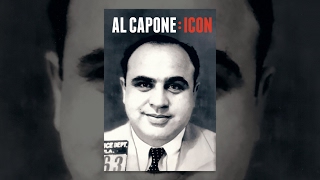
With the current mini-series 'Making of the Mob: Chicago' on the American Movie Classics network, I was thinking of the connection between "the Outfit" and Hurley, Wisconsin during the reign of Al Capone. Actually the Capone organization was the forerunner of what later became known as the infamous Outfit in Chicago. There are a lot of articles online about the early notorious history of Silver Street in Hurley, Wisconsin. I don't want to link to any right now, as it would tend to imply that this harsh history had anything to do with todays residents of the Ironwood-Hurley area... which it doesn't. However, from it's beginnings as a northern frontier town in the late 1880's through the Prohibition era, it was northern Wisconsin's "seedy part of town"... and then some. The areas miners and loggers during that time who wanted some "action," would flock to Silver Street's underworld element for illegal goods and services. This underworld was more in the style of Al Swearengen than it was Al Capone.
In later decades, the mere mention of "The Outfit" would strike fear in the Midwest. It's not an exaggeration; anyone who crossed them after a warning or two would get an ice pick in the ear. The Capone organization had risen to the top of the Chicago underworld by killing off a particularly vicious and violent Irish/Jewish gang during Prohibition. It probably should be mentioned that this Chicago Mafia that developed did much harm to anyone in the Midwest with an Italian name. It didn't even matter if someone was Milanese or Venetian in origin. The Hurley underworld wasn't "Italian." This alliance of black marketeers seemed to know every trick in the book. The use of violence wasn't really necessary among the Silver Street criminal milieu, and vice had almost a free reign.
The Capone organization smuggled liquor back and forth from Canada. They made a special point to establish connections in northern Wisconsin. Al Capone owned a summer home along a lake near Heyward, Wisconsin. It didn't take very long for them to come face to face with the well established Hurley underworld. When reading about Capone in Hurley, it appears that he at least pondered about taking over Silver Street. However, from what I can gather, he was impressed with how well organized they were. He decided that it would be best to work with them. If he had just moved in and took over, it would have made it more difficult to establish and maintain connections in the North Woods..
Today, the only remnant of those days are Silver Streets many bars and night clubs. However, it's more of a place to have some clean fun. There are walking tours revolving around the infamous history of Silver Street, so it's not like it's something they are ashamed of in the manner of modern Las Vegas. Along with summer off-road vehicles and winter snowmobiles, it helps attract tourism to the area. Al Capone's brother Ralph, also a mobster, later settled in Hurley... although by then had apparently switched to legal pursuits.
.
Thursday, January 16, 2014
"Wotan's day spiritual hodgepodge"
.
It's an incredibly warm, cloudless January evening tonight, about 70 degrees and eerily still. I just had a few ideas that I made note of recently, and I thought that I would lump them all together on this Wednesday, a day whose name was inspired by Wotan the Teutonic god of legend. Think of how many people in our society do not even know that the days of the week are named after ancient pagan gods, goddesses, and spiritual concepts. Sunday through Saturday: "Sun day," "Moon day," "Týr's day," "Wotan's day," "Thor's day," "Freya's day," and "Saturn's day."
Conflated time-spaces
There's an old saying regarding a person who may not like where they are at the moment; and it says that "your body may have to be here, but your mind can be wherever it wants to be." I had an experience on New Years Eve, and at other times too, which is a little bit of a different twist to that saying... but similar. We all have this experience, whether or not we want to acknowledge it. Sometimes we may find ourselves in a "place" which reminds us of some other unrelated faraway place from our memory or even from a perception.
Most places look and feel different with the combinations of different weather, times of the day, and the varying moods of light and shadow. So with the many different places--familiar or unfamiliar--there are endless combinations that make it entirely possible to experience one of these "geographical déjà vu experiences." Often this happens at night, where the darkness covers up most of the obvious clues that remind us of where we are. You know where you are, but under the right conditions--especially by yourself--you may have that silly idea about that "other time and place." It could even be a perception of a place where you've never been.. and it's nice to just go with it for awhile.
It's the same as listening to a song on your car radio that reminds you of a good experience from the past though a neurological association in your mind; so even though it may feel a little bit silly, you just go with it for a moment and relive the experience. Maybe even expand upon it in some way. It's amazing to me that some people are so closed-minded that they can't even experience something in their own mind without self-censorship. You can learn things about yourself through these mind exercises. It's not mere chance that one person ends up in a situation where they are nearly always in crowds, living and working in a densely populated areas; where another person always seems to live and work in quiet open places.
That's not necessarily an extrovert-introvert comparison either, but a long range consequence of internal self-will. Some people feed off of the energy of crowds, while others do not. History teaches us that there have been many men--"tough guys"--who swagger around with self assurance; but when men like this have gotten into trouble, they instantly crumble at the threat of solitary confinement. Their energy source is cut off. It's the same concept as people in a small town thinking that life in a big city would be a living hell; while people used to a big city would feel that life in a small town would be the same.
The place where I had this experience was near a business/industrial area; at the base of a mountain at night. I was having a few beers with a couple of friends. Behind us towards the mountain were familiar woods and trails. The bright lights from a couple of commercial buildings in front of us illuminated the small field and the woods behind us. I could see some lower hills dotted with homes in the distance, but most of the scenery was darkened out.. looking more like just some lights amid the darkness. Not far ahead I could hear an occasional truck ramble by on the main road while I watched its lights pass by as I sat in my fold up chair.
While sitting in the cool air drinking a Guinness under a half Moon, Venus, and the stars of this remote island amid an urban sea; it occurred to me that this particular spot created a neurological illusion in my mind of a particular spot on a particular evening one time just off of US 2 near Ironwood, Michigan. Despite the micromanaged proportions (in contrast, Ironwood is an urban island in a sea of remoteness), the two "spots" felt the same if I allowed my mind to wander. The cool night air, the woods behind us, the lights of the industrial area, and the main road here matched US 2 with the sound of an occasional truck driving by.
The only thing that would knock me back into the present time-space were the number of planes flying by. Ironically, something large and dark flying by caught my eye at one point. It was perhaps one hundred feet above us. I suspect that it was an owl, somehow symbolizing my alternate reality of the Northwoods. I have been seeing more owls lately than I ever have before. About a week ago at sunset, I saw one land on the very top of a twenty-five foot tree as I was hiking. I could see its body against the sunset as I walked downhill towards the tree, looking away from me in a southward direction; and suddenly it looked at me as I could tell by its ears. That's the second time that an owl has looked at me since December. Animal messengers?
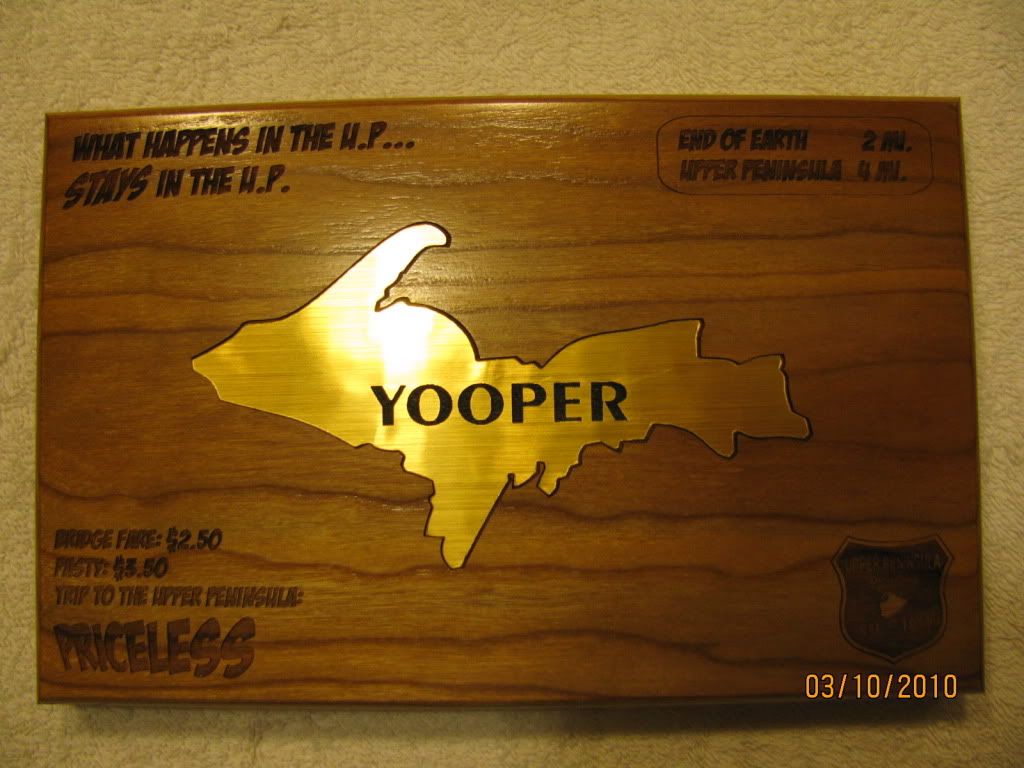
A "Yooper" is a native of Upper Michigan or north Wisconsin, where they have a distinct dialect called "Finglish"... a mixture of English and Finnish due to the large number of Finns who had immigrated there and the areas' relative remoteness. There also were a sizable number of immigrants from Italy, and in particular the Alpine stretches of the northeast. Within these communities were women who were known practitioners of "folk medicine"... usually tied to literally "Witches" if you go back far enough.
Recently, a woman complained to my mother about some aches and pains that she was experiencing... especially in the morning. My mother told her to place a bar of soap--packaged is fine--under the covers as she slept. Perhaps a month went by before they spoke again, and the woman raved about how the soap had helped her. She was acting excitable, even though she was usually very reserved. When I got to thinking about this later, it occurred to me that this was "folk medicine" in action! A direct link from the ancient Gaulish-Alpine village of Grömèl, to Hurley, Wisconsin, to Brisbane, California. At an earlier time, perhaps centuries ago, a crystal may have been prescribed for this problem by the local Strega.
I have a possible answer to out-of-control anger. Just about everyone can think of times where they were angry and said and/or did things that they wish they could take back. When confronted with this sudden feeling, try to attain the discipline to at least try to think about the anger in the form of a round glowing ball of energy about the size of a football in front of you. Try to picture it as you stare at the space in front of you. Imagine the pulsating electricity of it's outer dimensions. Tell yourself that you are its master, since your emotions created it... albeit unwillingly.
Hopefully this mind exercise will at least remove the irrational element from it. Perhaps something truly needs to be said or done as a result of someones words and/or actions, but at least you will be in control, and not the ball of energy. Emergencies aside--no matter how deplorable the situation may seem at that moment--if you at least take out two seconds to at least try to picture that energy ball in front of you, your chances of regaining control are good.
If you ever have a really dramatic or powerful dream, you really should write it down as soon as possible. You think that you will remember the details, but you will not. I just reread my own account of the most powerful dream that I ever had a few years ago, and I had forgotten most of the details. I wish that I could share some of my dreams here, but they're too personal. The symbolism that our minds conjure up is amazing. Dreams are the way that the mind tries to make sense of our personal issues. They can range from the glorious to the depths of negativity.
Although I am not comfortable giving an account of my inspirational dreams at this point, I did have a dream recently that gave an example of this mind symbolism. I have had four primary enemies in my life. One person I don't see much of anymore, while the other three I have not yet been able to rid myself of. One is my "big enemy," while the other two are slightly lessor enemies that are part of one unit. After recently dealing with all three of them, I had a dream about this frustrating long-term saga.
I was walking up to a driveway of a nearby street collecting for something it seemed. This was the third house on that block, which is a very steep street. Three = "three enemies"; Steep = "the stress" from these enemies. As I walked up the driveway, there was a large bush to the left of me, and a car to the right. Suddenly a large red snake blocked the path in front of me. Its dimensions were not rough like a rattlesnake, but more smooth and rounded. As I turned around to leave, a second large red snake blocked the path to the sidewalk.
As I was trying to figure out what to do, a third red snake--larger than the other two--appeared in the bush which had a slight overhang over the driveway, with the snake outstretched directly above me. I dropped to one knee, blocked on all six sides. The largest snake was my primary enemy, and the other two snakes were the other two of my enemies. Always trying to trap me. This is very typical of dream symbolism, albeit a negative example.
From the ancient proto-European polytheism--which later developed into what generally became known as "European witchcraft"--there was the "triple goddess" symbolized by "three moons." However, wouldn't it seem that there would be a "triple god" as well... especially since the two fit together? A "triple sun?" Ironically, there are examples in nature where there is an illusion of a triple sun under the right conditions.
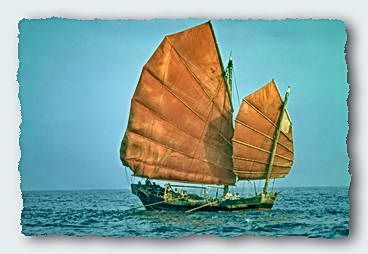
I find it interesting that the historical Chinese sailing vessel--"junks"--are not really creatively used as symbols of Chinese culture. They have such a unique design and coloring, even the smaller ones. I think in most other cultures, they would flaunt such a symbol.. as with the Viking ships.
I read somewhere recently of someone of Lombard descent suggesting that an "Iron Crown of Lombardy" could be fashioned as a wristband. Since this is one of the chief symbols of the ancient nation, this idea makes sense to me. It could also be masculinized to suit a man.
I saw where there are "outdoor picture frames" available on the market now. This is a good opportunity for someone to place any type of symbol or person in an outdoor location... perhaps serving as some type of memorial, or to somehow have that person's energy around. You could use your imagination, as maybe a certain sized frame could be placed in a carved out section of a large stone/rock or timber/log and placed in a good spot.
A couple of weeks ago, I watched the popular 2005 movie 'Walk the Line' with my mother. We had seen it once before. It was about the early careers of Johnny Cash and June Carter, played by Joaquin Phoenix and Reese Witherspoon. Coincidentally, during the following week, I saw where "the man in black" had played at the 23 Club in Brisbane decades ago. He and a few other famous musical artists' pictures, like Jerry Lee Lewis, were posted behind glass outside. There are always connections and tie-ins when you look for them
.
Sunday, August 16, 2009
Iron Crown to Ironwood II
As stated in the previous article (Iron Crown to Ironwood), the town of Hurley is on the west side of the Montreal River (Wisconsin), and bigger town of Ironwood is on the east side of the Montreal River (Northern Michigan). About 20% of Hurley's residents are "Italian," largely Lombardian. Although small, Hurley has had quite a reputation as a very rough town at the height of it's iron mining and lumberjack past.
[Above, left: A portion of the stripper joints along Hurley's main drag. The town is a pale shadow of the days in the 1920s and 1930s when Hurley was one of the most raucous places in the country.]
The following is an article from Hunts-Upguide.com:
Region: Ironwood & the Gogebic Range
Hurley Area
Today Hurley, Wisconsin, is a fairly placid place with a tourism-based economy. But it has nearly 30 bars, a rather unusual number for a town of 2,000. That's the only tip-off to Hurley's notorious past, unequaled in all the north woods. "Hurley, Hayward, and Hell," the saying went- though some people wonder if Cumberland shouldn't have been added to the list of lawless lumber towns. Three Hurley taverns at the bottom of Silver Street still have strippers.
Snowmobilers love Hurley because it's so snowy, so friendly, and so handy. Snowgoer magazine consistently rates it "best nightlife in the Midwest." The entire downtown is virtually on trail because the snowmobile trail is on the old railroad right of way. The railroad made Hurley boom in 1885 by connecting it with Ashland, Wisconsin, and its ore docks. The tracks ran right behind the north side of Silver Street.
"Throughout the Middle West, wherever lumberjacks and miners congregated, Hurley was known as the hell-hole of the range," stated Michigan: A Guide to the Wolverine State, the 1941 W.P.A. guide. "Even Seney, at its worst and liveliest, could not compete with the sin, suffering, and saloons that gave Hurley a reputation unrivaled from Detroit to Duluth."
From the beginning, Hurley was the wild, wide-open frontier town, in contrast to Ironwood just across the river, where mining companies based in Michigan reflected the more sober values of the eastern and Marquette interests that developed the Gogebic Range. The fledgling community of Hurley fought to preserve its autonomy by separating itself from more powerful and staid Ashland County, which it did in 1893. Hurley's elaborate courthouse with its impressive tower had already been built, in a prearranged deal.
Hurley's rough, crude past was the subject of Come and Get It (1934), a popular novel by Edna Ferber, the author of Show Boat, Giant, and Stage Door. She set it during the late 19th and early 20th centuries. Ferber stayed in town at the celebrated Burton House hotel, then in decline, and talked to many local people. She based the novel on fictionalized composite versions of an expansive lumber baron (said to reflect aspects of Escanaba lumber titan Bill Bonifas) and the celebrated Lotte Moore. Moore was "a well loved entertainer and lady of the evening," in the words of local historian Gene Cisewski. "In her day, the profession of high-class escort was not illegal. And when a woman carried herself with the proper comportment and discretion, the profession wasn't even frowned upon too seriously." Lotte was murdered in 1890, perhaps because she had witnessed a bank robbery.
In the sanitized but still enjoyable 1936 film version of Come and Get It, Lotta (played by Frances Farmer, now a cult figure, in her most noted role) reforms, marries, and has a daughter who marries the son of the lumberman who deserted her.
Ferber described the fictionalized Hurley as "a sordid enough town. . . , with all the vices and crudeness of the mining camps of an earlier day, but with few of their romantic qualities. Lumber and iron were hard masters to serve. A cold, hard country of timber and ore. . . . A rich and wildly beautiful country, already seared and ravaged. . . . Encircling the town were the hills and ridges that had once been green velvety slopes, tree shaded. Now the rigs and shafts of the iron mines stalked upon them with never a tree or blade of grass to be seen." Local people say that Come and Get It has little to do with the truth, but it's a good read and a memorable movie, often available through inter-library loan. Ferber, who was Jewish, did her research in Hurley but took offense to perceived local anti-Semitism, left town, and finished the novel at Bill Bonifas's cottage on Lake Gogebic.
A colorful true story from more recent times concerns a judge who ran a strip joint in which the stripper used a boa constrictor in her act. One fateful time she battered a heckling customer with it. Not long after that, the fire department got a call about a fire there, but arrived to find no smoke. Four or so hours later the place burned.
Hurley ignored all limitations on the sale of alcohol, up to and including Prohibition, passed in 1919. Stories of protracted conflicts between federal agents and local people are told during the Living History tour of Hurley taverns held during the Iron County Heritage Festival in late July and early August. For times, call (715) 561-5310 or look in at www.ironcountywi.com
The lower block of Silver Street dates from the Prohibition years, when a mining company decided to subdivide it and sell it off. Nearly 200 saloons, disguised as soda shoppes, lined downtown's streets. When Chicago gangsters established resorts and gambling rackets in northern Wisconsin mining and lumber towns, Hurley was a favorite place to relax and recreate. Al Capone never could figure out how to make inroads into Hurley's well-established business in illegal booze. He is said to have been a regular visitor; his brother Ralph ran several businesses in nearby Mercer and died in a Hurley nursing home.
Strip clubs are less artistically erotic and more crudely sexual than 50 years ago, and a small place like Hurley can't pay big-time performers. Compared to metro areas, local strip clubs are said to be tame. And patrons can't break the rules about physical contact, or the police will be called.
These Hurley bars stand out in terms of general interest:
• FREDDIE'S OLD-TIME SALOON and HALL OF FAME is full of sports memorabilia. The thick, bulletproof walls from Prohibition days aren't evident to visitors. 411 Silver St. (715) 561-5020.
• THE IRON NUGGET CASUAL FOOD & DRINK has a dining area that's a virtual museum of local iron mining. 404 Silver St. (715) 561-9800.
• MAHOGANY RIDGE feels like it's an original tavern from the 1890s, but it really dates from the early 1920s. Visually it's far and away the most striking of Hurley's taverns. The heavy, ornate back bar is said to have been carved by Scandinavians from the Keweenaw Peninsula. Said to get rowdy as the evening goes on, but it's a placid place in the daytime. (It opens at 9 a.m.) 29 Silver St. (715) 561-4414.
• Daytime pedestrians and sightseers may find more of interest at the HURLEY COFFEE COMPANY, a cheerful, light-filled coffeehouse and internet cafe with ice cream cones, soup and sandwiches, coffees and mugs, teas and teapots, cards and gifts. 122 Silver St. at Second/U.S. 1. (715)561-5500. Open 7 days from 7 a.m. to 5 p.m. Handicap accessible.
**************************************************
Actually, there are quite a few articles online about the Ironwood area, which, although small in population, is part of our history in America. It's also notable that the area is one of the chief centers of Finnish ancestry in America. Some of the names of the local towns in the Montreal River area strike me as interesting, like Rhinelander, Germania, or Tomahawk. Of course there are also all the regional names with "iron." I was thinking also of another remote connection, as our culture was a chief center of the "Iron Age," called the "Villanovan culture," which was based in Tuscany, Lombardy, and a little bit in the Veneto. The book 'Creed of Iron' is about Wotanism, and the old ways of our ancestors in that era. The Langobards called Wotan... "Godan," and that's a whole new subject. As you can see, there are so many connections here, literal, and spiritual. When you dive into a simple subject like this, it's amazing just how far you can go.
A few YouTube videos about the region:
Old family photographs in Ironwood
The Hiawatha of Ironwood
The Beauty of Lake Superior
Kayaking Montreal River canyon
Amazing Snowboarding at Big Powderhorn Mountain
Bad River Casino National Snocross Race - Ironwood, MI - Pt. 1
Finnish American Lives
The Finnish American Lives video is part of a documentary from 1982, which can be found here. Although we hear it probably too often about the Midwest, the Ironwood area is a very pure part of America. It did have a very rough reputation at one time however. Maybe a little bit like Deadwood, South Dakota.
**************************************************
8-23-09 Addition: I could almost make a third part to this series. I just wanted to note a few items and thoughts. When looking at a map of the region, I saw Green Bay, which is not all that far away. I have never been there, but it appears to me that it possesses the rugged charm of a small town, and a way of life probably not even much different than in the Ironwood area. There's so much history there, and I would like to look into further connections, past and present, in relation to what we're looking at here. There are just over 100,000 people in Green Bay, Wisconsin. It's probably best known for it's NFL team, the Green Bay Packers, named after the meat packing industry there. There is also a timeless element to the team, as one can easily vision the old Packer teams playing in the frost of winter, and images of Vince Lombardi on the sidelines, and all the other famous Packer players of the 60s. Vince Lombardi wasn't Lombardian, but was Neapolitan. On top of winning games, Lombardi was known for all those thought-provoking and challenging ideas about "life and winning."
Also noteworthy is the historical relationship between mining in the Montreal River area of Northern Michigan and Wisconsin, and the automotive industry in Detroit or Pontiac, Michigan. The mined metallic product is loaded onto ships and shipped east across Lake Superior and then south along Lake Huron to the various shipping ports. To show that these ocean-like lakes are not anything to be taken lightly, in 1975, one of these cargo freighters actually sank during a storm upon Lake Superior. It was called the SS Edmund Fitzgerald. It more than just sank, it was wrecked and the entire crew was lost.
Thursday, July 30, 2009
Iron Crown to Ironwood
Lombardia, historically the land of the Iron Crown of the Langobards (and later Napoleon), and also known for iron mining in the Valle Camonica. For centuries the valley produced both the raw materials for armaments of war and their design. They did this for whichever government ruled over them, not the least of which was the thousand-year Venetian Empire.
Northern Michigan, also known for iron mining. Lots of it. Although the mining has waned, the place names remain. Iron Mountain, Ironwood, Ironwood Township, Iron River, Iron Belt, Iron Exchange Bank, Ironwood Ridge, and bordering Iron County, Wisconsin, just to give a few examples.
Lost in the history of this region is the fact that it attracted a somewhat sizable number of immigrants from Lombardia. Sizable at least in the percentage of the overall population in this rural region. I had always heard about "Northern Michigan," but the name didn't mean anything to me until I looked closely at a map, and could see that it was almost like a state onto itself, separated from the rest of Michigan by the great lakes. It's a rural area, much of it flatlands, heavily forested, and with a distinct pure northern feel to it. I think when people say the "north woods," they're probably talking about Northern Michigan. I recall looking at an old National Geographic magazine once, and seeing at least a part of this area which was extremely heavily wooded, with the huge tree trunks, mixed with rocky and lush mossy ground cover, and which reminded me of some parts of the wooded Sierra Nevada areas more than the Minnesota or Wisconsin-style wooded flatlands.
I can recall one time, on television, two Italian-Americans, both from one of the major northeast urban areas, referring to "Italians in Northern Michigan," jokingly as being "kind've different." As they laughed, this went right over my head at the time, and I thought that it merely meant that they were "rural people," as opposed to "city people." I suspect that they actually meant that they had visited the area, and found that those "Italians" struck them as being very different. More than mere "city versus country" would suggest. Different faces, different mannerisms. In fact, a different ethnic group.
One center of Lombardian settlement, in and around a century ago, was in Ironwood, Michigan. Ironwood was a mining town founded in 1889. Its population today is only 6,293 (down from 10,000 in 1900), but it is the chief city in that particular part of Northern Michigan. I'm not going to do a profile on this city, as it would get me too much off track, but do take a look at the link, and of nearby "suburbs" like Hurley, Wisconsin, which is directly across the Montreal River from Ironwood in Iron County. The main business strips of these cities remind me of Calistoga, California, or even Petaluma, as far as architecture and old simple beauty. Of course, with a northern flavor to them.
"Ironwood" is also a forest in Norse mythology, from the Poetic Edda, and likely named this due to the large Scandinavian-American population. This also is a remote connection with Lombardia. Another connection is the St. Ambrose Catholic Church in Ironwood, founded in the 1890s, and of the distinctly Lombardian "Ambrosian Rite" of Catholicism, and which is also referred to as the "Milanese Rite."
A excerpt from the Ironwood Wikipedia page under History: "Iron ore was found in the area in the 1870s but it wasn't until the mid 1880s when the arrival of the railroad to the area opened it for more extensive exploration of the vast iron ore deposits. Soon several mines were discovered and opened such as the Norrie mine, Aurora mine, Ashland mine, Newport mine, and Pabst mine. The opening of the mines and the lumber works in the area led to a rapid influx of immigrants both from other parts of the USA and directly from Europe (mainly Sweden, Germany, England, Italy, Poland, Finland)."
Another excerpt from this page under Demographics: "The ancestral makeup of the population were 24.7% Finnish, 17.0% German, 14.8% Italian, 12.6% Polish, 10.4% English and 9.5% Swedish." Anything here under the title of "Italian" is largely Lombardian or similar cultures. A region populated by Germanic or Germanic-influenced peoples, and in a landscape and climate which is very "northern."
The following is from an article entitled 'Ethnic Life in the South Shore Region', which is the region south of the massive Lake Superior. Take a peek at the above link, at the gallery. Like with so many subjects, I wish I could do this more justice, so to speak. There's so much history here. Those Great Lakes are accessable to the Atlantic Ocean, I think, as we can see photographs of ship traffic in them. While poking around Wikipedia in preparation of this article, I looked at the page for Duluth, Minnesota, which is right on the eastern shore of Lake Superior, and in the images there was one beautiful old image of one of those old passenger ships, like the Titanic, coming into the Duluth harbor at twilight. If you didn't know where it was, you would swear it was any ocean port. The immigrants may have even made their way to Northern Michigan mining communities, like Ironwood, by ship.
"Ethnic Life in the South Shore Region
By Greta Swenson
The term “ethnic identity” is used today to describe a feeling of shared heritage and cultural expression found among groups who have migrated and resettled in a “New Land.” In northwestern Wisconsin and the Upper Peninsula of Michigan, Swedish, Norwegian, Finnish, Croatian, Slovakian, Czech, Polish, Russian, Italian, Cornish, Irish, German, Lithuanian, and other peoples came to the area to reestablish their families, communities, and churches just before and after the turn of the century. Settlement days along the South Shore of Lake Superior were like a bustling League of Nations, freshly organized and economically booming.
The settlers brought with them and developed a rich ethnic history in the region. But the rich, diverse cultural life brought by the early settlers did not end with that history. Those cultures interacted, intermarried, and adapted to the economic and climatic necessities of the northern winters. They transmitted their traditions to the succeeding generations. Today in the South Shore region, ethnic expression is a part of everyday life. We can see indications of that life on the streets, in the grocery stores, and in other public forums. Private means of expressing who we are, are also part of ethnic life in the South Shore region. This life is expressed in a variety of ways. In order to explore the ethnic life of the region, we will first take a look at the settlement days.
Settlement
European presence along the South Shore of Lake Superior began with the voyageurs and missionaries as early as 1659. Settlement of the land and towns in this region, however, did not occur until a period from 1840 to 1920, during the second large wave of immigration to the United States. People migrated to the South Shore region, as to other parts of the country, because of the need for labor and raw materials to support the rapid industrial expansion taking place in the United States. They left their old homes because of a lack of land, work, or idealogic freedom in many of the European countries.
These two urges opened wide the gates of passage from Scandinavia and Eastern and Southern Europe to “New Worlds.” The first large group of new immigrants to come to the region were the Cornish. They were recruited to work in the mines of the Copper Country in Michigan’s Upper Peninsula. When those mines opened in the 1850s and ‘60s, experienced Finnish copper miners working in Norway were also recruited and imported by the mining companies. Following company recruitment, immigration to the mines increased rapidly. Building of the railroad for shipment of the ore was one reason for the increased migration.
In addition, immigrants wrote “American letters” to family and friends in the Old Country and other parts of North America, telling them work was available and providing an address to which to come. The Cornish and Finns ere followed by Scandinavians, Italians, Slavic groups from the Austro-Hungarian Empire, Germans, and several other groups seeking work. Many of these immigrants to the region had already migrated to North America and were working elsewhere. Twenty years later, the Gogebic Iron Range mines opened up, beginning full production when the railroad was completed to the Ashland, Wisconsin docks in 1884.
At the same time, lumber companies were cutting northern Wisconsin’s an the Upper Peninsula’s white pine forests in order to supply building material to the mining operations and to the rest of the rapidly expanding young nation. In the 1890s, brownstone quarries opened along the South Shore. Work was abundant; the region was booming. Ashland, Wisconsin, in 1900, had a population of 13,000, its waterfront included approximately 11 ore docks, 13 to 18 sawmills, a pulp mill, and a blast furnace. By World War I, the timber had been “cutover” – nothing but stump acreage remained of the giant white pine forests.
Agricultural settlement in the area was then actively encouraged by several agencies, including lumber companies, the state governments, and private land investors. New groups of migrants came to the region to work the land. Advertisements, such as this one of the James Good Land Company in Ashland, Wisconsin, were published in ethnic language newspapers printed in the United States. This particular advertisement was published in the Czech language and widely circulated throughout the United States. Slovaks and Czech-speaking Bohemians who were working in the coal mines in Oklahoma, or slaughterhouses in Iowa, saw an opportunity to own their own land and headed north.
They settled the community of Moquah, Wisconsin, southwest of Ashland. Others did the same: advertisements were also circulated in Polish, Hungarians, Croatian, Finnish, and the Scandinavian languages. The boom continued. After strikes in the Minnesota and Michigan iron mines in 1907, 1913, and 1917, Finns, Croatians, and others left the mines and moved out to the stump acreage to settle the land of the South Shore region. This sign from one of Ashland, Wisconsin’s early banks reflects the rich ethnic diversity of those early boom years along the South Shore. It also reflects the major motivation for migration to the area: opportunity to economically better ones and one’s family’s condition.
“We can send money to the Old Country” the sign proclaims in Swedish, Finnish, Polish, Slovak, German, Hungarian, and Russian. Life in the booming frontier area was multicultural. The settlers brought with them their diverse languages, religions, foods, and customs. People bonded together for mutual support, mingling with their neighbors. Societies like this Italian group were formed or mutual benefit and to supply social interaction. Most groups soon established a church, organized according to language and culture. In 1907 in Calumet, Michigan, for instance, six Catholic churches were active: Polish, Italian, Slovenian, Croatian, French, and one general.
In Ashland, Wisconsin, Swedish, Norwegian, Danish, Finnish, Swede-Finnish, and English Lutheran churches has also been organized. Several ethnic language newspapers were published in the region during those early years, providing the settlers a contact with others of their group throughout the world. In the public arena, the rich cultural diversity of the region’s settlement days contributed to entertainment. Members of the Swedish Glee Club celebrated Midsummer’s Day with a picnic, while Moquah residents formed a Slovak Dance group, and members of the Croatian Fraternal Union played tamburitza music.
At home, more private expressions of ethnic identity can be traced through the words of settlers. Oral histories, diaries, songbooks, and newspaper articles reveal active ethnic identities among the settlers. Evidence of home-centered expressions of cultural roots can also be found in museums – a krumkake iron from a Norwegian woman’s kitchen, or a collection of Swedish wood carvings from someone’s living room. Family celebrations, such as weddings and funerals, varied from group to group, but were also mixed, as people began to marry into different cultures.
Regional Mixture
Ethnic groups settled often in enclaves – a large Finnish population, for instance, in the township of Oulu, Wisconsin, or Italian families in “The Flats” between Ironwood, Michigan and Hurley, Wisconsin. Both at work and at play, however, people did rub elbows with their neighbors. Musicians in the various communities, for instance, traded tunes and instruments. Folklorist Jim Leary described the life of one musician as “How a Pole learned a German tune from a Norwegian accordionist while playing an Italian instrument at a Swede’s tavern.” Ethnic expression along the South Shore was a part of everyday life for the settlers. They practiced their own traditions, and learned new ones from their neighbors. This diverse mixture of ethnic traditions is visible in the region today.
Current Life-Public
Some very public indicators of the current ethnic life along the South Shore exist today. Signs such as that for Koski Korners outside of Marquette, Michigan, or the several public saunas in the city, indicate immediately to the causal observer that segments of a Finnish heritage are still active in the community. The churches remain as landmarks to the ethnic neighborhoods, and in some cases indicate the unique mixture of ethnic religion with regional economy, as does this copper-domed synagogue in the Upper Peninsula’s copper country. Some ethnic halls and societies are yet active, other, as one Swedish-Finn put it, are no longer necessary, since insurance companies have replaced them.
Musicians, older and younger, are still active in the region. Art Moilanen still plays Finnish polkas and schottisches in Mass City, Michigan every Saturday night. In the Bohemian and Slovak settlement of Moquah, Wisconsin, entertainment at an annual hunters’ ball is provided by a local band, the Polka-Teers. Members of this band are of Slovak, Croatian, and Polish descent. They play music from each of those cultures, as well as more modern pieces from artists like Johnny Cash, and a Finnish schottische now and then. Records stores carry current ethnic artists, and local jukeboxes may feature Croatian, Finnish, or Italian numbers.
If you walk into a grocery store in Ashland or Hurley, Wisocnsin; Ironwood, Hancock, or Marquette, Michigan, just before Christman, you will be greeted with a sign such as this in Ironwood’s Jack’s Food Store. Holidays are a special time for many ethnic groups, and no Swede, Norwegian, or Finn would be caught celebrating Christmas Eve without lutfisk. Other items in the grocery store are surprising to the casual observer only because they are not in specialty sections. Swedish headcheese, or sylta, is next to the bologna. In the Italian area of Ironwood-Hurley, shelves are lined with pasta. Bakeries feature such items as Scandinavian “toast,” or rusks, and Finnish breads.
Finnish restaurants feature Cornish pasties, a regional symbol of the settlement mixture. As one resident of the Upper Peninsula once commented about the pasty, “They were brought by the Cornish, made edible by the Finnish, but the best ones made around here now are made by an Italian.” Down the road, Billy Trolla, a second-generation Italian grocer, caters to the special needs of second-, third-, and fourth-generation Italian families. Community events nearly always involve some sort of ethnic expression in the South Shore region, whether Croatian cabbage rolls are served at a wedding, or Italian-American communities. The Swedish Lutheran Church in Ashland, Wisconsin each year celebrates St. Lucia Day before Christmas, and Finnish communities in the region stage annual Johannus, or Midsummer’s, celebrations.
Current Life-Private
While there are visible landmarks and customs which tell us about an active ethnic life along the South Shore, it is inside people’s homes – in their kitchens, attics, daily rituals – that the ethnicity of the region is most expressed. Private expressions in the daily lives of area residents have been passed along, sifted out, and chosen as favorites symbols of ethnic identity. No tradition is so strongly continued in the ethnic homes as are those of food. If we peek into the kitchen of Irene Lunda Novak, a Czech-speaking Moravian from the Moquah, Wisconsin community, we will likely find her baking special sweet breads and kolache to have on hand for coffee time. Irene learned to make kolache from her mother, as did her sister, Agnes.
They now make them differently from each other, but, as Agnes says, “They taste the same.” Rose Tody Kriskovich, who lives only a few miles from the Novaks, is of Croatian descent. What Rose pulls out of the freezer when visitors stop in at coffeee time is strudel made from a distinctive “stretch dough” her mother used. Here her niece, Marilyn McKay, learns to prepare the strudel the way Rose did – by helping. Rose Stella Longhini’s parents migrated to Ironwood, Michigan from the Abruzzi region of Italy. From her mother, Rose learned to prepare varieties of Italian pastries and “cookies,” items she prepares and stores in her freezer, so they are always “on hand.”
Agnes Raspotnik Oreskovich, of Slovenian descent, cuts a different pastry for the coffee plate: a rolled walnut bread called “potica.” Scandinavian-Americans in Hancock, Michigan may prepare rosettes, while Polish-Americans in Ashland, Wisconsin spend a great deal of time and effort making pierogi for special occasions. But, food isn’t the only private form of expressing one’s ethnic heritage. Once we set food inside Irene Novak’s kitchen, we will discover more non-public symbols of her identity in other parts of her home. In addition to special kitchen utensils used to prepare Czech sweet breads, Irene has safely kept away in a truck hand-embroidered headdresses sent to her by her cousins in Moravia when she was a girl.
In the home of Agnes and Joe Oreskovich will be found representative hand-crafted items from Yugoslavia. Mrs. Norman Burnside include in her decor symbols of her Norwegian ancestry, while Vern and Naima Sandstrom proudly display a symbol of their multiple identities: Swedish, Finnish, and American flags. Another symbol of their ethnic identities is hidden away in the basement: the ever-present Finnish sauna. Ethnic life in the region stems from the settlers’ rich, diverse cultural heritages, heritages which also have mingled together to produce distinctive regional expressions. Past and present, public and private, traditional and adapted, the diversity of those ethnic expressions adds a uniqueness to life in the South Shore region.
Credits
Produced by Special Student Programs
Northland College
Ashland, Wisconsin 54806
Script by Greta E. Swenson
Visuals by Sue Ellen Smith, James P. Leary and Greta E. Swenson
Funded with a grant from the Ethnic Heritage Studies Program
U.S. Department of Education, directed by Stuart Lang.
Narrated by Cynthia Soucheray-Luoma
Music by Ray Maki, Olavi Winturri, Bill Hendrickson, The Voyageurs, George Noisianen, Jerry Novak, St. Mary's Russian Orthodox Church, Gogebic Range Tamburitzans, Rose Swanson & Friends, Art Moilanen, Saron Lutheran Church, Tom Marincel, Bruno Synkula, and the Bethany Swedish Baptist String Band.
This program is a result of hospitality extended by the people and organizations of the South Shore region."