The Týrlanders
About every 45,000 years, after the two poles have attained enough of the earth's water within their massive frozen zones, the outer crust of the earth moves about 2,000 miles like a loose outer layer of an orange. This last happened about 12,000 years ago. It wasn't really a "pole shift," but a tectonic "plate shift." The direction of this movement was southward from the standpoint of North America, and northward from the point of view of Eurasia. Therefore, North America melted and became a temperate climate zone, while Eurasia was thrust up towards and even into the arctic. This caused an immediate and dramatic earth change. For example, mammoths died and froze so quickly that some are still being found in perfectly preserved condition.
Some of the Mongol (the sub-racial meaning) ancestors of Amerindians were forced to migrate over the frozen land bridge between Siberia and Alaska, which would be almost like going south at that time in terms of climate. People from the proto-Germanic homeland, which was somewhere along the Kara Sea in northern Eurasia, suddenly found themselves living near or even above the Arctic Circle, which directly ties into Bal Gangadhar Tilak's theory in 'Arctic Home in the Vedas'. In other words, it's not a "theory," but a fact. It should be noted that this very ancient proto-Germanic homeland had a climate and terrain which was probably much like Montana. The only feature of Tilak's theory which wasn't really true was that he lumped all modern Europeans into one basket and sincerely proclaimed point-blank that they weren't native to Europe originally. This was what I would call a half-truth which he overlooked.
The proto-Germanics seemed to continue to live in this homeland--let just call it "Týrland" after what seems to have been the chief god of the proto-Germanics at one time, until if and when someone comes up with a better name--for a period of time until migrating to other lands. Some migrated to a land which later became known as the Tibet Autonomous Region, and although there isn't a trace of them left, modern natives of this region still use a version of the proto-Germanic triskelion as one of their most sacred symbols. Some migrated down into lands east of the Caspian Sea and north of the Himalayas, like the Tarim Basin. Some then continued to migrate into what is today Iran, and then eventually their uniracial/interethnic (I'm guessing "Balkan-looking"; Note: White "interethnic," not "interracial") descendants into the Indus Valley. I believe that others migrated into ancient Assyria. Still others migrated into Europe, where they merged with native "Alpine" proto-Europeans in many places to produce the Celtic-cultures; and eventually they moved in mass into northern Europe, and being checked at the border of ancient Gaul (for a while).
Eastward migration after the "plate-shift?"
 Could some of the ancient "Týrlanders" have migrated eastward, and even into the Americas? "Kennewick Man"--found near Kennewick, Washington--comes to mind, but we still don't know the origins of this man. The Army Corps of Engineers purposely destroyed the area of this find so no further evidence can be found there; as well as outrageously mismanaging the remains, compromising any future DNA studies of it. All we really know about Kennewick man is that he lived over 9,000 years ago and clearly had a Caucasian skull type. He could have been proto-Germanic, originating from a genetic migration from either the eastern or western land bridges. He may have been an ancient proto-European (non-Germanic) type who was part of a westward migration; or he may very well have been part of an ancient migration of Ainu people, who were a "Caucasian-like" people whose true origins are unknown.
Clearly based on their actions, the establishment does not want any of us to look at the evidence of Ainu, proto-Germanic, Chinese, Egyptian, Phoenician, proto-European/Welsh, Roman, ancient Hebrew, or Viking movements into the Americas. Only Leif Erikson is "allowed" to have been the sole non-Amerindian to have visited the pre-Columbian Americas, despite clear evidence to the contrary. Very clear non-Amerindian artifacts--like those left by Chinese travelers on Victoria Island, or Egyptian artifacts found along the Mississippi River and in the Grand Canyon--are either permanently put away in storage or disappear into private collections. Curiously, the Amerindians on Victoria Island today look much more Chinese than Amerindian. Usually numerically smaller cultures who are absorbed into larger ones are just thought of as being "one people" at the end of the day. However, for some reason, the establishment has decided on their own that Amerindians are the ONE exception to this rule, and other peoples/cultures may not be discussed.
Excerpt from pages 97 and 98 of 'The Suppressed History of America' (Schrag; Haze; 2011):
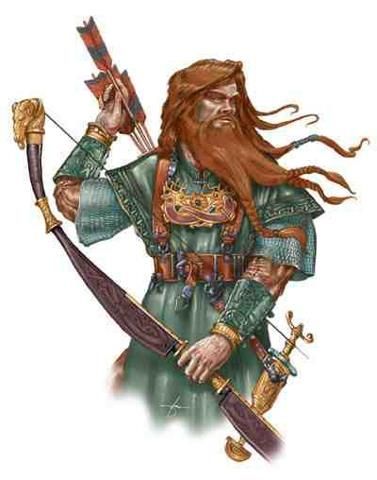
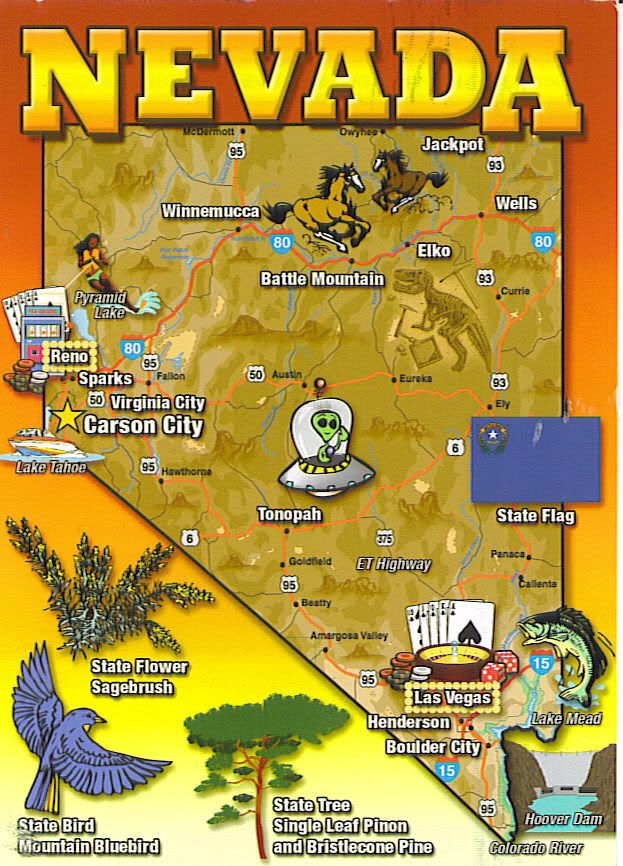
According to an article published in the May 13, 1928, edition of the Humboldt Star, a nine-foot-tall red-haired mummy was discovered deep inside the Lovelock Cave, located twenty miles south of the town of Lovelock, Nevada. Isolated on top of a high hill, the cave is estimated to be 40 feet deep and 180 feet wide. The Piute Indians told the early Nevadan settlers fantastic stories about the origins of the cave, including tales about their fierce battles with red-haired white giants. In their oral history they claimed to have cornered the remaining giants in Lovelock Cave. Once the giants were trapped, the Piutes blocked the entrance with sagebrush and set it on fire. They reportedly stoked the fire until all the remaining giants had been smothered by smoke.
 Further evidence supporting local legends about giants had emerged in 1911 when a mining company plowing for bat guano in Lovelock Cave began to find amazing artifacts. They discovered layers of burned materials and broken arrows that validated the Piutes' claims. Further down they found the remains of giant red-haired mummies, along with strange stone artifacts and shells carved with mysterious symbols. As usual most of these artifacts were either lost or fell into the hands of private collectors who whisked them away. One museum did manage to preserve some of the items discovered at Lovelock Cave.
The Humboldt County Museum at Winnemucca, Nevada, has in its collection a skull from one of the giants. Stan Nielsen, the famed treasure hunter, pilot, and photojournalist, went to investigate this skull with some dental plaster and a camera. The museum curator graciously allowed Nielsen to compare the plaster model of a normal-size man's jaw with a jaw of one of the giants found in the museum's collection. The photographic evidence clearly shows the vast difference in size between the plaster model and the immense jaw from the giant skull. What's more amazing is that anyone can see this skull for themselves by contacting the friendly staff at the Humboldt County Museum. Recent e-mail transactions have verified that some of the sensational Lovelock Cave artifacts, including a giant skull, are being kept in the back room of the museum.
This event--the killing of this tribe--took place about five or six hundred years ago, long after eastward traveling proto-Germanics may have crossed the Bering Strait land bridge. One curious note is that during the global flood which followed the last "plate shift" 12,000 years ago, California's huge Central Valley was flooded by the ocean. It was literally part of the Pacific Ocean, and the "coast" would have come right up close to northern Nevada. That dynamic may have existed right up to five or six thousand years ago. Could this red-haired tribe--which most clearly was of an Indo-European type based on the existing skulls--have been a last remnant of ancient eastward-migrating proto-Germanic people? Maybe they were part of, or descended from, a more recent westward traveling group? Could this tribe have traveled by boat--possibly either around the tip of South America, or even across the waters north of Canada and Alaska--thousands of years ago to this ancient inland coast? Were these people among the last remnants of the migrating post-glacial movement (actually "post-plate shift") "Týrlanders" In North America?
 There are some issues that need to be addressed regarding what is known about this mysterious tribe. First, the archeological establishment clearly isn't having any of it. To them, these are "Native Americans," plain and simple, despite CLEAR evidence to the contrary! Next, I have seen some of the old photographs which were taken prior to these mummies being taken away and "lost." They were quite similar to the Tarim mummies. They appeared as "Norse-looking," and with red hair as was evident even in the black and white photographs. They were more "mummified" rather than mummies from a burial rite. It isn't likely that they were Vikings, since red hair is not common in Scandinavia in particular. I would love to know what those "mysterious symbols" looked like. If, for example, there was a triskelion symbol, then this would be a closed issue. Since some of those symbols still exist for public view, we need to see them! If anyone reading this lives or will be near Winnemucca, and is interested in this subject, then by all means get permission and get in that back room and take some pictures!!
Next, evidently, only two of the remains were incredibly tall--about eight and a half feet--while the rest apparently averaged between six and a half to seven feet..... which would only be about six inches taller than the average height of modern Montenegrins (6'3"). If these were pure proto-Germanics, then this "giant concept" would not be all that amazing. That is pretty damn tall though! In addition, they didn't live in that cave. Apparently, the Piutes used that cave for food and storage, so it would seem that most of the artifacts were Piute. However, since the symbols were alien to them, they were likely from this mysterious tribe... and certainly we need to see them. In other words, they weren't "cave men." As far as cannibalism, we probably will never know. Perhaps during this war, there was an act of cannibalism, or maybe there was propaganda among the Piutes to get them in a war mode. If this tribe was perhaps seventeen inches taller on average than the Piutes, coupled with the fact that they were at war, then exaggerations were possible... "giants."
Lastly, the "dental comparison" isn't quite as incredible when you overlay the normal dental mold directly over the teeth of "the giant." It's certainly big, but not all that comparatively "giant." Look for yourself. Definitely big... but not so "giant." Also, based on the remaining skulls, the report of these people as having "layers of teeth" seems to have been a misrepresentation of the initial evidence. This was certainly a big tribe though, and probably were part of a really big strain of ancient pure "Týrlander." You can't really think only of modern Scandinavians--the purest modern Teutonic strain--as far as comparison. The average height for males in Scandinavia is just under 5'11," which is tall for an average height, but may have been on the short side in ancient "Týrland." However, this mysterious tribe must have been an unusually tall sub-grouping.
Video: Nevada - Spirit Cave and Lovelock Mummies
~~~ Týrland was the Arctic homeland ~~~
Proven.
.